

Quick answer: Do birds need 12 hours of sleep? For most pet parrots, the target is 10 to 12 hours of uninterrupted darkness every night, and 12 is the safe number most avian veterinarians recommend. The rule comes from their tropical origins near the equator, where nights last about 12 hours all year. Exact needs vary by species, age, and the individual bird, but consistency matters as much as the number.
Contents
- Do Birds Need 12 Hours of Sleep? Where the Rule Came From
- How Many Hours Do Birds Sleep?
- What Is a Photoperiod and Why Does It Run Your Bird’s Brain?
- Bird Sleep Requirements: What Happens When They Miss Sleep?
- Do Parrots Need 12 Hours of Darkness?
- The Night Protocol: A Cage-Covering Routine That Actually Works
- Related Guides
- Frequently Asked Questions

Do Birds Need 12 Hours of Sleep? Where the Rule Came From
The 12-hour rule comes from the equator. Most pet parrots are tropical or subtropical species. Their wild ancestors lived near the equator, where day and night each last about 12 hours all year. Avian veterinarians (bird vets) turned that natural rhythm into a simple guideline: give pet birds 10 to 12 hours of darkness every night.
Think about what that means in practice. A wild green-cheeked conure in South America experiences sunset around 6 pm and sunrise around 6 am, every single day, with almost no seasonal change. Its entire biology, from hormone cycles to molting, is built around that steady 12-hour photoperiod. Then we bring that same bird into a living room where lamps burn until midnight and the TV flickers until 1 am. The bird’s internal clock never gets the memo.
This is why vets phrase the rule as a range, not a law. Ten to twelve hours of darkness covers nearly every companion species, and twelve is the number you default to when you are unsure. A bird that gets a steady ten hours will do far better than a bird that gets twelve hours one night and seven the next. Regularity is half the medicine.
For a deeper veterinary take, this guide to a parrot’s night and day cycle explains the same 10 to 12 hour recommendation from avian veterinarians.
How Many Hours Do Birds Sleep?
Most companion parrots sleep 10 to 12 hours per night, measured as uninterrupted darkness in a quiet spot. That is the maintenance range for healthy adults. Babies, juveniles, and birds going through a heavy molt often need more, sometimes up to 13 or 14 hours. Growth and feather production are expensive work for the body.
Species differ less than owners expect, but the differences still matter. Here is how the most common pet birds compare:
| Species | Nightly darkness target | Worth knowing |
|---|---|---|
| Budgerigar (budgie) | 10 to 12 hours | Light sleepers; cage placement away from hallway traffic matters a lot |
| Cockatiel | 10 to 12 hours | Prone to night frights; a dim night light near (not in) the room can help |
| Green-cheeked conure | 10 to 12 hours | High-energy species; short sleep shows up fast as nippiness |
| African grey | 10 to 12 hours | Sensitive to disturbance; partial sleep debt links to feather picking in this species |
Notice the pattern: the range is the same, but the failure mode differs. A tired conure bites. Cockatiels panic at 2 am instead. And a sleep-deprived grey starts plucking. Learning your own species’ tell is more useful than memorizing a number, because you will spot the problem weeks before it becomes a habit.

What Is a Photoperiod and Why Does It Run Your Bird’s Brain?
A photoperiod is simply the daily cycle of light and dark. In birds, it is far more than a schedule. Light entering the eyes signals the brain to release or suppress hormones that control breeding behavior, appetite, molting, and sleep itself. Day length is the master switch of a bird’s body.
Here is the mechanism in plain terms. Long days tell a bird’s brain that it is breeding season, so reproductive hormones rise. Short days signal the off season, and those hormones fall. Wild birds use this to time nesting with food availability. Pet birds, however, live under our ceiling lights, which can stretch their perceived day to 15 or 16 hours. Their brains read that as permanent spring, and the hormonal machinery never gets to rest.
This is the deeper reason the 12-hour rule exists. It is not just about rest, though rest matters enormously. Twelve hours of darkness keeps the photoperiod balanced so hormones stay in their normal range. When owners complain about a cockatiel that screams at mirrors, regurgitates on toys, or lays clutch after clutch of eggs, one question comes first. An avian vet will ask about the light schedule. Fix the photoperiod first, then look further.
Bird Sleep Requirements: What Happens When They Miss Sleep?
Bird sleep requirements are simple to state and easy to break. They need 10 to 12 hours of dark, quiet, undisturbed rest, at the same times every day. Miss that repeatedly and the signs show up in behavior long before they show up in health. Birds rarely look “tired” the way people do; instead, they act out.
Run through this checklist honestly. If several items sound familiar, sleep is the first thing to fix:
- More screaming or contact calling, especially in the evening when the house is winding down.
- Shorter patience and harder bites, a bird that was gentle last month is nippy this month.
- Feather picking or over-preening, barbered chest feathers or chewed wing edges with no medical cause found.
- Daytime napping, a bird that dozes on its perch at noon is borrowing sleep it missed at night.
- Cranky, anxious, easily startled reactions to normal household sounds.
- Getting sick more often, since chronic short sleep weakens immune response over time.
Picture the classic setup. The cage sits in the family room, the TV runs until midnight, and someone walks past with the hallway light on at 1 am. The bird never fully wakes, but it never fully sleeps either. Weeks later the owner is asking about biting, and the answer was in the light schedule all along. Move the sleep location or fix the schedule, and the “behavior problem” often fades within two to three weeks.
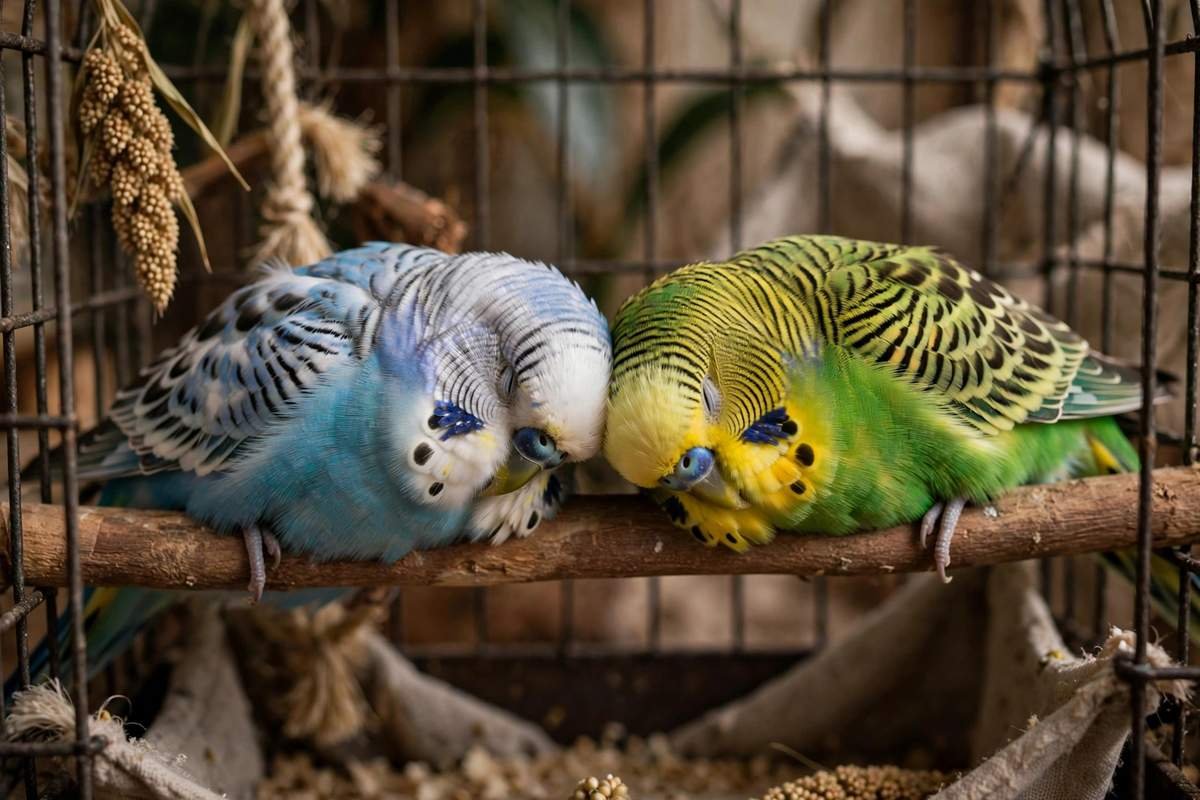
Do Parrots Need 12 Hours of Darkness?
Not every parrot needs a full 12 hours; 10 to 12 is the healthy range, and many birds do perfectly well at 10 or 11. The full 12 becomes important in one specific situation: a chronically hormonal bird. For cockatiels laying endless eggs or conures stuck in regurgitation loops, some avian veterinarians recommend pushing darkness to 12 or even 14 hours. This mimics winter and dials breeding hormones down.
Why does darkness calm hormones? It goes back to the photoperiod science above. Long light hours whisper “breeding season” to the bird’s brain. Long dark hours whisper “winter, stand down.” Extending the night is one of the gentlest tools for hormonal behavior. Unlike medication, it has no side effects when done sensibly.
A few honest caveats, however. First, darkness alone rarely fixes severe hormonal behavior. It works best alongside removing nest-like spaces, limiting mushy warm foods, and avoiding petting along the back and wings. Second, do not swing a bird from 16 hours of light to 14 hours of dark overnight. Shift the schedule by 30 minutes every few days so the bird’s clock can catch up. Third, if egg laying or aggression persists, talk to an avian veterinarian rather than just adding more darkness. Light is a tool, not a cure.

The Night Protocol: A Cage-Covering Routine That Actually Works
The night protocol is simple. Pick a fixed bedtime, cover the cage with a breathable dark cover, and keep the room dark and quiet for 10 to 12 hours. The math decides itself. Choose your wake time first, then count backward:
| If you uncover at | Cover the cage by | Darkness given |
|---|---|---|
| 6:00 am | 6:00 to 8:00 pm | 10 to 12 hours |
| 7:00 am | 7:00 to 9:00 pm | 10 to 12 hours |
| 8:00 am | 8:00 to 10:00 pm | 10 to 12 hours |
Make it a routine your bird can set its clock by. Dim the room lights about 30 minutes before cover time so the change is gradual, not sudden. Say the same calm goodnight phrase each evening; birds learn routines fast and the phrase becomes a sleep cue. Use a proper cage cover made of breathable dark fabric, never a plastic sheet or anything airtight. Leave the bottom few inches open for airflow. If your household is loud at night, a separate small sleep cage in a quiet bedroom wins. It beats a covered cage in a noisy living room every time.
Mornings matter just as much. Do not rip the cover off to a blaze of light and noise. Lift it calmly and give the bird 10 or 15 minutes to wake fully before handling or training. Finally, keep the same schedule on weekends. A bird’s clock does not know what Saturday is, and one late night can undo a week of good rhythm. Say you get home from work at 6 pm and want evening time with your conure. Cover at 9 pm and uncover at 7 to 9 am. You get three relaxed hours together plus a fully rested bird.

Related Guides
- Bird Body Language: 15 Signals Every Owner Must Read
- 7 Signs Your Bird Is Sleep-Deprived (And How to Fix It)
- Best Cage Covers for Parrots
Frequently Asked Questions
Can birds sleep with the TV on in the room?
No, not well. Flickering light and changing sound keep a bird’s brain half alert all night, even if its eyes are closed. Birds are prey animals wired to monitor their surroundings, so background noise prevents deep sleep. Move the cage or turn the room truly dark and quiet.
Should I cover my bird’s cage at night?
Yes, for most households. A breathable dark cover blocks lamplight and movement, signals bedtime, and helps the bird reach 10 to 12 hours of darkness. Leave the bottom open for airflow and never use airtight material. In a naturally dark, quiet room, covering is optional but still helpful.
Is 8 hours of sleep enough for a parrot?
Usually not as a steady diet. Do birds need 12 hours of sleep, or is 10 enough? Eight hours occasionally will not harm a healthy bird. But chronic 8-hour nights fall short of the 10 to 12 hour target and often produce crankiness, biting, or hormonal behavior within weeks. Treat 10 hours as the minimum for long-term health.
Do baby birds need more sleep than adults?
Yes. Juveniles, recent weanlings, and birds in heavy molt can need 12 to 14 hours of darkness because growth and feather production demand extra rest. Give young birds the long end of the range and watch for daytime sleepiness as a sign they need even more.
My bird naps during the day. Is that normal?
Short midday dozes are normal; many parrots take a brief afternoon rest. Constant or long daytime napping is different and usually means nighttime sleep is broken or too short. Fix the night schedule first before assuming the naps themselves are the problem.
Does more darkness really calm hormonal behavior?
It helps, often noticeably. Longer nights mimic winter and tell the bird’s brain to lower breeding hormones, which can reduce regurgitation, nesting, and chronic egg laying. Use 12 to 14 hours of darkness for hormonal birds, shift gradually, and combine it with removing nest sites and limiting hormonal petting.
This guide is for informational purposes and doesn’t replace professional veterinary advice.