

Quick answer: The best dog brushes for shedding depend on coat type, not the price tag. Dense short coats like a Labrador’s do best with a rubber curry brush and bristle brush, double coats need an undercoat rake or deshedding tool, and long silky coats need a slicker plus a pin brush. This guide compares all five brush types honestly, so you buy once and buy right.
Contents
- What Are the Best Dog Brushes for Shedding?
- How Do the Best Dog Brushes for Shedding Differ by Coat Type?
- Which Dog Deshedding Tool Should You Pick?
- What Is the Best Brush for Labrador Shedding?
- What Does a Dog Undercoat Brush Actually Do?
- How Often Should You Brush a Shedding Dog?
- Related Guides
- Frequently Asked Questions
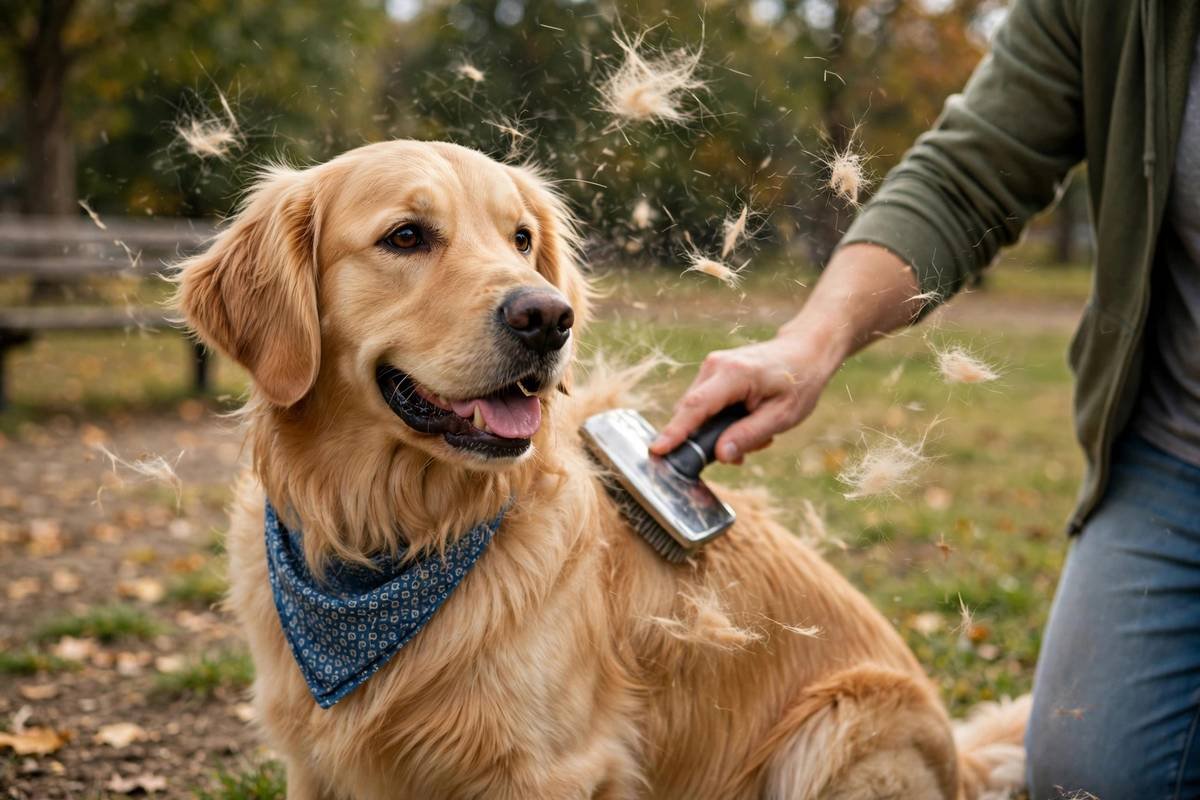
What Are the Best Dog Brushes for Shedding?
There is no single winner. The best dog brushes for shedding are the ones matched to your dog’s coat. A deshedding tool on a double coat removes armfuls of undercoat. The same tool on a short single coat can irritate skin and damage the topcoat (the outer layer of guard hairs). Start with the coat, then pick the tool.
This guide works differently from typical roundups. There are no invented scores, no star ratings, and no fake product-testing claims. Rankings like that are easy to fake and hard to verify. Instead, you get an honest type-by-type comparison: what each brush does, which coats it suits, and where it can go wrong.
Five brush types cover nearly every shedding dog. The slicker brush, the undercoat rake, the deshedding tool, the rubber curry brush, and the bristle or pin brush. Most households need two of them, not all five. The comparison below shows which two belong in your kit.
How Do the Best Dog Brushes for Shedding Differ by Coat Type?
Learn what each tool actually does before you shop. Every brush below has a coat it serves brilliantly and a coat it should never touch. Groomers say the same thing. CNN’s tested brush guide notes that a slicker can feel too rough on a short-coated dog like a Labrador. For short-haired breeds, a rubber curry comb should be the primary tool.
| Brush Type | What It Is | Best For | Watch Out |
|---|---|---|---|
| Slicker brush | Fine wire pins on a padded head that grab loose hair and light tangles | Medium and long coats; daily maintenance and mat prevention | Pressing too hard scratches skin; wrong for very short coats |
| Undercoat rake | Wide-set rounded teeth (often rotating) that reach deep into dense undercoat | Thick double coats: huskies, malamutes, shepherds, goldens | Useless and scratchy on single or very short coats |
| Deshedding tool | A stainless steel blade edge that strips loose undercoat as it slides through fur | Heavy seasonal shedding on medium and long double coats | Overuse thins the topcoat; never daily, never on curly or very short coats |
| Rubber curry brush | Soft rubber nubs that massage skin and pull dead hair from short coats | Short dense coats: labs, beagles, boxers; brilliant at bath time | Cannot reach deep undercoat or undo mats in long coats |
| Bristle / pin brush | Natural or nylon bristles (or rounded pins) that smooth the topcoat and spread oils | Finishing work on short and long coats; shine and oil distribution | Moves surface hair only; will not fix real shedding alone |
Notice the pattern: each tool owns a job. Slickers maintain, rakes dig deep, deshedding blades strip, rubber lifts from short coats, and bristles finish. Buying the wrong specialist is the most common grooming mistake, and it is entirely avoidable once you know your dog’s coat category.

Which Dog Deshedding Tool Should You Pick?
Pick a dog deshedding tool only if your dog has a real undercoat to remove. Blade-style tools, including the widely used FURminator-type deshedders, slide a fine steel edge through the coat and pull out dead undercoat in satisfying clumps. On a blowing double coat, nothing else clears volume this fast.
Respect the blade, however. These tools can thin the topcoat if you get enthusiastic. Use a deshedding tool once or twice a week during heavy shedding season, and never daily. Keep strokes light, short, and always in the direction of hair growth. Stop the moment you see mostly clean blade instead of loose fur.
Just as important is knowing when NOT to use one. Skip deshedding tools on curly coats like poodles, where the blade catches and breaks curls. Also skip them on very short single coats (there is no undercoat to strip, so you just irritate skin) and on wet hair. For those coats, the rake or rubber brush from the table above is the honest answer.
One more practical note: deshedding works best after the loose hair is already loosened. A quick pass with a slicker first releases far more undercoat than attacking a dry coat cold. The same goes for a bath-time session, when the coat is damp with conditioner. Many groomers brush with conditioner still in the coat, then rinse, then finish with a blowout.
What Is the Best Brush for Labrador Shedding?
The best brush for Labrador shedding is a rubber curry brush paired with a bristle brush. Labs have a dense, short double coat where dead hair sits right at skin level. Rubber nubs massage it loose without scratching, and a bristle brush then sweeps it away and spreads the skin oils that keep the coat water-resistant.
This surprises owners who buy a deshedding blade first. On a Lab, the blade often grabs the short topcoat instead of undercoat and leaves the skin pink. The rubber curry is gentler, cheaper, and honestly more effective for this coat. Use it two or three times a week for five to ten minutes, in small circles against and then with the grain.
Bath day is your secret weapon. Lather the shampoo, then work the rubber curry through the coat while it sits. You will pull out more dead hair in one bath than in a week of dry brushing. Rinse thoroughly, towel off, and finish with the bristle brush once the coat is nearly dry.

What Does a Dog Undercoat Brush Actually Do?
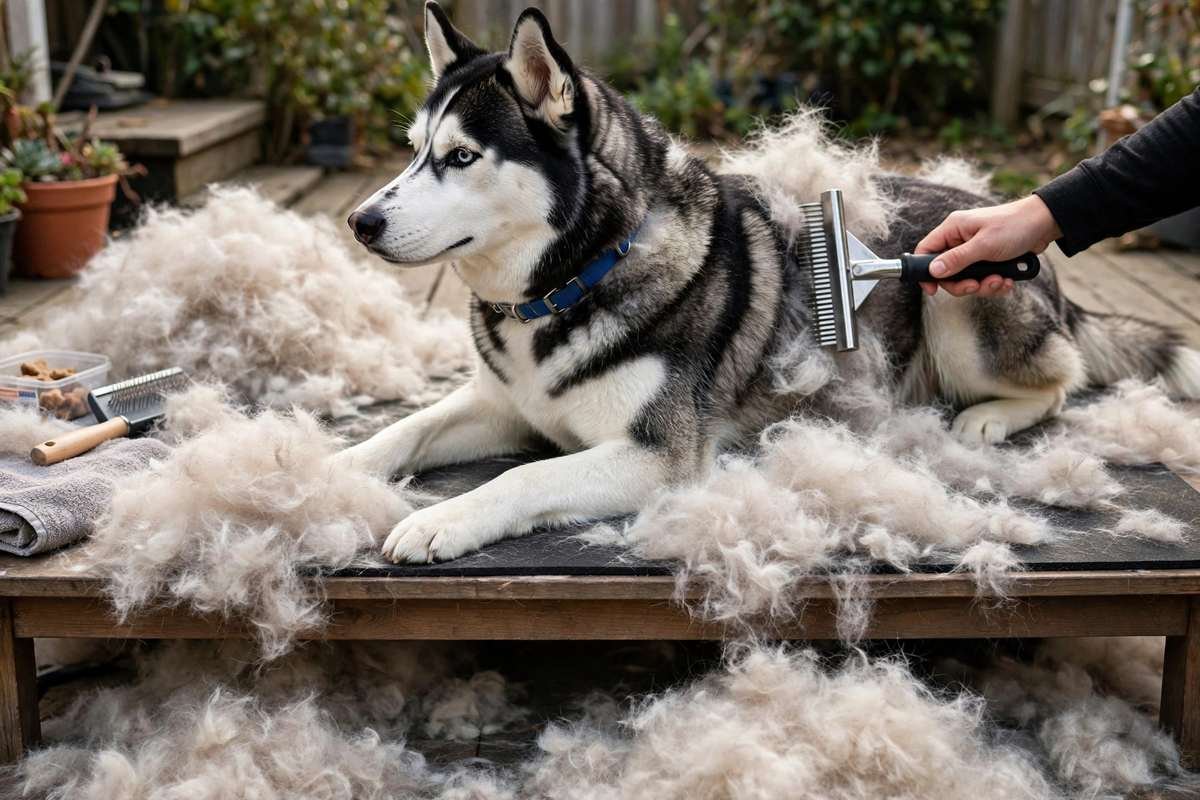
A dog undercoat brush, usually an undercoat rake, reaches past the long guard hairs and pulls dead fluff out of the dense layer underneath. The wide-set rounded teeth (choose rotating teeth if you can) slide through without cutting, so the topcoat stays intact while the undercoat thins out. For huskies, shepherds, malamutes, and golden retrievers, this is the workhorse tool.
Technique matters more than brand. Work in sections, parting the coat so you can see skin, and rake outward in the direction of growth. This “line brushing” catches the packed undercoat near the skin that surface strokes miss. Focus on the hindquarters and behind the ears, where dead hair gathers. Stop each section when the rake comes out mostly clean.
How does it compare head to head with a deshedding blade? Both target undercoat, but they differ in aggression and control:
| Factor | Undercoat Rake | Deshedding Tool |
|---|---|---|
| Mechanism | Rounded teeth comb out dead undercoat | Steel edge strips loose undercoat |
| Best for | Regular maintenance on thick double coats | Heavy seasonal blowouts, fast volume removal |
| Skin risk | Low with light pressure | Higher; overuse thins the topcoat |
| Safe frequency | 2 to 4 times weekly, daily during blowout | 1 to 2 times weekly in shedding season only |
Most double-coat owners end up with both: the rake for the weekly routine, the blade for the twice-a-year coat explosion. That pairing covers the full year without overworking either tool.
How Often Should You Brush a Shedding Dog?
Match the schedule to the coat. Short smooth coats need brushing once or twice a week. Double coats need three to five sessions a week, going daily during the spring and autumn blowouts. Long silky coats need a few minutes daily to stay mat-free. Curly or wire coats need two to three sessions a week, plus professional grooming every six to eight weeks.
Keep every session short and positive. Ten focused minutes beats thirty resentful ones. Brush in the direction of hair growth, work in small sections, reward calm behavior with a treat, and stop before your dog gets frustrated. Check the skin as you go. Redness, flakes, or hot spots mean you are pressing too hard or using the wrong tool.
The bath trick from earlier deserves repeating because it multiplies results. Wash, apply conditioner, brush the coat with the conditioner still in, then rinse thoroughly and dry completely. Loosened undercoat releases dramatically after a bath and blow-dry, which is why groomers always pair the two.

Related Guides
- Best Cat Litter for Odor Control (2026 Picks)
- How Often Should You Brush Your Dog?
Frequently Asked Questions
Can one brush work for two dogs with different coats?
A slicker brush is the closest thing to a universal tool and works acceptably across most coats for maintenance. Still, a Lab and a husky in the same house genuinely need different specialists. A rubber curry plus bristle set for the short coat and an undercoat rake for the double coat covers both without compromise.
Can deshedding tools damage my dog’s coat?
Yes, if overused or used on the wrong coat. Daily use or heavy pressure can thin the topcoat and leave the fur dull. Stick to once or twice a week in shedding season and use light strokes. Never use a blade on curly coats, very short coats, or wet hair.
Should I brush my dog before or after a bath?
Both, for different reasons. Brush before the bath to remove loose surface hair and small tangles so they do not tighten when wet. Then brush during the bath with conditioner in the coat, which releases deep undercoat. Finish with a quick brush once the coat is fully dry.
Why does my dog still shed after brushing?
Brushing manages shedding; it never stops it. Shedding is a normal cycle, and some always continues between sessions. If the volume suddenly spikes, turns patchy, or comes with itching, flakes, or bald spots, that is a vet question, not a brush question.
Do I need an expensive brush for good results?
No. When people compare the best dog brushes for shedding, technique and coat matching matter far more than price. A mid-range rubber curry used correctly on a Lab outperforms an expensive deshedding blade used wrong on the same dog. Spend your effort on the right type and a consistent routine first.
This guide is for informational purposes and doesn’t replace professional veterinary advice.