

Quick answer: Bird body language is the system of postures, feather positions, eye movements, and beak gestures parrots use to show mood and intent. Eye pinning signals high excitement or agitation, beak grinding means deep contentment, and a fanned tail with slicked feathers warns you to back off. Read the whole bird at once, because one signal alone never tells the full story.
Contents
- What Is Bird Body Language?
- How Do You Read Parrot Body Language?
- Bird Pinning Eyes Meaning: What Is Your Parrot Telling You?
- What Does Cockatiel Body Language Reveal?
- 15 Bird Body Language Signals: The Field Guide
- Happy Signals vs Warning Signals
- When Body Language Means a Vet Visit
- Related Guides
- Frequently Asked Questions
What Is Bird Body Language?
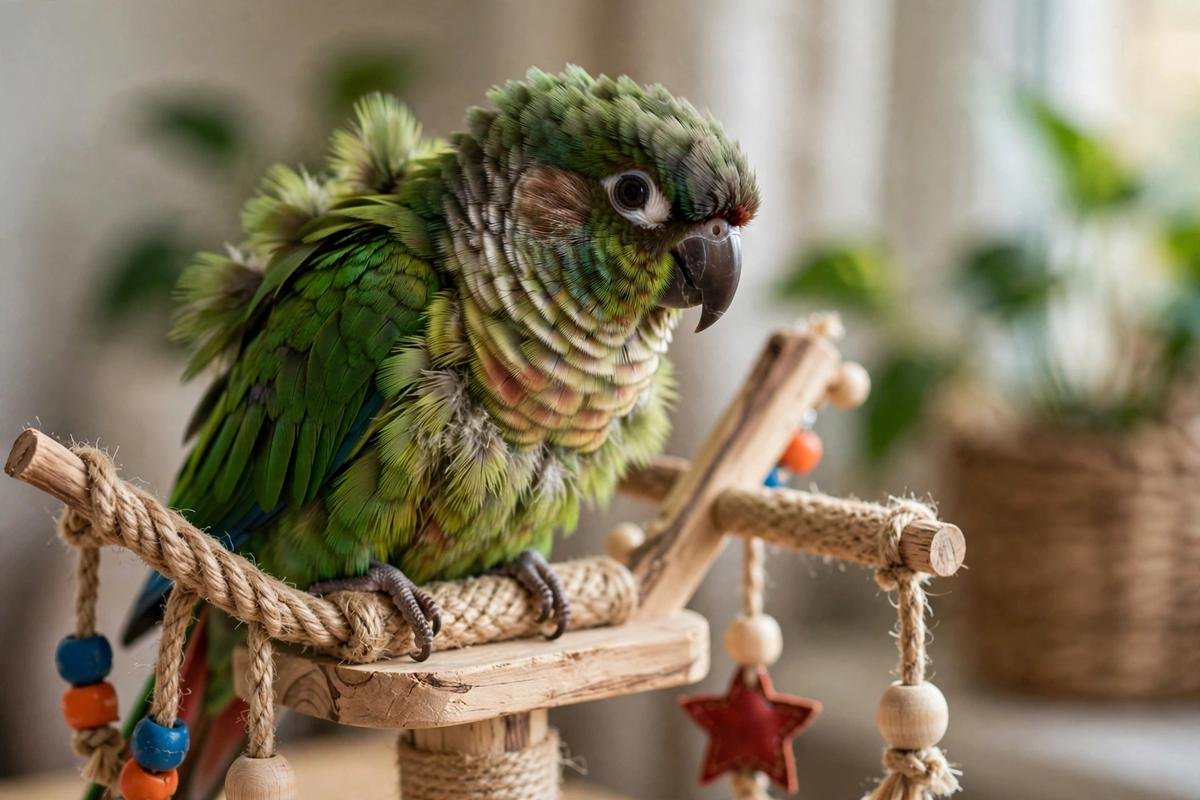
Bird body language is the combination of posture, feather position, eye movements, wing and tail gestures, and beak sounds. Parrots use this system to communicate mood and intent. Birds are prey animals, so their signals are fast and subtle. A shift in feather position or a flicker of the pupil can change the whole message in under a second.
Learning it pays off immediately. Almost every bite is telegraphed minutes ahead through clear warning signals. Yet most owners miss them because they watch the beak and ignore the rest of the bird. Owners who read the full picture get bitten less, bond faster, and spot illness days earlier than owners who only react to screaming.
The golden rule comes first: context is king. The same gesture can mean joy in one moment and fury in the next. Read the whole bird in the moment instead of memorizing isolated moves.
How Do You Read Parrot Body Language?
Read parrot body language in three steps. First, scan the whole bird from eyes to tail instead of fixating on one gesture. Second, weigh the context: the same eye pinning means delight during play and a warning during a standoff. Third, respond to what you see by rewarding calm signals and respecting warning ones.
Think of a single cue as a word and combined cues as a sentence. Eye pinning plus relaxed feathers and soft chatter forms one sentence: engaged and happy. Eye pinning plus a stiff body, fanned tail, and slicked feathers forms the opposite sentence: step back now. Neither word means much on its own.
Next, learn your bird’s baseline by watching it calm and content for a week. That relaxed version becomes your reference point, and individuals vary as much as people do.
Finally, factor in time of day. Many parrots are playful in the morning and grumpy near bedtime, so judge each gesture against the clock as well as the body.
Scenario: your conure bobs his head and pins his eyes when you pick up his favorite toy. Relaxed feathers, soft chirps. That sentence reads as pure excitement, so play on. Scenario: the same bird pins his eyes with a rigid stance when your guest reaches toward the cage. That sentence reads as a warning, so ask your guest to step back.

Bird Pinning Eyes Meaning: What Is Your Parrot Telling You?
Bird pinning eyes, also called flashing, is the rapid shrinking and widening of the pupil. It signals high arousal, not one fixed emotion. Paired with relaxed feathers and soft chatter it means excitement or keen interest. Paired with a stiff body, fanned tail, and slicked feathers it means agitation or aggression.
Pupil size tracks arousal, so anything that spikes interest or alarm makes the pupils pulse. Amazon parrots show dramatic pinning you can read across the room. In dark-eyed species like African greys it is harder to see, so lean on feather position and posture instead.
Respond to the sentence, not the word. Pinning with bouncing and head bobbing means the bird is thrilled, so join the fun. Pinning with a crouch, raised neck feathers, and hard beak clicking means overload, so slow down and give space.
Scenario: your amazon pins his eyes and bobs his head when you offer a walnut. Soft body, eager steps forward. That is delight; hand it over. Scenario: the same pinning appears with a fanned tail when a stranger leans into the cage. That is a threat display; calmly move the stranger back before the beak gets involved.
What Does Cockatiel Body Language Reveal?
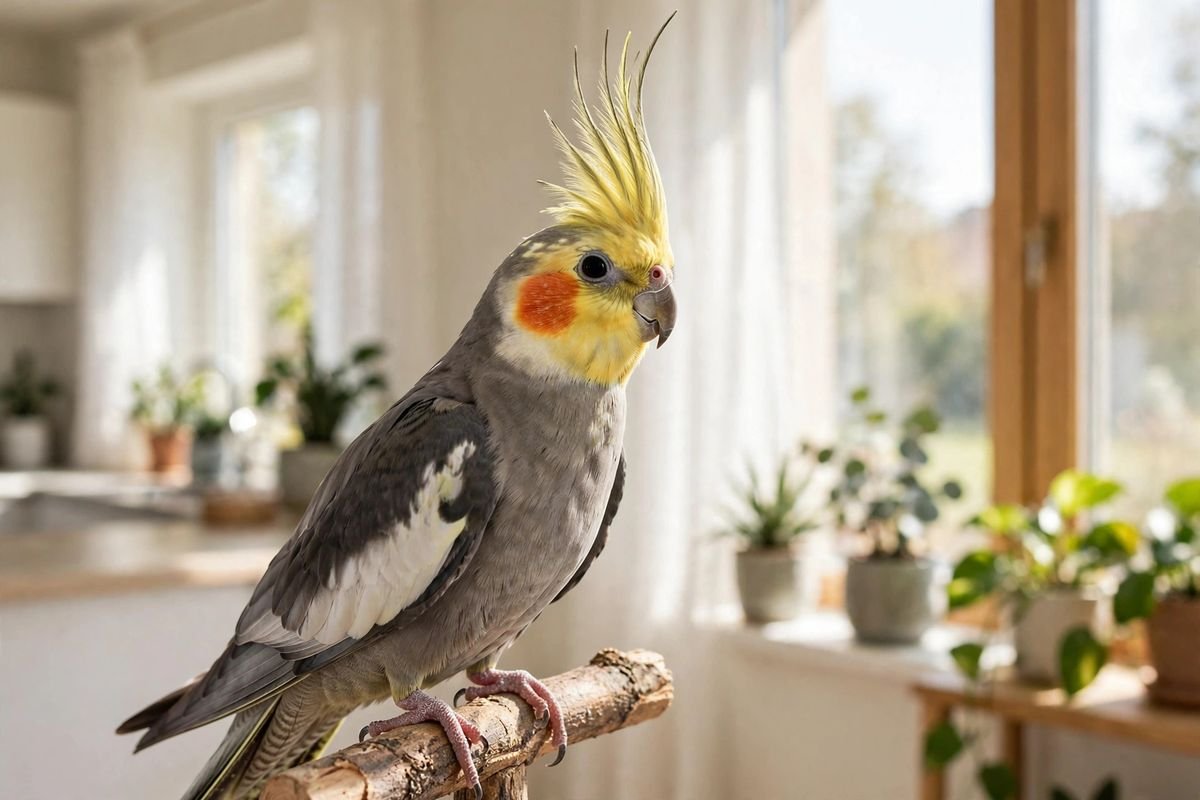
Cockatiel body language centers on the crest, which works like a mood meter. A crest held halfway up means curious and content. Flattened tight against the head means frightened or defensive. Fully erect and tense means highly alert or agitated. Always combine the crest with body posture before you act.
Use this quick crest decoder:
| Crest Position | Mood | Your Move |
|---|---|---|
| Halfway up, relaxed | Curious, content, open to interaction | Good time to talk, train, or offer a treat |
| Flat against the head | Scared or defensive | Back off, speak softly, try again later |
| Fully erect and stiff | Startled, highly alert, possibly agitated | Freeze, then retreat slowly; do not grab |
Cockatiels also hiss, which is a gift: an honest spoken warning that means keep your distance. A bird whose warnings are honored bites less, because it learns that signals work.
Watch for the evening shift too. Cockatiels are prone to night frights, and a tired cockatiel is a cranky one. A bird that hisses at bedtime usually wants its cover and quiet, not to reject you.
Scenario: your cockatiel flattens his crest and hisses when your hand enters the cage. That is territorial fear, not meanness. Train step-up on a neutral perch outside the cage instead. Scenario: the crest pops halfway up with soft chirps when you whistle. That is an invitation, so keep whistling.
15 Bird Body Language Signals: The Field Guide
Here is the complete reference, organized by body part from eyes to posture. Scan the signal, check the meaning, and follow the action column. Print this table mentally and you will read most parrots within a week.
| # | Signal | Body Part | What It Means | What To Do |
|---|---|---|---|---|
| 1 | Eye pinning | Eyes | High arousal: excitement or agitation | Read the body with it; play on if relaxed, step back if stiff |
| 2 | Slow blink, soft half-closed eyes | Eyes | Trust and contentment | Enjoy it; slow-blink back to bond |
| 3 | Beak grinding | Beak | Deep relaxation, usually pre-sleep | Nothing; let the bird drift off |
| 4 | Beak clicking | Beak | Soft click: greeting; hard click: warning | Greet back softly; retreat from hard clicks |
| 5 | Open-beak lunge | Beak | Clear threat: back off now | Withdraw calmly; never punish |
| 6 | Feather slicking | Feathers | Tense and alert; possible fear or aggression | Give space; identify the trigger |
| 7 | Fluffed feathers | Feathers | Brief: relaxed comfort; prolonged with lethargy: illness | Enjoy brief fluffing; vet check for the sick look |
| 8 | Crest position | Head | Half up: curious; flat: scared; erect: agitated | Match your approach to the crest |
| 9 | Wing flapping on perch | Wings | Joy and exercise | Let it flap; it is healthy and happy |
| 10 | Wing droop or quiver | Wings | Nervousness, chill, or early illness | Warm the room; watch for other sick signs |
| 11 | Tail wagging | Tail | Happiness and anticipation | Deliver the good thing it expects |
| 12 | Tail fanning | Tail | Excitement display or aggression | Admire from a distance; do not reach in |
| 13 | Head bobbing | Head | Excitement, play invitation, attention-seeking | Engage: talk, play, or offer a toy |
| 14 | Regurgitation for you | Whole body | Deep bonding; you are flock or mate | Accept graciously; redirect if hormonal |
| 15 | One-foot stand vs crouch | Posture | One foot: relaxed; crouch and lean away: fear | Relax with the first; retreat from the second |
Two signals get misread most. Feather slicking looks tidy, so people assume the bird is fine, but a slicked bird with a rigid stance is braced for trouble. Tail fanning looks spectacular, but fanning plus pinned eyes is a threat display, not an invitation.
Happy Signals vs Warning Signals
When you need a fast read, sort what you see into two piles. Happy signals invite you closer. Warning signals ask for distance. Getting this split right prevents most bites.
Happy and content signals: beak grinding before sleep, gentle tail wagging, and soft eyes with slow blinks. Add standing relaxed on one foot, head bowing to request scritches, and calm preening near you. A bird showing three or more of these is settled and safe to handle.
Warning and back-off signals: open-beak lunge, tail fanning with pinned eyes, and feathers slicked tight over a stiff body. Add hissing or growling, crouching low and leaning away, and hard beak clicking. Any single one of these means pause what you are doing.
When warnings appear, stop moving toward the bird, soften your gaze, and withdraw slowly. Never punish a warning; a bird that gets scolded for warning simply stops warning and bites instead. Try again in fifteen to thirty minutes.

Regurgitation bonding confuses new owners. When your parrot bobs its head and offers regurgitated food, it treats you as mate or closest flock member, which means the bond is deep. Frequent sessions can feed hormonal behavior, so enjoy the compliment, then redirect with a toy or training.

When Body Language Means a Vet Visit
Some body language is medical, not emotional. The sick-bird look is fluffed feathers held for hours, sitting low or on the cage floor, dull half-closed eyes, and no interest in food. Content birds fluff briefly and stay bright; sick birds stay puffed and dull.
Other red flags include feather plucking or barbering (chewing the feathers) that leaves bald patches, plus tail bobbing with each breath. Also watch for discharge around eyes or nostrils, and sudden appetite loss. Birds hide illness by instinct, so by the time the signals are obvious the problem is already advanced. Do not wait for a second day of the sick-bird look.
For a deeper species-by-species breakdown of these cues, Birdsville’s parrot body language guide covers the same signals from a bird specialist perspective. When in doubt about a possible illness sign, an avian veterinarian visit beats internet guesswork every time.
Related Guides
- Do Birds Really Need 12 Hours of Sleep? The Full Truth
- 7 Signs Your Bird Is Sleep-Deprived (And How to Fix It)
Frequently Asked Questions
How can you tell if a parrot is happy?
A happy parrot shows bright eyes, gentle tail wagging, relaxed feathers, and playful chatter. It grinds its beak before sleep, bows its head to ask for scritches, and preens calmly near you. The strongest sign is engagement: a content bird plays, explores, and seeks your company on its own.
Why does my bird grind its beak?
Beak grinding signals deep contentment and relaxation, most often heard as the bird settles for sleep. The soft crunching sound means the bird feels safe. It is one of the most reliable happy signals in parrot body language, so take it as a compliment when your bird grinds near you.
Why does my cockatiel hiss at me?
Hissing means your cockatiel is frightened or defending its space, not that it hates you. Common triggers are a hand entering the cage, sudden movements, or being woken up. Respect the hiss by backing off and approaching more slowly next time, ideally outside the cage.
Why does my parrot regurgitate food for me?
Regurgitation is a bonding behavior borrowed from courtship feeding: your parrot sees you as its mate or closest flock member. It signals a deep bond. If it happens constantly, though, it can fuel hormonal behavior, so redirect with play or training instead of encouraging it.
How do you know if a bird wants to be petted?
A bird that wants petting bows its head, fluffs its head feathers, and leans gently toward your hand. A bird that does not want contact leans away, slicks its feathers, or gives a hard beak click. Ask with a slow hand approach and honor whichever answer you get. That ask-and-answer exchange is bird body language in action.
What does it mean when a bird sits fluffed up all day?
A bird that stays fluffed for hours with drooping energy is likely ill, cold, or both, and this is different from brief contented fluffing. Watch for lethargy, appetite loss, or sitting on the cage floor alongside it. If the sick-bird look persists, see an avian veterinarian promptly.
This guide is for informational purposes and doesn’t replace professional veterinary advice.