

Quick answer: When you’re learning how to clean dog ears at home, the ears must look healthy and the dog must be comfortable. The calm routine is simple: inspect first, decode the gunk color, fill the canal with a dog ear cleaner, massage the base for 30 seconds. Then let the dog shake and wipe clean with cotton pads. Never use cotton swabs. Stop immediately if you see pain, a strong odor, yellow or green discharge, or blood. Those signs mean a vet visit, not a cleaning.
Contents
- Why Should You Clean Your Dog’s Ears at Home?
- What Do You Need Before You Start?
- The Ear-Gunk Color Decoder
- How to Clean Dog Ears at Home: The 7-Minute Calm Routine
- Stop and Call the Vet: Warning Signs
- How Often Should You Clean Dog Ears?
- Related Guides
- Frequently Asked Questions

Why Should You Clean Your Dog’s Ears at Home?
Knowing how to clean dog ears is maintenance, not medicine. Wax, dust, and moisture collect inside a dog’s ear canal over time. A gentle cleaning now and then keeps that buildup from becoming a problem. Dogs with floppy ears, such as spaniels, hounds, and retrievers, trap more warmth and moisture under the flap, so they benefit most.
The goal is simple: remove what should not be there and leave healthy ears alone. Learn what your dog’s normal ears look like, because the first sign of trouble is usually “this does not look like usual.” Home cleaning handles healthy ears only. If warning signs appear, skip the cleaning and call your vet.
What Do You Need Before You Start?
Gather everything before the dog sits down. You need a dog ear cleaning solution made for dogs, cotton balls or pads, a small towel, and treats your dog genuinely loves. Ask your vet which type suits routine cleaning, and avoid anything with alcohol or hydrogen peroxide.
Notice what is missing: cotton swabs. They push debris deeper and can injure the canal. Pick a quiet moment, ideally after a walk when the dog is relaxed. Work in good light so you can read the gunk color in the next step.
The Ear-Gunk Color Decoder
Before any liquid goes in, lift the ear flap and look. What you see decides the next move: clean it, watch it, or call the vet. This decoder is an owner’s guide, not a diagnosis. When in doubt, the warning-signs section wins over this table.
| What You See | What It May Suggest | What To Do |
|---|---|---|
| Light tan or pale brown wax, small amount | Normal wax | Routine cleaning is fine |
| Dark brown, dry, coffee-ground specks | Ear mites possible | Book a vet visit; do not try to treat this at home |
| Yellow or green discharge | Bacterial infection possible | Do not clean; call the vet |
| Thick black gunk with a sweet, musty smell | Yeast buildup possible | Call the vet before cleaning |
| Reddish tint or fresh blood | Scratching damage or injury | Stop; call the vet |
| Clean and pale pink | Healthy ear | Just routine maintenance |
Check both ears every time, since trouble often starts in one. Note the smell too: healthy ears have almost no odor, while a strong or sour smell is an early clue something is off.
How to Clean Dog Ears at Home: The 7-Minute Calm Routine
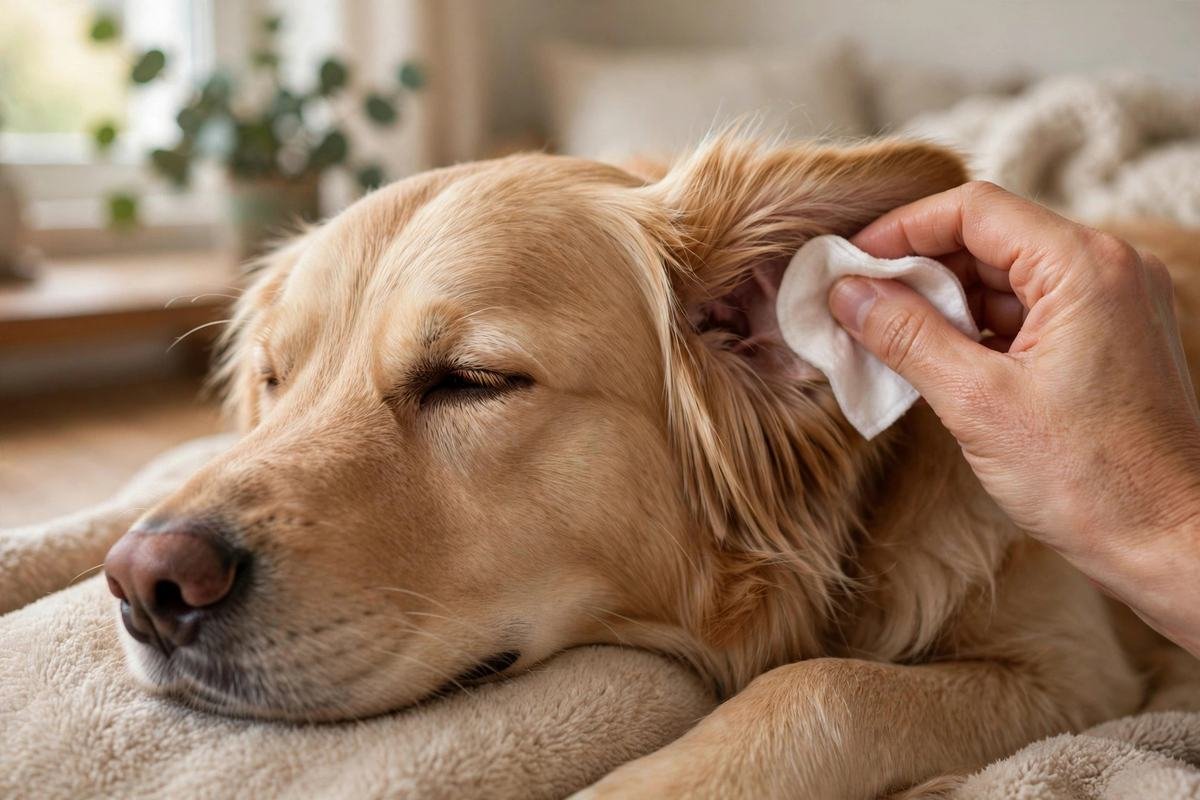
The method below follows the same three moves described in Cornell University College of Veterinary Medicine’s guide to cleaning your dog’s ears: fill, massage, wipe. Work through both ears one at a time.
- Minute 0 to 1: Settle. Sit beside your dog, towel on your lap, cleaner open, treat for sitting. A calm start decides the session.
- Minute 1 to 2: Lift and inspect. Gently lift the flap upright to expose the canal. Run the decoder above; if you spot a warning sign, stop here.
- Minute 2 to 3: Fill. Squeeze solution into the canal, enough to fill without flooding. Keep the tip shallow and never touching the ear. If the dog hates liquid going in, saturate a cotton ball and hold it at the opening.

- Minute 3 to 4: Massage. With the flap lifted, massage the base for about 30 seconds. You will hear a squishing sound as the solution loosens debris. Most dogs enjoy this part.
- Minute 4 to 5: Shake and wipe. Let the dog shake (towel ready), then wipe inside-out with a cotton pad, only as far as your finger easily reaches. Repeat with fresh pads until one comes back clean.
- Minute 5 to 7: Second ear, then celebrate. Repeat on the other ear, then praise and treat generously. The dog that remembers a reward sits still next time.
| Phase | Time | Focus |
|---|---|---|
| Settle | 0:00 to 1:00 | Supplies ready, dog calm, treat for sitting |
| Ear one | 1:00 to 3:30 | Inspect, fill, massage, wipe |
| Ear two | 3:30 to 6:00 | Same steps, fresh cotton pads |
| Reward | 6:00 to 7:00 | Praise, treat, quick note of what you saw |
Jot down what each ear looked like. Over months, that tiny log shows whether wax is building or one ear always runs dirtier.
Stop and Call the Vet: Warning Signs
Do not clean if you see any of these: pain or yelping when the ear is touched, a strong or foul odor, yellow or green pus-like discharge, bleeding, swelling of the flap or canal, or a head tilt. Cleaning an infected or injured ear can hurt your dog and make diagnosis harder. Call your vet instead.
These signs mean the problem is deeper than home cleaning can reach. Your vet can check the eardrum and prescribe treatment, which home cleaning can never replace.
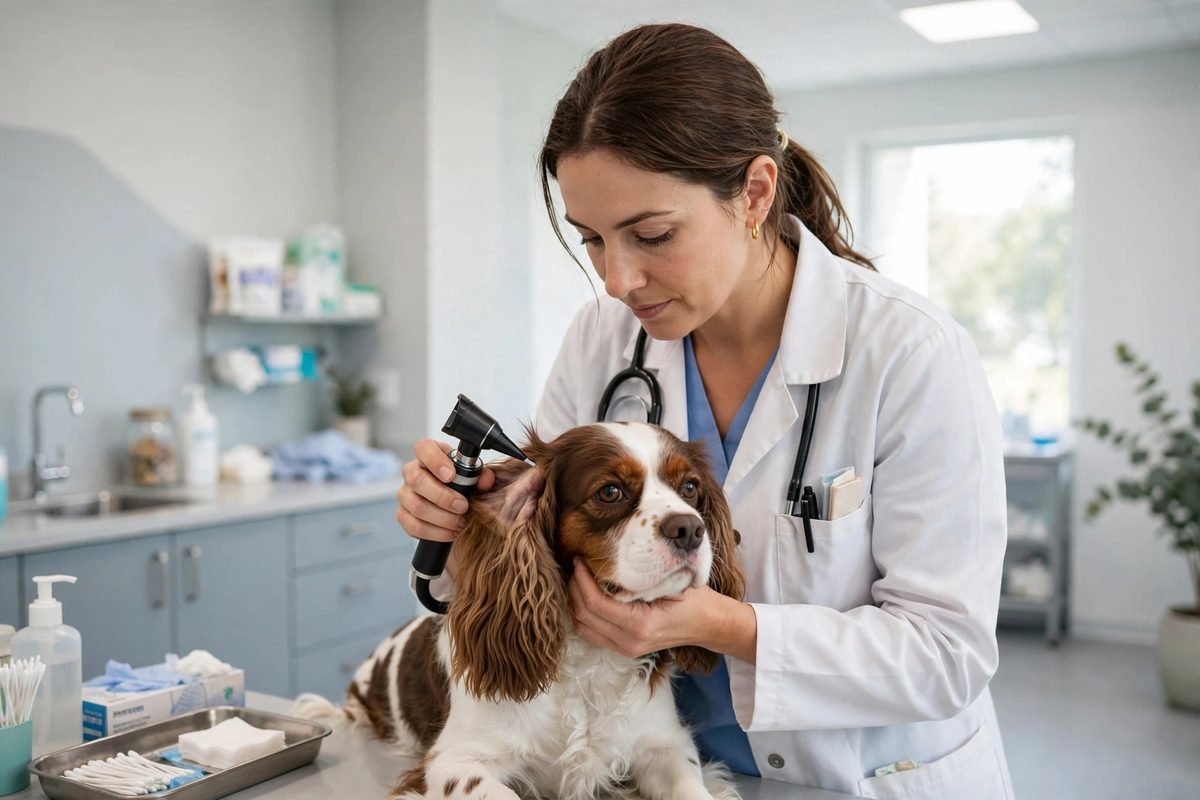
Also stop mid-routine if your dog suddenly flinches. A dog that was fine last time and now shows pain has told you something changed. End kindly with a treat and book the appointment.
How Often Should You Clean Dog Ears?
For healthy ears, less is more. Clean only when you see dirt or debris, since overcleaning can irritate the canal. A look every week or two is plenty for most dogs.
Dogs with floppy ears, allergies, or past infections may need cleaning every 1 to 2 weeks. After swimming or bathing, clean once the ears are wet, because trapped moisture invites infection.

Related Guides
- Why Is My Dog So Itchy? 10 Causes and What Actually Helps
- How to Trim Dog Nails Without Fear
Frequently Asked Questions
How often should I clean my dog’s ears?
Healthy ears: clean only when you see dirt; a look every week or two is enough. Floppy ears, allergies, or past infections: every 1 to 2 weeks. Always clean after swimming or bathing.
Can I use water or a homemade solution instead of ear cleaner?
Water alone does not dry well, and moisture is part of the problem. Avoid alcohol and hydrogen peroxide, which irritate the canal. Use a solution made for dogs, and ask your vet which type fits routine cleaning.
Are cotton swabs safe for dog ears?
No. One rule of how to clean dog ears safely is knowing what not to use: cotton swabs push debris deeper and can injure the canal or eardrum. Cotton balls or pads only, wiped just as far as your finger easily reaches.
Why do my dog’s ears smell bad even after cleaning?
Odor that survives cleaning usually means infection or yeast that cleaning cannot fix. If odor, discharge, or redness persists, book a vet visit instead of cleaning again.
Should I clean my dog’s ears before or after a bath?
After. Bath water sitting in the canal is exactly the moisture that causes trouble in floppy ears. Make ear cleaning the last step of bath day.
My dog hates ear cleaning. What should I do?
Build tolerance gradually: touch and lift ears during calm moments, reward generously, and keep early sessions under two minutes. Never pin the dog down. If fear is extreme, ask your vet to demonstrate in the clinic.
This guide is for informational purposes and doesn’t replace professional veterinary advice.