

Introduction
You brought your cat home. They sniffed the room, looked at you once, and vanished behind the sofa. You sat on the floor, hand stretched out, waiting. Then out of nowhere they walked over, pressed their head against your palm, and something shifted. That is the moment every cat owner knows. And that is exactly the moment your real responsibility begins.
Did you know that millions of cat owners still wing it when it comes to the basics? The truth is, knowing how to take care of a cat properly makes a bigger difference than most people realize not just for your cat’s health, but for your peace of mind too.
Cats may have a reputation for independence, but they depend on you far more than they let on. They need balanced nutrition, a clean environment, regular veterinary care, mental stimulation, and genuine affection. Miss any one of these, and even a seemingly healthy cat can develop serious problems over time.
In this guide, you’ll learn:
- Exactly what your cat needs to eat, and how often
- How to set up litter boxes, grooming routines, and a safe indoor space
- What veterinary care looks like and what it actually costs
- How to read your cat’s behavior and meet their emotional needs
- A practical cat care checklist you can follow from day one
Whether you’re a first-time owner or you’ve had cats for years and want to do better, this is the most complete, honest cat care guide you’ll find.

Table of Contents
- Cat Care Basics: What Every Owner Needs to Know First
- How to Feed Your Cat the Right Way
- Litter Box Maintenance and House Cat Hygiene
- Cat Grooming and Physical Health
- Veterinary Care and Cat Health
- Indoor Cat Care and Enrichment
- Understanding Cat Behavior
- Conclusion
- FAQ: People Also Ask
Cat Care Basics: What Every Owner Needs to Know First

Cat care basics means giving your cat everything they need to feel safe, healthy, and mentally engaged starting before they even walk through your door.
Before you bring a cat home, your environment matters as much as your intentions. Cats are territorial animals. A new space can feel overwhelming and even threatening to them, especially if they’re a kitten or a rescue from a shelter. Setting things up thoughtfully from the start reduces stress for both of you.
What You Need Before Day One
Every new cat owner should have these essentials ready:
- A litter box (at least one per cat, plus one extra)
- Food and water bowls stainless steel or ceramic, not plastic
- High-quality cat food appropriate for the cat’s age
- A scratching post (non-negotiable cats scratch to maintain their claws and mark territory)
- A carrier for vet visits and emergencies
- Toys for mental and physical stimulation
- A bed or cozy hideaway where your cat can feel safe
If you are still in the planning stage and wondering exactly what to get before bringing a cat home, our detailed guide on what you need to adopt a cat covers every supply, home preparation step, and first-year cost so nothing catches you off guard on day one.
How to Feed Your Cat the Right Way

Proper cat nutrition means feeding a complete, balanced diet that matches your cat’s life stage kitten, adult, or senior in appropriate portions, consistently.
Nutrition is the single most important pillar of cat care. Get this right, and you eliminate a huge percentage of common health problems before they start.
Understanding What Cats Actually Need
Cats are obligate carnivores. Unlike dogs or humans, they cannot thrive on a plant-based diet. Their bodies require animal protein to function, and they depend on specific nutrients like taurine and arachidonic acid that only come from animal tissue. A diet that’s too heavy in carbohydrates can contribute to obesity, diabetes, and urinary issues over time.
When choosing cat food, always look for:
- A nutritional adequacy statement on the label this confirms the food is complete and balanced
- A named protein source as the first ingredient chicken, salmon, or turkey rather than vague “meat by-products”
- Age-appropriate formulation kitten, adult, or senior
Wet Food vs. Dry Food: What the Research Says

| Factor | Wet Food | Dry Food |
| Moisture content | 70–80% | 6–10% |
| Protein content | Generally higher | Variable |
| Urinary health | Better hydration | Higher risk of issues |
| Dental health | Neutral | Slight mechanical benefit |
| Cost | Higher | Lower |
| Convenience | Requires refrigeration after opening | Easy to leave out |
| Best for | Most cats, especially prone to UTIs | Free-feeding cats, budget-conscious owners |
Most veterinarians recommend a combination of wet food as the primary meal with dry food as a supplement or occasional snack. Wet food keeps cats better hydrated, which is especially important because cats have a naturally low thirst drive and often don’t drink enough water on their own.
How Often Should You Feed Your Cat?
Adult cats generally do well with two meals per day morning and evening. Kittens under six months need three to four smaller meals daily because they’re growing fast and their blood sugar drops quickly between meals. Free-feeding leaves dry food out all day and works for some cats but often leads to overeating and weight gain over time.
Portion Sizes and Weight Management
Obesity is one of the most overlooked problems in cat care. Research consistently shows that over 60% of cats are overweight or obese and most owners don’t recognize it. An overweight cat is at higher risk for diabetes, joint disease, and shortened lifespan.
You should be able to feel but not see your cat’s ribs. If you can’t feel them at all, your cat is likely overweight. Consult your vet for a personalized feeding plan.
Litter Box Maintenance and House Cat Hygiene
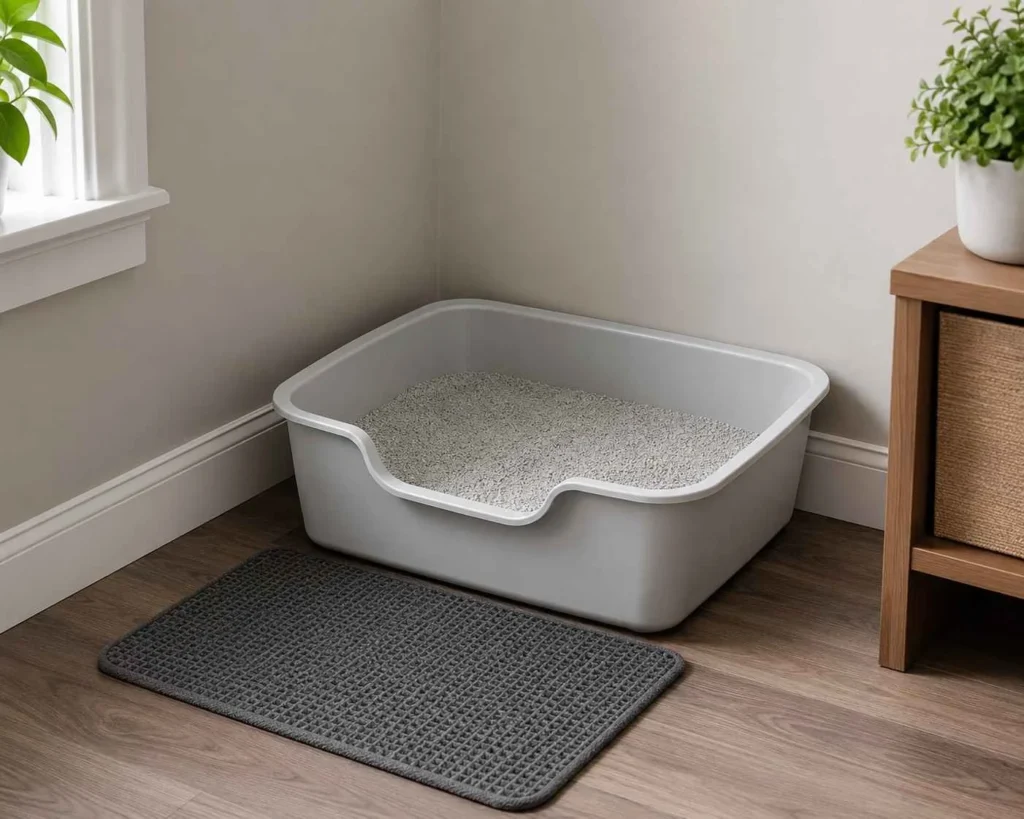
Litter box maintenance means scooping daily, doing a full litter change weekly, and providing enough boxes in the right locations so your cat always has a clean, accessible place to go.
This is the part of cat ownership people most underestimate. Litter box problems are the number one behavioral reason cats end up in shelters. The good news? Almost all litter box issues are preventable with the right setup.
The Golden Rules of Litter Box Setup
How many boxes do you need?
Follow the n+1 rule: one litter box per cat in the household, plus one extra. If you have one cat, you need two boxes. Two cats means three boxes. This ensures there’s always a clean option available.
Where should the boxes go?
Place them in quiet, low-traffic areas where your cat can use them without feeling watched or trapped. Never put a litter box next to the food and water bowls cats instinctively avoid eliminating near their feeding areas.
What type of litter?
| Litter Type | Pros | Cons |
| Clumping clay | Easy to scoop, widely available | Dusty, heavier |
| Crystal/silica | Excellent odor control, low dust | More expensive |
| Natural/plant-based | Eco-friendly, biodegradable | Variable odor control |
| Non-clumping clay | Budget-friendly | Harder to clean thoroughly |
Most cats prefer unscented clumping litter. Strongly scented litters may smell fresh to you but can actually deter your cat from using the box at all.
Daily and Weekly Cleaning Routine
- Daily: Scoop solid waste and clumps at least once per day twice is even better
- Weekly: Do a full litter change, washing the box with warm water and mild, fragrance-free soap
- Every 1–2 years: Replace the plastic box itself scratches harbor bacteria and odors that cleaning can’t fully remove
If your cat stops using the litter box suddenly, don’t assume it’s a behavioral problem. Litter box avoidance is frequently a sign of a urinary tract infection, kidney issue, or pain. A vet visit should be your first step.
Cat Grooming and Physical Health
Cat grooming involves regular brushing, nail trimming, ear checks, and dental care all of which directly impact your cat’s overall health, not just their appearance.
Cats are meticulous self-groomers, but that doesn’t mean they don’t need your help. Regular grooming sessions give you an opportunity to check for lumps, skin irritations, ear problems, and other early signs of illness.
For a full step-by-step breakdown of brushing technique, nail trimming, ear cleaning, and dental care by coat type, see our dedicated guide on how to groom a cat it covers everything from first-time grooming sessions to handling cats that resist the process.
Veterinary Care and Cat Health

Proper cat health care means scheduling annual wellness exams, staying current on vaccinations, using preventive parasite control, and having a plan for unexpected emergencies.
Veterinary care costs have been rising faster than general inflation. For cats, annual care costs range from $760 to $3,495, with an estimated lifetime cost of approximately $32,170 over 16 years. Preventive care is always cheaper than treating illness that’s been allowed to progress.
Routine Veterinary Schedule
| Life Stage | Frequency | What’s Covered |
| Kitten (under 1 year) | Every 3–4 weeks until 16 weeks, then annually | Core vaccines, deworming, spay/neuter discussion, microchipping |
| Adult (1–10 years) | Once per year | Wellness exam, vaccines, parasite screening, dental check |
| Senior (10+ years) | Every 6 months | All of the above, plus bloodwork, blood pressure, thyroid |
A basic vet exam typically costs between $50 and $150, while a full routine visit often totals between $70 and $250 once vaccines and tests are added. Emergency visits can start around $150 and climb well above $1,000.
Core Vaccines Every Cat Needs
The FVRCP combination protects against feline viral rhinotracheitis, calicivirus, and panleukopenia. Rabies vaccination is required by law in most states. Your vet will advise on any additional vaccines based on your cat’s specific lifestyle and local risk factors.
Spaying and Neutering
Spaying or neutering your cat is one of the most important decisions you’ll make as an owner. Beyond preventing unplanned litter, it reduces the risk of certain cancers, lowers roaming and spraying behavior, and generally contributes to a longer life. Most veterinarians recommend the procedure between four and six months of age.
Parasite Prevention
Indoor cats can still get parasites, fleas hitchhike inside on shoes and clothing, and mosquitoes that enter the home can transmit heartworm. Year-round parasite prevention is recommended by veterinary professionals for all cats, regardless of whether they go outdoors.
Building an Emergency Fund or Getting Pet Insurance
Studies show that a significant portion of pet owners lack confidence in their ability to afford an unexpected medical emergency. Pet insurance premiums for cats are generally affordable, and comprehensive coverage can save thousands when something serious happens. Alternatively, setting aside $50 to $100 per month in a dedicated emergency fund builds a practical safety net without monthly premiums.
Indoor Cat Care and Enrichment
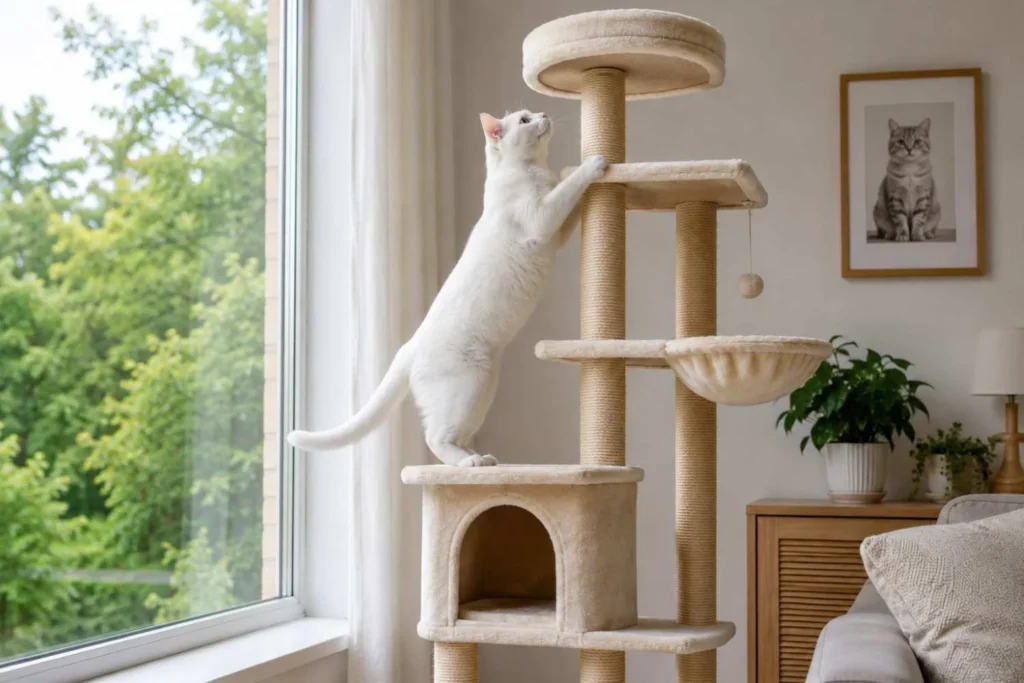
Indoor cat care goes beyond physical needs; it means creating an environment where your cat can express natural behaviors, feel mentally stimulated, and stay physically active every single day.
One of the most common mistakes indoor cat owners make is assuming that a safe, comfortable home is automatically an enriching one. Safety matters, but a bored cat is an unhappy cat and an unhappy cat is often a destructive or anxious one.
Why Indoor Cats Need Active Enrichment
Indoor cats live longer, healthier lives than outdoor cats on average. But without intentional enrichment, they can develop anxiety, obesity from inactivity, destructive habits, and depression-like withdrawal.
Creating an Enriched Indoor Environment
Vertical space: Cat trees, wall-mounted shelves, and window perches give your cat territory to survey and places to retreat. A cat that can climb is a cat that feels safe.
Window access: Even indoor-only cats love to watch the world outside. A bird feeder placed near a window creates hours of natural entertainment. Make sure any open windows have secure, pet-resistant screens.
Scratching posts: Every cat needs appropriate surfaces to scratch. Offering both vertical posts for stretching and horizontal scratching pads many cats prefer scratching at floor level.
Rotation of toys: Cats lose interest in toys quickly. Rotate them every few days to keep the novelty high. Interactive toys, wand toys, puzzle feeders, and battery-operated moving toys engage instincts far better than passive toys.
Daily Exercise and Play
Cats need at least two 10 to 15 minute interactive play sessions per day. This isn’t a luxury, it’s a health requirement. Play mimics hunting, which is fundamental to how cats experience their world. End each session with a small treat or feeding so the hunt cycle feels complete and satisfying.
Understanding Cat Behavior

Cat behavior tips start with learning your cat’s communication style because cats don’t vocalize their needs the way dogs do, and missing the signs can mean missing serious problems.
Reading Body Language
| Signal | Meaning |
| Slow blink | Trust, affection “I’m comfortable with you” |
| Tail held high | Confidence, happiness |
| Puffed tail | Fear or aggression |
| Flattened ears | Stress, fear, or warning |
| Exposed belly | Trust but not always an invitation to touch |
| Dilated pupils in normal light | Excitement, fear, or overstimulation |
Common Behavioral Issues and What They Mean
Scratching furniture: Normal cat behavior not spite. Provide appropriate scratching surfaces and use positive reinforcement when your cat uses them.
Excessive meowing: Can indicate hunger, boredom, pain, or in older cats, cognitive changes. A sudden increase in vocalization warrants a vet check.
Hiding: Occasional hiding is normal. Extended hiding combined with other changes often signals illness or significant stress.
Aggression: Usually rooted in fear, pain, or overstimulation. Never punish a cat for aggression; it escalates the problem. Identify the trigger and address it calmly.
Conclusion
Learning how to take care of a cat properly isn’t complicated, but it does require intention. The cats that thrive aren’t necessarily the ones with the most toys or the fanciest food, they’re the ones whose owners pay attention, stay consistent, and treat them as the living creatures they are, not decorative pets that take care of themselves.
Three key takeaways to carry with you:
- Nutrition and vet care are non-negotiable. Everything else is built on these foundations. Get them right from the start, and you prevent most of the health and behavioral problems that overwhelm new cat owners.
- Enrichment is as important as food and water for indoor cats. A bored cat develops problems. A stimulated cat thrives.
- Your cat is always communicating. Learning to read their signals is the single most powerful thing you can do to deepen your bond and catch health issues early.
Start with the routines in this guide, build them one week at a time, and don’t hesitate to call your vet when something doesn’t feel right. Proper cat care is one of the most rewarding responsibilities there is and with the right knowledge, you’re already ahead of most.
FAQ: People Also Ask
Is taking care of a cat hard?
Taking care of a cat is manageable for most people, but it does require consistency. Daily feeding, litter box cleaning, and some playtime are the main daily tasks. The learning curve is steepest in the first few months while you’re establishing routines and understanding your specific cat’s personality and needs.
What do cats need to be happy?
Cats need five core things to be happy: a complete and balanced diet, fresh water, a clean litter box, regular veterinary care, and mental stimulation through play and enrichment. Social connection with their owner also matters significantly, even for cats that seem aloof.
How do I properly take care of an indoor cat?
Indoor cat care involves the same fundamentals as all cat care nutrition, hygiene, vet visits, grooming but with extra attention to enrichment. Indoor cats need vertical space, regular interactive play, window access, and rotating toys to stay mentally healthy and physically active.
How often should I take my cat to the vet?
Adult cats should see a veterinarian once per year for a wellness exam. Kittens need visits every three to four weeks until they’ve completed their vaccine series. Senior cats aged ten and older benefit from checkups every six months because age-related conditions like kidney disease, hyperthyroidism, and arthritis can develop and progress quickly.
What does a proper cat care routine look like each day?
A solid daily cat care routine includes: fresh water and at least two meals, one to two litter box scooping sessions, at least 15 to 20 minutes of interactive play, and a brief visual health check watching for changes in appetite, energy, or behavior. Weekly tasks include brushing and a quick physical check of eyes, ears, and coat.
How much does it cost to take care of a cat per year?
Annual cat care costs typically range from $940 to $4,300, depending on food quality, health status, and whether unexpected medical events occur. Budget at minimum for food, litter, annual vet visits, and a small emergency fund.
Can cats stay alone all day while I’m at work?
Yes, adult cats can handle being alone during a standard workday. However, they should not be left alone beyond 24 hours without someone checking in. If you’re regularly away for long hours, enrichment tools, puzzle feeders, window perches, and rotating toys or a second cat for companionship help significantly.
What are the signs that my cat is sick and needs a vet?
See a vet promptly if your cat shows: sudden changes in appetite or water consumption, lethargy or hiding lasting more than a day, vomiting or diarrhea more than once or twice, difficulty urinating or crying in the litter box, sneezing or eye and nose discharge, or unexplained weight loss. Cats are skilled at hiding illness, so trust your instincts when something feels off.