

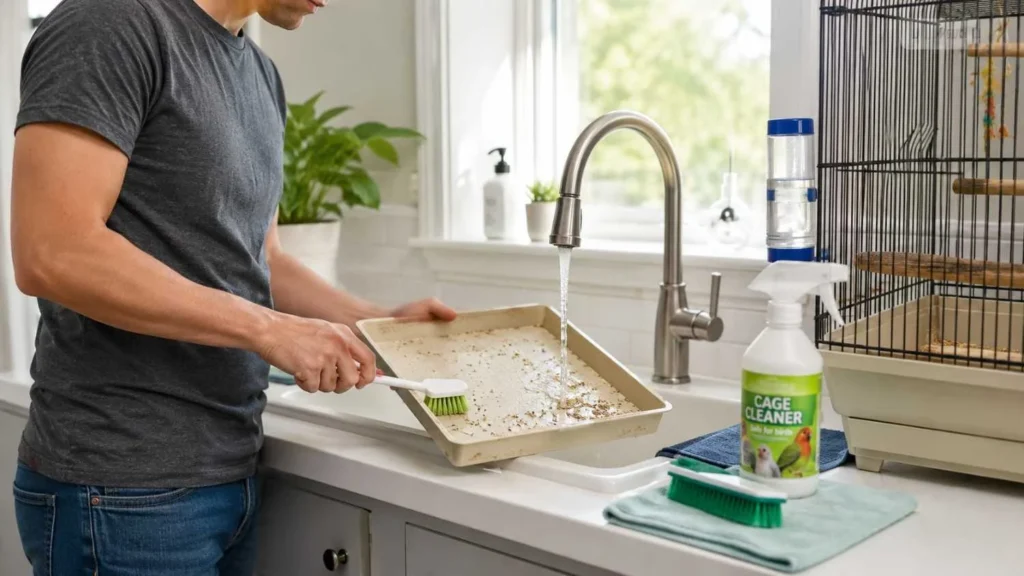
A cage that “looks clean” can still be one of the biggest hidden health risks in a bird’s home, droppings residue and stale food build up bacteria long before anything looks visibly dirty. Knowing how to clean bird cage setups properly, on a real schedule rather than “whenever it looks bad,” is one of the simplest habits that prevents avoidable vet visits.
This guide walks through exactly what to clean, how often, and in what order, a routine you can actually stick to, not a one time deep clean that fades into “I’ll do it this weekend.” If you’re specifically looking for disinfectant products and sanitizing chemistry, that’s a narrower topic worth its own guide; this one focuses on the day to day and week to week routine that keeps a cage genuinely clean.
In this guide, you’ll learn:
- How often to clean a bird cage, daily, weekly, and monthly
- The exact daily cage cleaning routine, step by step
- A full weekly deep clean checklist
- How to clean a used bird cage before bringing a new bird home
- How to manage a cleaning schedule across multiple birds
- The warning signs that mean a cage needs cleaning right now
Key Takeaways:
- Daily cleaning takes most owners under 10 minutes and prevents 90% of buildup
- Droppings trays and water bowls are the two highest priority daily items
- A proper weekly deep clean should take 20 to 40 minutes depending on cage size
- Used or secondhand cages need a full clean before any bird moves in
- A visible smell or sticky residue means cleaning is already overdue, not upcoming
Let’s start with what cleaning a bird cage actually covers.
Table of Contents
- What Cleaning a Bird Cage Actually Involves
- How Often Should You Clean a Bird Cage?
- Daily Bird Cage Cleaning Routine
- Weekly Deep Clean Checklist
- How to Clean a Used Bird Cage Before a New Bird
- Cleaning Schedule for Multiple Birds
- Signs Your Cage Needs Cleaning Now
- Cage Cleaning Tools Needed
- Frequently Asked Questions
What Cleaning a Bird Cage Actually Involves
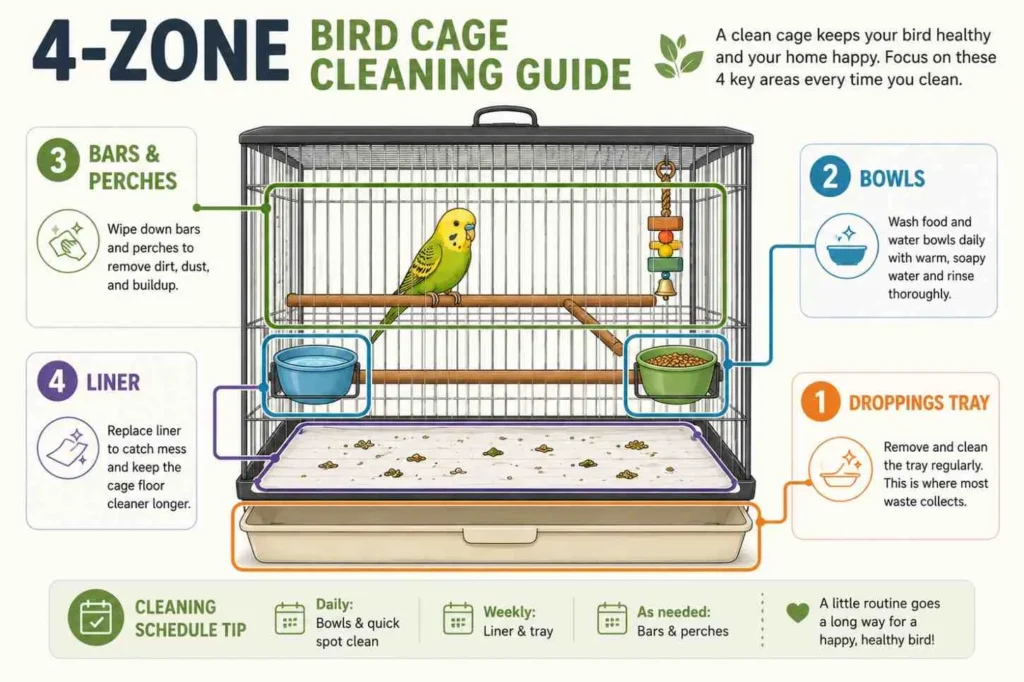
How to clean bird cage properly is defined as a layered routine, daily spot cleaning, weekly deep cleaning, and monthly full resets, rather than a single cleaning method. Each layer targets a different kind of buildup, from fresh droppings to residue that accumulates over weeks.
Bird cage cleaning routine basics fall into four zones: the droppings tray, food and water bowls, cage bars and perches, and the cage liner. Treating these as separate tasks with separate frequencies, The 4 Zone Cage Cleaning Method, makes the whole routine faster and easier to stay consistent with than trying to “clean the cage” as one vague task. Following safe bird cage cleaning steps in this order is also how you learn how to clean a bird cage properly without missing the spots that matter most.
How Often Should You Clean a Bird Cage?
How often to clean bird cage setups depends on the task, not a single blanket answer. Daily vs weekly cage cleaning breaks down like this:
- Daily, Droppings tray, food bowl, water bowl
- Weekly, Perches, cage bars, cage liner, floor grate
- Monthly, Full deep clean, including corners, toy attachments, and anything with buildup daily wiping misses
Learning how to deep clean a bird cage properly means treating the monthly session as a full reset rather than a bigger version of the weekly clean, it’s the one pass where every removable part comes out. A deep clean bird cage monthly habit catches the buildup that both daily and weekly cleaning tend to miss around joints, corners, and toy attachment points.
How often clean bird cage setups with multiple birds or larger species is worth adjusting upward, more birds means more droppings and food debris, so daily tasks may need a midday touch up rather than a single pass.
Daily Bird Cage Cleaning Routine
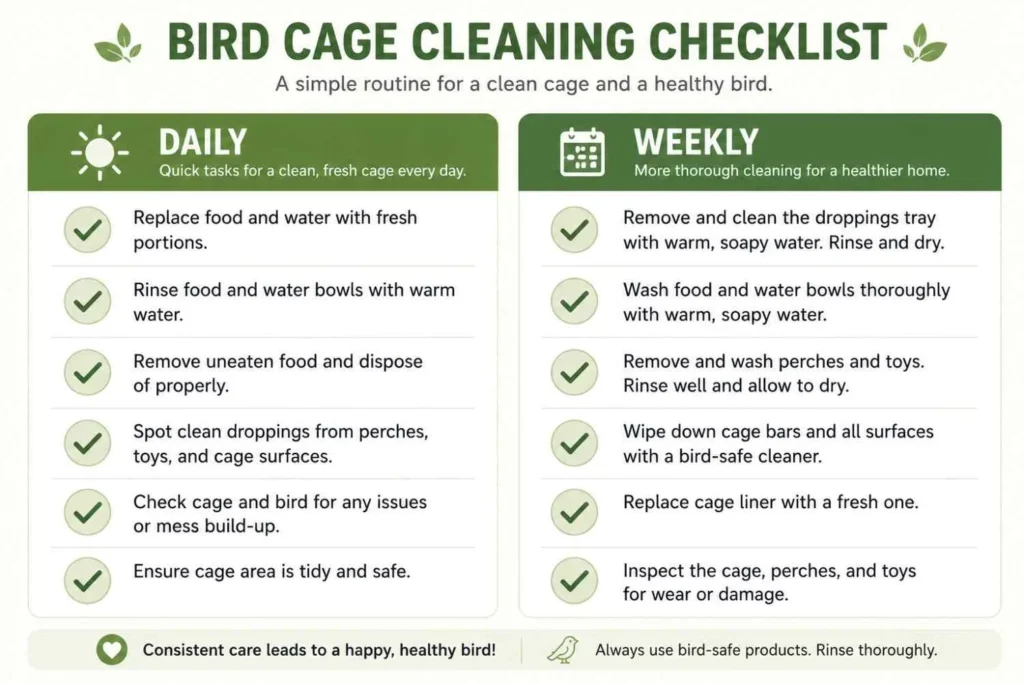
How to clean a bird cage on a daily basis, step by step:
- Remove and rinse the droppings tray, Empty, rinse with hot water, and reline before placing it back; consistent droppings tray cleaning is the single highest impact daily habit
- Wash food and water bowls, Hot water and a mild dish soap; rinse thoroughly to remove all residue, since cleaning food and water bowls daily is what most directly affects a bird’s health
- Wipe down the cage floor, A quick wipe of the grate or floor area to catch loose debris and scattered food
- Spot check perches and bars, Wipe any visible droppings from perches the bird uses most, since these get the heaviest use
Pro Tip: Keep a second set of clean bowls ready to swap in daily. Swapping instead of washing in place means the bird always has fresh dishes waiting, and you can wash the used set on your own schedule instead of rushing it.
Real world example: A first time budgie owner who cleaned the cage only “when it looked dirty” noticed a persistent sour smell and occasional bacterial looking film on the water bowl. Switching to a daily bowl and tray routine, under five minutes each morning, eliminated both within a week, with no other changes made.
Weekly Deep Clean Checklist
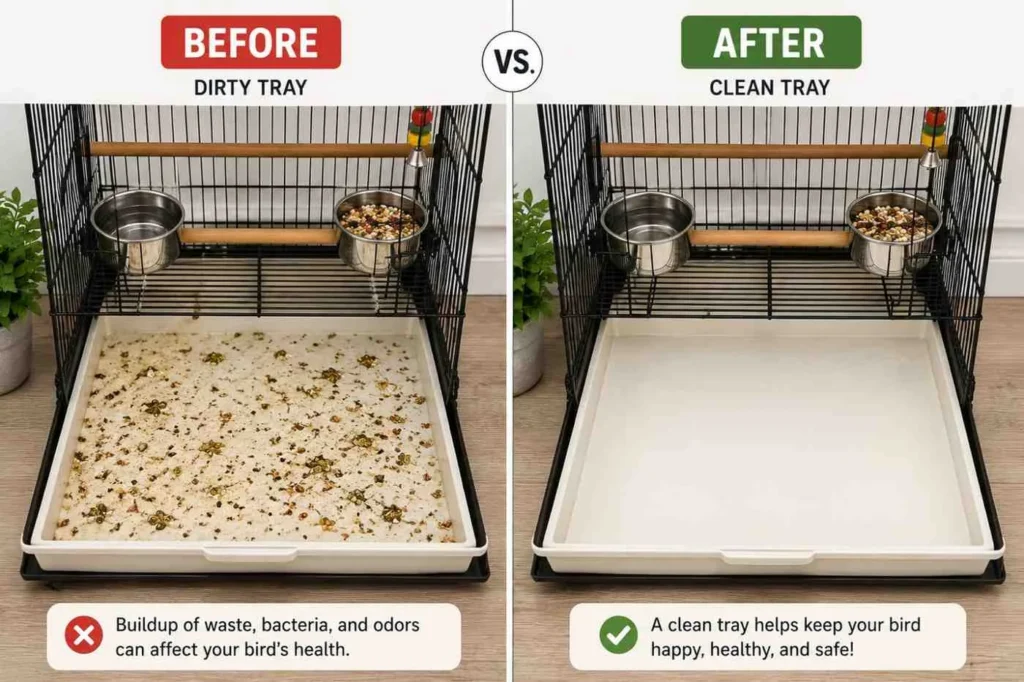
A proper cage cleaning checklist for the weekly deep clean:
- Remove and wash all perches with hot water and a mild, bird safe cleaner
- Wipe down all cage bars, focusing on cleaning bird cage bars where droppings tend to dry and stick
- Replace the cage liner completely, this is the core of any cage liner replacement guide
- Wash toys and any chewable accessories showing buildup
- Wipe the outside of the cage and surrounding floor area
How long does cage cleaning take for a proper weekly session? Most owners report 20 to 40 minutes for a standard single bird cage, depending on cage size and how quickly droppings and debris have accumulated that week.
Cage cleaning is one part of a bird’s full daily and weekly routine, for the complete picture on feeding, sleep, supplies, and bonding, see the [ Pet Bird Care Guide ].
How to Clean a Used Bird Cage Before a New Bird
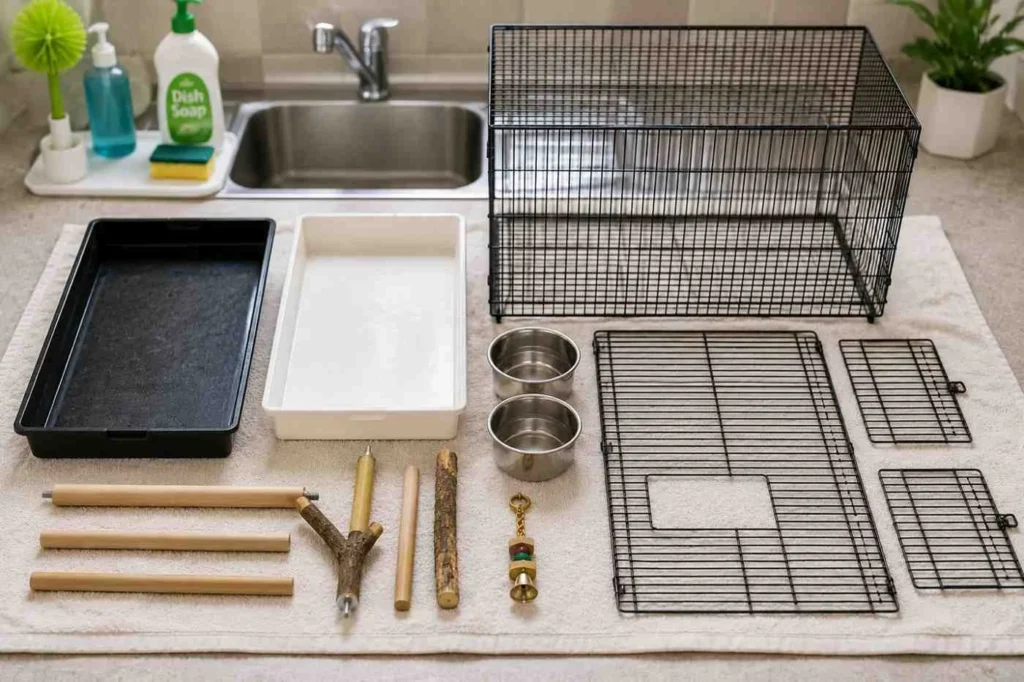
How to clean a used bird cage before it houses a new bird is a more thorough process than routine maintenance, since a secondhand or previously used cage may carry residue or organisms from its last occupant.
- Disassemble everything removable, Trays, perches, grates, and any attachments come out first
- Wash every surface thoroughly, Hot water and a mild cleaner on bars, tray, and all removable parts
- Let everything fully air dry, Trapped moisture in corners or seams can encourage bacterial growth before the bird even moves in
- Reassemble with fresh liner and clean bowls, Start the new bird off with a completely reset setup
This full reset matters most for cage cleaning before new bird arrival, secondhand cage purchases, or after a previous bird’s illness, situations where a standard weekly clean isn’t thorough enough on its own.
Cleaning Schedule for Multiple Birds
Cleaning schedule for multiple birds needs slightly more structure than a single cage routine, mostly because daily tasks scale directly with bird count.
How to clean my bird cage setup when there are two or more birds:
- Stagger tray and bowl cleaning across the day if birds are messier eaters, rather than one single daily pass
- Keep each cage’s cleaning supplies separate where possible, especially during any illness in one bird
- Rotate the weekly deep clean across cages on different days rather than doing all cages the same day, so the workload doesn’t pile up
Expert Insight: With three or more birds, a fixed day of week deep clean rotation (Cage 1 on Monday, Cage 2 on Wednesday, and so on) tends to hold up far better long term than trying to deep clean everything in one session.
Signs Your Cage Needs Cleaning Now
Signs cage needs cleaning immediately, rather than waiting for the next scheduled session:
- A noticeable smell, Any odor beyond a faint, fresh scent means buildup has already progressed
- Sticky or crusted residue on bars, perches, or the tray
- Visible mold or discoloration anywhere in the cage, especially around water sources
- A sudden increase in droppings volume or mess that outpaces the current cleaning frequency
Quotable insight: a clean looking cage isn’t the same as a clean cage, most bacterial buildup happens in places that don’t look obviously dirty until it’s already established.
Cage Cleaning Tools Needed
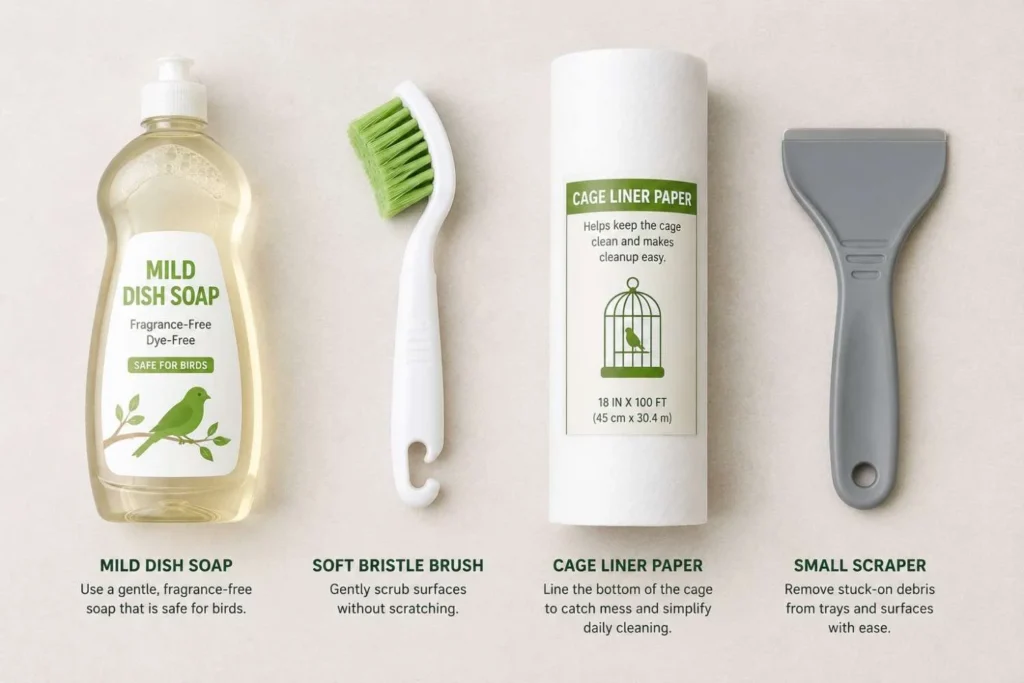
How to Clean Bird Cage: Tools Comparison at a Glance
| Tool | Best For | Frequency Used | Difficulty | Priority |
| Mild dish soap | Bowls, daily wipe downs | Daily | Easy | Essential |
| Soft bristle brush | Bars, perches, corners | Weekly | Easy | Essential |
| Cage liner/paper | Tray relining | Daily | Easy | Essential |
| Scraper or spatula | Dried droppings removal | Weekly | Easy to Moderate | Helpful |
| Bird safe disinfectant spray | Deep monthly clean | Monthly | Moderate | Situational |
Recommendation: The first three tools handle roughly 90% of routine cage cleaning tools needed for a standard weekly and daily rhythm, the disinfectant spray becomes more relevant for monthly deep cleans or after illness, which deserves its own careful, chemical specific approach.
Conclusion
How to clean bird cage setups properly comes down to consistency, not intensity. A daily five minute routine and a weekly 20 to 40 minute deep clean prevent almost all of the buildup that makes cleaning feel like a chore. Skipping the small daily steps is what turns cage cleaning into a dreaded weekend project instead of a quick habit.
Quick Summary:
- Clean droppings trays and bowls daily; deep clean perches, bars, and liner weekly
- A weekly deep clean takes most owners 20 to 40 minutes
- Used or secondhand cages need a full wash and dry reset before a new bird moves in
- Multiple bird households do best with staggered daily tasks and rotated weekly deep cleans
- Smell, residue, or mold are signs cleaning is already overdue, not just due soon
Next steps:
- Set a fixed day of the week for your deep clean and put it on a recurring reminder
- Build the daily tray and bowl habit into your existing morning routine
- If your cage is secondhand or you’re introducing a new bird, do the full reset clean before move in day
Frequently Asked Questions
How often should I clean my bird’s cage?
Clean the droppings tray and bowls daily, do a full perch, bar, and liner clean weekly, and do a complete deep clean monthly. This three layer approach keeps buildup from ever reaching a point where it’s genuinely hard to clean.
How do I clean a bird cage properly?
Start with the droppings tray and bowls daily using hot water and mild soap, then do a weekly deep clean covering perches, bars, and the liner. Consistency matters more than intensity, a quick daily routine prevents most of the buildup a deep clean has to fix.
How long does cage cleaning take each week?
A standard weekly deep clean typically takes 20 to 40 minutes for a single bird cage, depending on size and how much buildup accumulated that week. Daily maintenance usually takes under 10 minutes.
How do I clean a used bird cage before getting a new bird?
Disassemble every removable part, wash thoroughly with hot water and a mild cleaner, let everything fully air dry, then reassemble with a fresh liner and clean bowls. This is more thorough than routine cleaning since a secondhand cage may carry residue from its last occupant.
What tools do I need for bird cage cleaning?
The essentials are mild dish soap, a soft bristle brush, and fresh cage liner, these cover most daily and weekly needs. A scraper for dried droppings and a bird safe disinfectant spray round things out for deeper monthly cleans.
What are the signs a bird cage needs cleaning?
A noticeable smell, sticky or crusted residue on bars or perches, visible mold, or a sudden jump in mess are all signs that cleaning is overdue. A cage that looks fine on the surface can still need attention underneath.
How do I manage cleaning for multiple bird cages?
Stagger daily tasks across the day if needed, keep cleaning supplies separate between cages, and rotate weekly deep cleans across different days instead of doing every cage at once. This keeps the workload manageable as the number of birds grows.
How is cage cleaning different from disinfecting a cage?
Routine cleaning removes droppings, food residue, and everyday buildup using basic soap and water. Disinfecting is a more targeted process using specific bird safe chemical solutions, usually reserved for monthly deep cleans or after illness.