

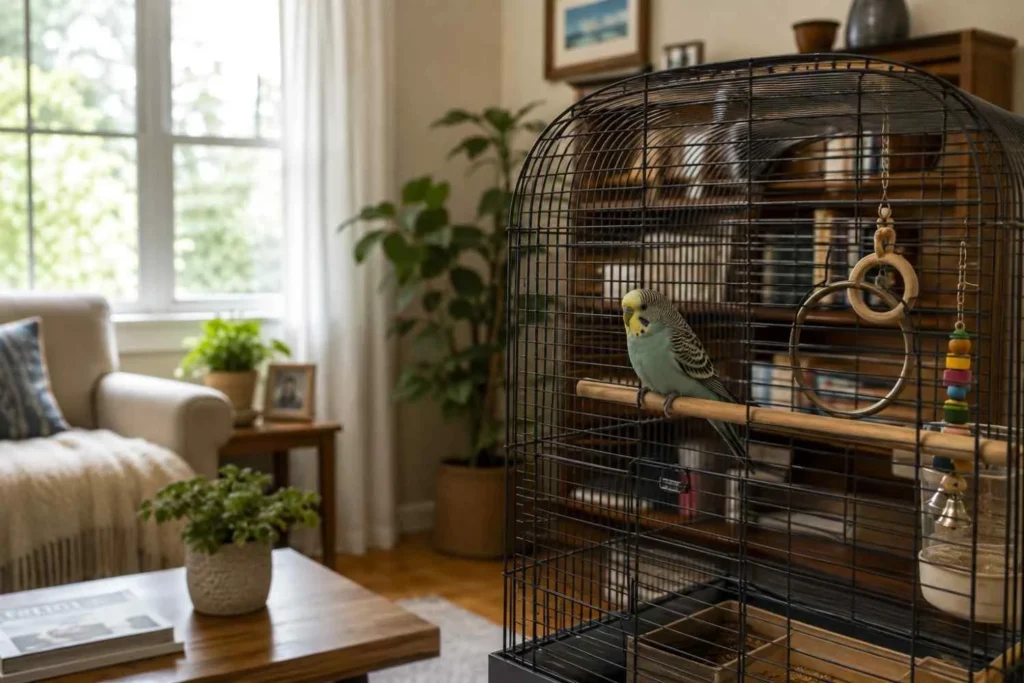
Most new bird owners don’t fail because they don’t love their bird enough. They failed because nobody handed them a pet bird care guide before the cage arrived. A parrot’s screech at 6 a.m., a sudden refusal to eat, feathers scattered across the floor these moments catch first-time owners off guard, and confused owners often make decisions that stress the bird further.
This pet bird care guide walks you through everything a first-time owner actually needs: the daily routine, the supplies worth buying, the mistakes that quietly damage a bird’s trust, and the health signs that mean “call the vet now.” Think of it as both a how to care for a pet bird basic guide for someone still deciding whether to bring one home, and a full how to care for a pet bird guide for someone who already has one. Whether you already have a bird or are still deciding, this first time bird owner guide is built to answer the questions you’ll ask in the first week and the ones you won’t think to ask until month three.
In this guide, you’ll learn:
- How to set up a cage and daily routine a bird actually thrives in
- Which supplies are essential versus which ones are marketing
- How to choose a species that matches a first-time owner’s lifestyle
- The most common beginner mistakes and how to avoid them
- How to bond with a bird without overwhelming it
- The warning signs that mean a vet visit can’t wait
Let’s start with the table of contents, then work through each section in order.
Table of Contents
- What Pet Bird Care Actually Means
- Why Pet Bird Care Matters More Than People Expect
- Choosing the Right Bird Species as a First-Time Owner
- Essential Bird Care Supplies Checklist
- Setting Up a Daily and Weekly Bird Care Schedule
- How to Bond With Your Bird the Right Way
- Common Beginner Bird Care Mistakes to Avoid
- Bird Species Comparison for First-Time Owners
- Health, Hygiene, and When to Call an Avian Vet
- Frequently Asked Questions
What Pet Bird Care Actually Means
Pet bird care is defined as the combination of daily physical care (food, water, cage hygiene), environmental care (cage setup, temperature, safety), and behavioral care (social interaction, mental stimulation) that keeps a companion bird physically healthy and emotionally stable. Learning how to take care of a pet bird properly means understanding all three layers, not just feeding and cleaning.
That third piece behavioral care is the one most beginner guides skip, and it’s the one that determines whether a bird becomes a calm, trusting companion or a stressed, feather-plucking one. Birds are prey animals by instinct. Even a bird bred in captivity for generations still reads sudden movement, loud noise, and unfamiliar hands as potential threats.
A proper pet bird care guide treats the bird as a whole animal, not a decoration that occasionally needs seed. These three pillars are the avian care basics every species shares, regardless of size or temperament:
- Physical care: fresh food and water daily, a clean cage, and regular nail and beak monitoring
- Environmental care: a cage sized and placed correctly, safe temperature range, and no toxic fumes nearby
- Behavioral care: consistent daily interaction, toys that rotate to prevent boredom, and training built on trust rather than force
Why Pet Bird Care Matters More Than People Expect
Birds are one of the few common pets whose owners frequently underestimate the commitment before bringing one home. A goldfish forgives neglect for a day. A dog tells you plainly when something’s wrong. A bird often hides distress until it’s already serious, a survival instinct left over from life in the wild, where showing weakness invites predators.
That’s why things to know before getting a pet bird should include lifespan, not just personality. Small birds like budgerigars typically live 5 to 10 years with good care, cockatiels commonly live 15 to 20 years, and larger parrots such as African greys or macaws can live 40 to 60+ years occasionally outliving their owners. How long do pet birds live is one of the most searched questions among new owners, and the honest answer is: longer than most people plan for.
Pro Tip: Before choosing a species, ask “who will care for this bird in 20 years?” rather than just “which bird looks nice?” It changes the decision for most first-time buyers.
Getting pet bird care for beginners right early also prevents the two most common outcomes of poor early care: chronic stress-related feather plucking and rehoming. Shelters and rescue organizations consistently report that parrots are among the most frequently surrendered pets, usually because new owners underestimated noise, mess, lifespan, or the daily time commitment. The basic bird care tips in this guide are designed to close exactly that gap before it becomes a problem.
Choosing the Right Bird Species as a First-Time Owner
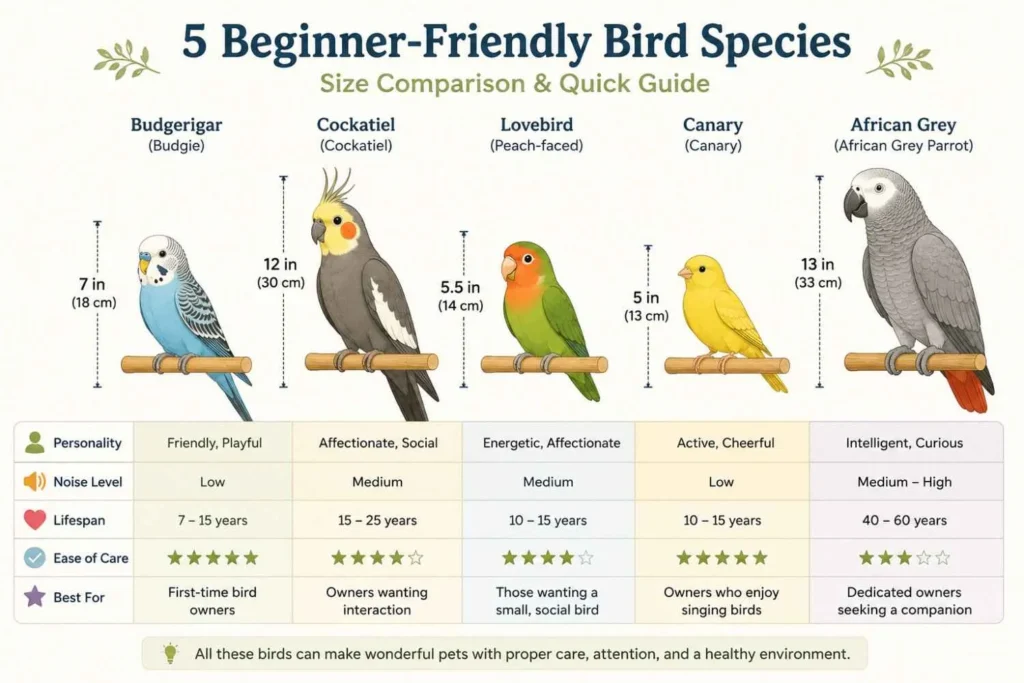
Not every bird suits every household, and this is where most new bird owner checklists fall short; they list supplies but skip the specific decision that everything else depends on.
Budgerigars (Budgies) Best All-Around Starter Bird
Small, social, and relatively quiet compared to larger parrots, budgies are widely considered the most beginner-friendly bird species for first time owners. They’re affordable to keep, don’t need enormous cages, and can learn to talk with patience.
Cockatiels The Gentle Middle Ground
Cockatiels are calmer than budgies in temperament but larger and longer-lived. Their whistling is charming rather than piercing, making them a good fit for apartments where noise is a concern.
Lovebirds Affectionate but Demanding
Lovebirds bond intensely, sometimes to the point of possessiveness, and can nip if under-socialized. They need daily interaction; without it, they’re prone to anxiety-driven behaviors.
Larger Parrots (African Greys, Amazons, Macaws) Not for First-Timers
These species are intelligent enough to require the equivalent daily engagement of a toddler, live for decades, and can be extremely loud. They’re rewarding for experienced owners but overwhelming as a first bird.
Essential Bird Care Supplies Checklist
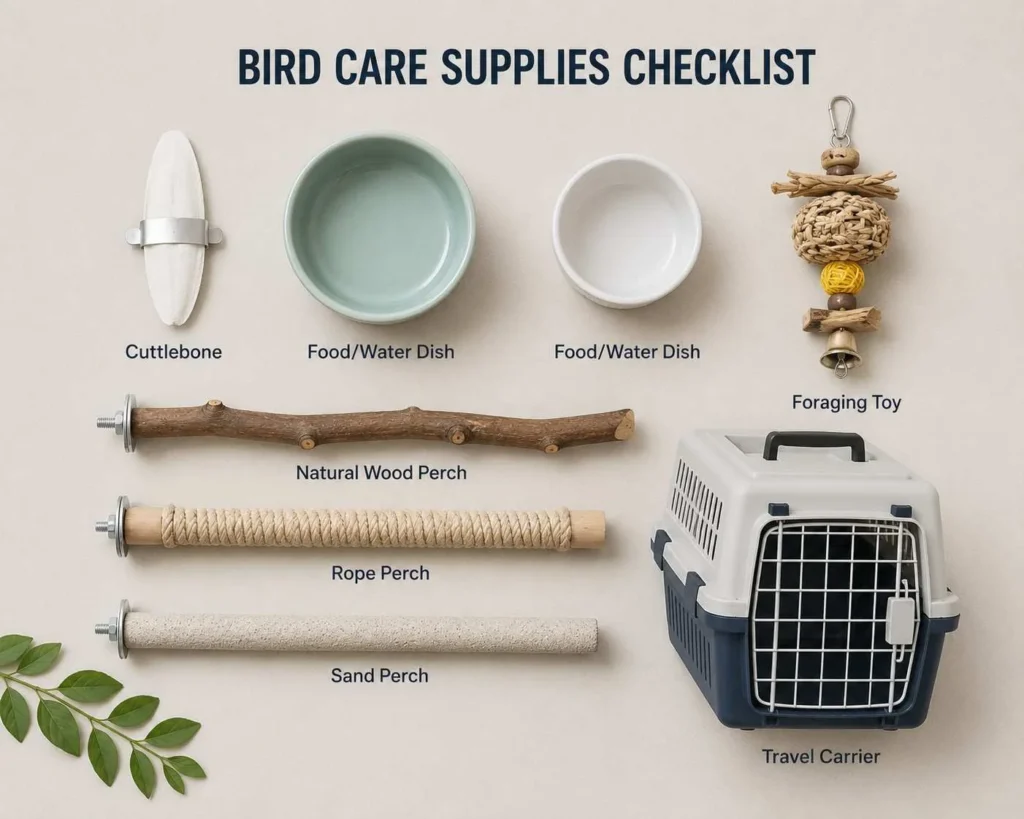
A proper essential bird care supplies list separates what a bird genuinely needs from what pet stores upsell.
The core list every first-time owner needs:
- Cage sized and set up correctly for the species
- Perches a few varied, safe options for foot health
- Food and water dishes at least two of each, positioned away from beneath perches to avoid droppings contamination
- Species-appropriate pellet or seed mix the right base diet varies by species, age, and health status
- Toys chewable, foraging, and puzzle-style toys rotated weekly to prevent boredom
- Cuttlebone or mineral block supports beak health and calcium intake
- Full-spectrum lighting (if the bird’s space lacks natural sunlight) supports vitamin D synthesis
- Travel carrier for vet visits and emergencies
This combination of bird cage bird toys perches essentials covers the physical setup; the daily routine below covers what happens after the cage is set up. Diet also deserves its own deeper look portion sizes, safe fresh foods, and feeding frequency all change by species and age, so see our full breakdown: [ How to Feed Pet Birds at home (Species-by-Species Guide) ].
Setting Up a Daily and Weekly Bird Care Schedule
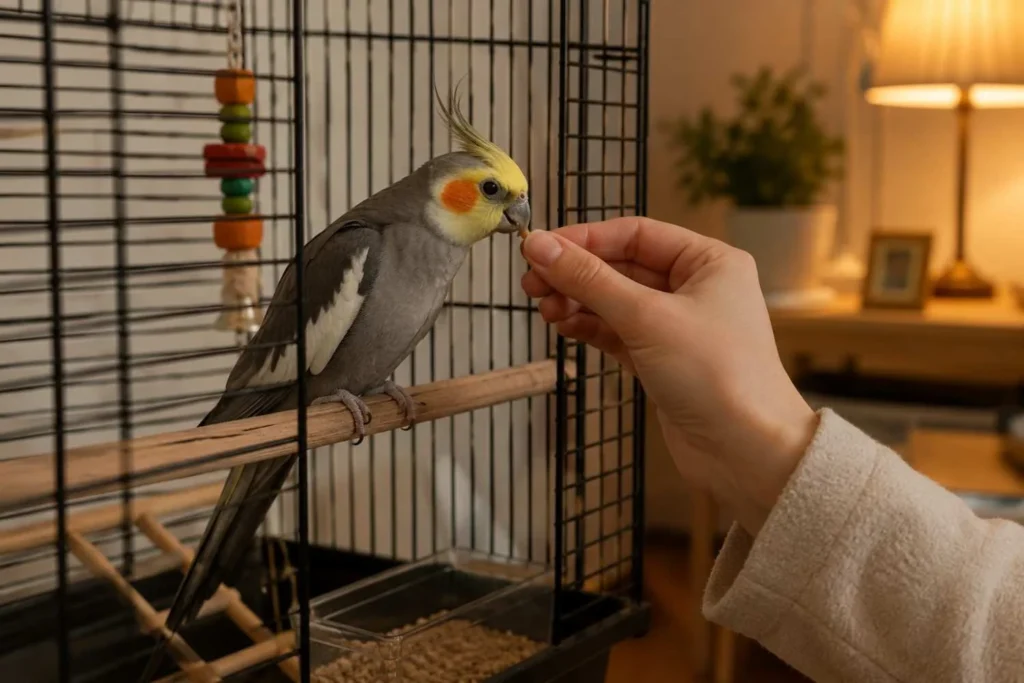
A pet bird’s daily care routine doesn’t need to be complicated, but it does need to be consistent. Birds regulate their sense of safety through predictable patterns.
Daily bird care schedule:
- Morning Replace food and water, remove droppings tray, open curtains or let in natural light
- Midday Offer out-of-cage time in a bird-safe room (30–60 minutes minimum for most species)
- Afternoon Rotate a toy or add a foraging challenge to prevent boredom
- Evening Final food check and wind-down toward a consistent sleep routine
Sleep needs are easy to underestimate, and getting them wrong is a common cause of crankiness and screaming see the full breakdown of hours-by-species and cage-covering routines here: [ How Much Sleep Do Pet Birds Need ].
Weekly bird care schedule:
- Deep-clean food and water dishes with hot water
- Wash perches and remove buildup
- Refresh the cage liner and disinfect the tray
- Trim overgrown nails or beak only if trained or with vet guidance
- Inspect toys for wear and replace anything with loose threads or small detachable parts
A clean cage prevents most of the bacterial and respiratory issues beginners run into, and the correct method matters more than people expect see the full step-by-step process: [ How to Clean a Bird Cage the Right Way ].
This kind of bird care schedule daily weekly structure is what separates a bird that thrives from one that merely survives. Consistency, more than any single supply purchase, is the foundation of good pet bird care.
How to Bond With Your Bird the Right Way
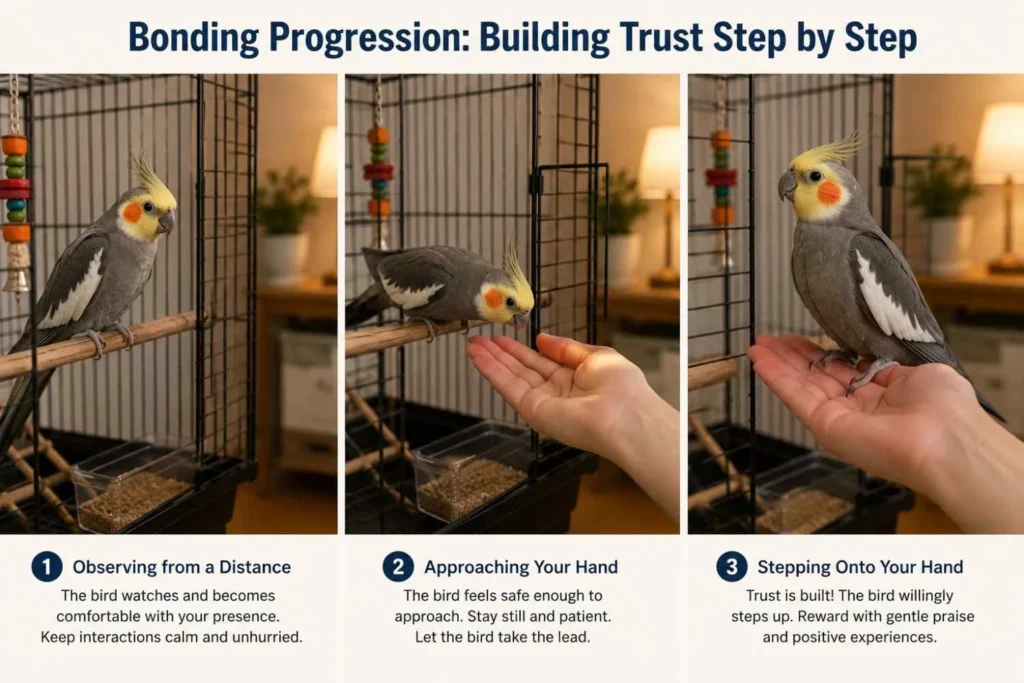
Bird bonding tips for beginners usually go wrong in one direction: owners move too fast, reaching into the cage on day one expecting immediate trust. Birds build trust gradually, through repetition and choice, not through forced handling; a bird that’s allowed to approach on its own timeline almost always ends up more confident around people than one that’s rushed.
That first adjustment period from the day a bird arrives to the point it feels settled is where patience matters most. Owners who let the bird set the pace in the first two to three weeks almost always end up with a calmer, more trusting bird than those who rush hand-taming on day one. For a full week by week walkthrough of this process, see [ How to Help a New Bird Settle In fast ].
Common Beginner Bird Care Mistakes to Avoid
Understanding beginner bird care mistakes prevents most of the health and behavior problems new owners run into and most of them trace back to a handful of avoidable habits: an all-seed diet, a cage placed near kitchen fumes, too little out-of-cage time, and skipping avian-specific vet care. Catching these early is far easier than undoing the stress or health issues they cause later. For the complete list with fixes for each one, see [12 Beginner Bird Owner Mistakes Almost Everyone Makes ].
Bird Species Comparison for First-Time Owners
Pet Bird Care Guide Comparison: Top Beginner Species at a Glance
| Species | Noise Level | Lifespan | Best For | Approx. Cost to Start |
| Budgerigar | Low–Moderate | 5–10 years | First-time owners, apartments | $150–$300 |
| Cockatiel | Moderate | 15–20 years | Beginners wanting more interaction | $250–$450 |
| Lovebird | Moderate–High | 10–15 years | Owners with daily free time | $200–$400 |
| Canary | Low | 8–12 years | Owners who prefer listening over handling | $150–$300 |
| African Grey | High | 40–60+ years | Experienced owners only | $800–$2,000+ |
Recommendation: For most first-time owners, the budgerigar offers the best balance of manageable noise, moderate lifespan, and genuine companionship potential making it the most practical starting point in any pet bird care guide for beginners.
Health, Hygiene, and When to Call an Avian Vet
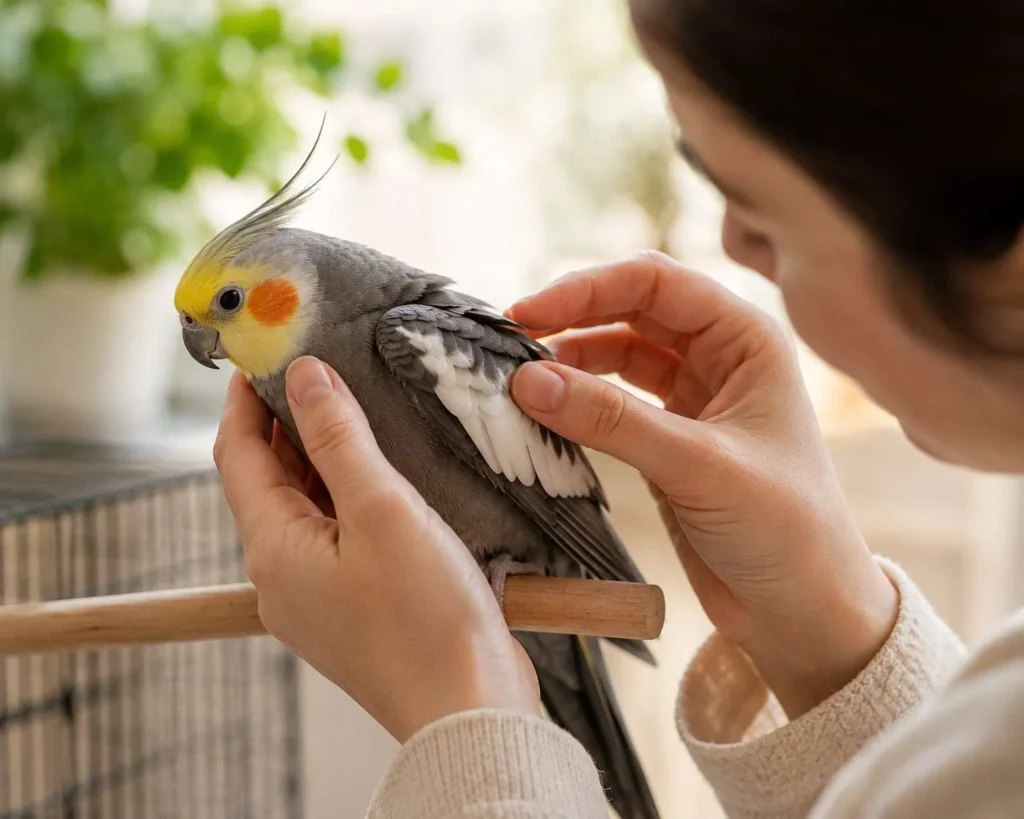
Birds mask illness instinctively, so a pet bird care guide isn’t complete without a basic sense of what “healthy” looks like day to day: steady appetite, normal droppings, alert posture, and consistent activity. When any of those shift noticeably, it’s worth taking seriously rather than waiting it out, since birds tend to hide illness until it’s already progressed.
Recognizing the specific warning signs and knowing which ones mean “today, not tomorrow” is worth learning before you need it, not after. Basic hygiene, clean dishes, fresh water, and a regularly cleaned cage is covered in the daily and weekly routine above.
This is the layer of bird ownership responsibilities that’s easy to overlook when a bird seems perfectly healthy. Regular preventive attention catches problems long before they become visible.
Conclusion
Good pet bird care comes down to three things: a properly set-up environment, a consistent daily and weekly routine, and patience when it comes to bonding. Skipping any one of these is usually what leads to the stress-related problems plucking, screaming, biting that make new owners feel like they’ve failed, when really they just weren’t given the full picture upfront.
Next steps:
- Match your household’s noise tolerance and time availability to a suitable species before buying a cage
- Build your daily and weekly routine before bringing the bird home, not after
- Bookmark the linked feeding, sleep, and cage-cleaning guides above so they’re handy once your bird is home
A bird that gets consistent, informed care from day one tends to become a far calmer, more trusting companion than one whose owner is figuring things out reactively and that consistency starts with the basics covered in this guide.
This pillar guide is intentionally scoped as the beginner’s overview species selection, supplies, routine, bonding basics, common mistakes, and health awareness while dedicated guides on feeding, sleep, and cage cleaning go far deeper on those specific topics than a single article could without losing readability. Together, they form the most complete pet bird care guide resource available for first-time owners.
Frequently Asked Questions
What is a pet bird care guide supposed to cover?
A complete pet bird care guide covers diet, cage setup, daily routine, bonding, common mistakes, and health warning signs, not just feeding instructions. Beginners who only learn feeding basics are often unprepared for the behavioral and social needs birds have.
How do I take care of a pet bird as a total beginner?
Start with a species-appropriate cage, a balanced pellet-based diet, daily out-of-cage time, and a consistent routine. Avoid rushing physical handling in the first week let the bird approach on its own timeline.
How long do pet birds live?
Lifespan varies widely by species: budgies typically live 5–10 years, cockatiels 15–20 years, and larger parrots like macaws or African greys can live 40–60+ years. This is one of the most important things to know before getting a pet bird.
What are the most common beginner bird care mistakes?
The most common mistakes are feeding an all-seed diet, placing the cage in the kitchen near non-stick cookware fumes, and skipping daily out-of-cage interaction. Each of these directly affects a bird’s physical or emotional health.
What are the essential bird care supplies for a first-time owner?
The essentials are a correctly set-up cage, varied perches, food and water dishes, a balanced diet, rotating toys, a cuttlebone, and a travel carrier for vet visits.
Is a budgerigar a good first pet bird?
Yes, budgerigars are widely recommended as the best starter bird because they’re social, relatively quiet, affordable, and have a manageable lifespan compared to larger parrot species.
How much daily attention does a pet bird need?
Most social species need at least 30–60 minutes of direct interaction daily, in addition to being kept in a common household area where they can see and hear people throughout the day.
When should I take my bird to an avian vet?
Take your bird to an avian vet promptly if its behavior, appetite, breathing, or droppings change noticeably from normal birds instinctively hiding illness, so a visible symptom usually means the issue is already progressing. See our full symptom-by-symptom breakdown for exactly what to watch for.