

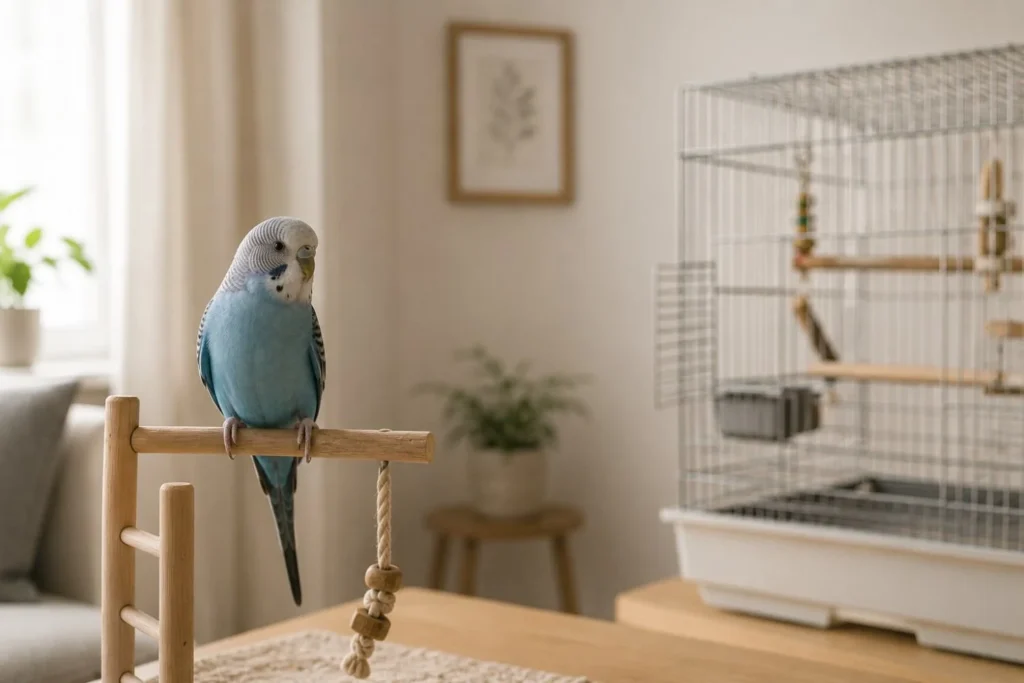
Most birds returned to shelters in the first month aren’t sick or badly chosen. They’re simply overwhelmed, and their owners mistake normal adjustment stress for a bad match. Learning how to help a new bird settle in properly, right from the drive home, is often the single biggest factor in whether a bird becomes a calm companion or a permanently nervous one.
A bird arriving in a new home has just lost every familiar sight, sound, and smell it knew. What looks like a simple cage move to a person is, from the bird’s perspective, a total environment change. Reducing stress in new pet bird situations starts before the bird even arrives, and helping birds settle in new cage setups is really about managing that first impression carefully. This guide walks through exactly what to expect in the first days and weeks, how to set up a comfort zone, how to read stress signs early, and how to build trust without rushing it.
In this guide, you’ll learn:
- How long a new bird typically takes to adjust, day by day
- The specific stress signs that show up when a bird changes homes
- How to set up a comfort zone that actually reduces anxiety
- What “quiet time” should really look like in the first week
- How to build trust gradually without forcing contact
- What changes in eating habits are normal versus concerning
Key Takeaways:
- Most birds need one to three weeks for a genuine adjustment period, not just a few days
- Hiding, reduced vocalization, and picky eating are normal in week one, not automatically red flags
- Quiet, predictable routines settle a new bird faster than active efforts to bond
- Forcing early handling is the single most common mistake that delays trust
- A comfort zone matters as much as the cage itself in the first two weeks
Let’s start with what actually happens during a new bird adjustment period.
Table of Contents
- What Settling In Actually Means for a New Bird
- How Long Does It Take a Bird to Adjust?
- Bird Stress Signs When Moving to a New Home
- Setting Up a Comfort Zone
- Week One: Quiet Time and Space
- Bird Acclimation Tips: Talking and Trust Building
- New Bird Eating Habits During Adjustment
- Adjustment Timeline at a Glance
- Frequently Asked Questions
What Settling In Actually Means for a New Bird
How to help a new bird settle in is defined as reducing environmental stress long enough for a bird to relearn that its new space, sounds, and people are safe. It’s a process the bird works through at its own pace, not something an owner can shortcut through effort or affection alone.
Bird adjusting to new home situations share a common pattern. In the wild, an animal that reacts calmly to a completely unfamiliar environment on day one would likely be a poor survivor. A bird’s caution when bringing home a new bird isn’t a personality flaw or a bad sign. It’s the same instinct that’s kept the species alive for millions of years, now playing out inside a living room instead of a forest.
[IMG: bird calmly perched in a quiet, softly lit room near its new cage]
How Long Does It Take a Bird to Adjust?
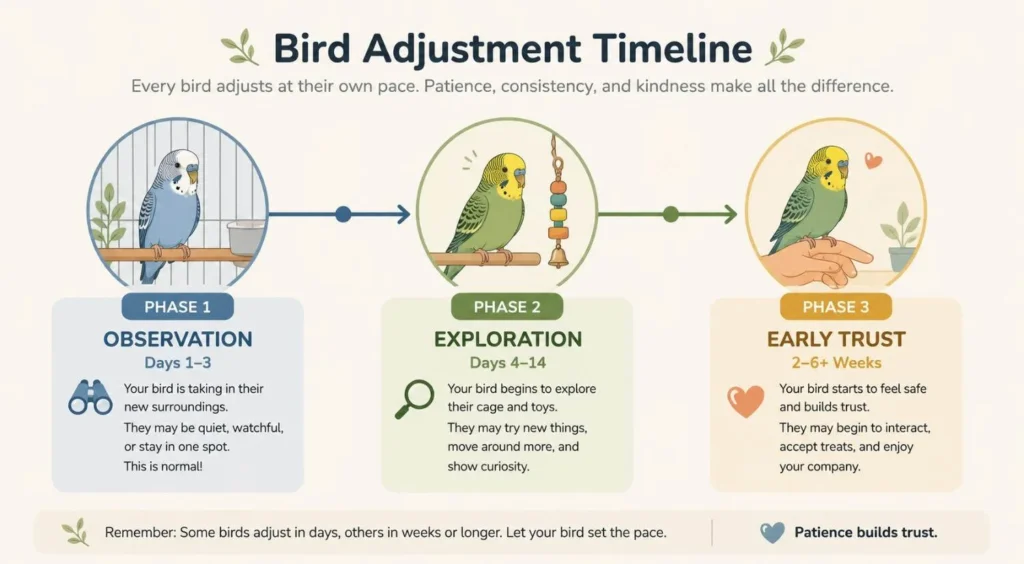
How long does it take a bird to adjust to a new home? Most birds need one to three weeks for a genuine new bird adjustment period, though the exact timeline depends on species, prior handling history, and how the first few days are managed.
How long bird takes to adjust, broken down roughly by phase:
- Days 1 to 3: Shock and observation. The bird is learning that space is not an immediate threat, often from a distance or partially hidden.
- Days 4 to 10: Cautious exploration. The bird starts eating more normally, may vocalize occasionally, and begins watching household routines with more curiosity than fear.
- Weeks 2 to 3: Early trust. The bird approaches the front of the cage voluntarily, may accept treats through the bars, and shows interest in interaction on its own terms.
A bird with prior trauma, a difficult rehoming history, or minimal early handling may take considerably longer than this general timeline, sometimes two to three months before it fully relaxes.
Bird Stress Signs When Moving to a New Home
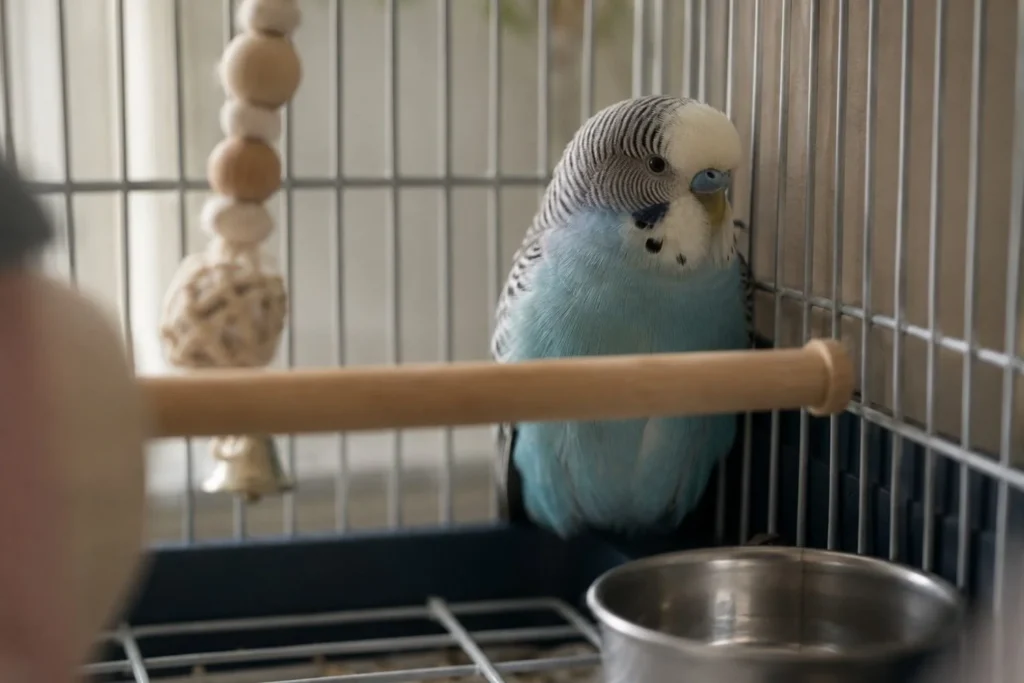
During a new home transition, bird stress signs are typically behavioral rather than physical. In most cases, these behaviors are a normal part of the first week of adjustment.
Bird hiding after bringing home is one of the most common early signs. Many newly adopted birds tuck into a corner, stay on the lowest perch, or face away from activity as they manage their exposure to an unfamiliar environment. This behavior is usually part of the normal adjustment process rather than a sign of severe distress.
Other common new bird adjustment period signs include:
- Reduced or absent vocalization compared to what a seller or shelter described
- Picking at food rather than eating normally
- Flinching at sudden movement or noise more than seems proportional
- Freezing in place when approached, rather than reacting normally
- Sleeping more than usual during the day
Quotable insight: a quiet bird in week one is not the same as a sick bird. Persistent physical symptoms like labored breathing or complete food refusal beyond a couple of days point to a health concern rather than adjustment stress, and are worth addressing separately with a vet.
Pro Tip: Track what’s actually changing day to day rather than judging against day one. A bird eating slightly more and hiding slightly less by day five is progressing normally, even if it’s still far from relaxed.
Setting Up a Comfort Zone
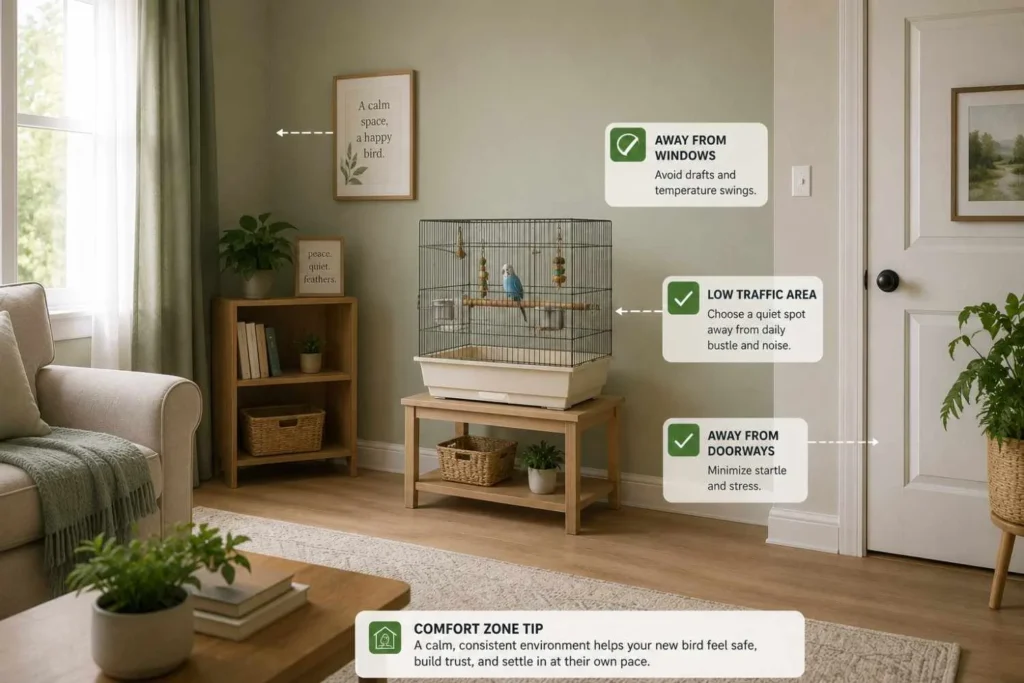
Bird environment setup for comfort matters as much in the first two weeks as the cage itself. The Quiet Room Method is a simple approach: place the cage in a low traffic room with consistent lighting, away from other pets, loud appliances, and constant foot traffic, for at least the first several days.
A genuine bird comfort zone includes these bird comfort zone tips:
- A stable location that won’t move or get relocated repeatedly during the adjustment period
- Minimal direct eye contact or hovering from people passing by
- Familiar-feeling elements where possible, such as the same type of food the bird was eating before arrival
- Consistent daily light and dark hours, since disrupted light cycles add stress on top of an already stressful transition
Real world example: A newly adopted cockatiel that spent its first three days in a busy kitchen stayed pressed into a back corner and barely touched its food. Moving the cage to a quiet spare room, with the same feeding schedule kept exactly the same, led to noticeably more activity and normal eating within four days, without any other change.
Settling in is one part of a bird’s full first month at home. For the complete picture on supplies, feeding, sleep, and cage care, see the [ Pet Bird Care Guide].
Week One: Quiet Time and Space
Quiet time for new bird adjustment isn’t the same as ignoring the bird. It means being present without demanding interaction.
First week with new bird best practices:
- Sit near the cage for short periods daily without opening it or reaching in
- Talk in a normal, calm voice during routine tasks like feeding, so the bird associates your voice with predictable, non-threatening activity
- Avoid inviting friends or family to see or handle the new bird during this window
- Keep the daily schedule as consistent as possible, since predictability itself is calming
Talking to new bird companions during this phase should be low key and frequent rather than performative. A steady, familiar voice heard throughout the day does more to build early comfort than occasional enthusiastic greetings.
Bird Acclimation Tips: Talking and Trust Building
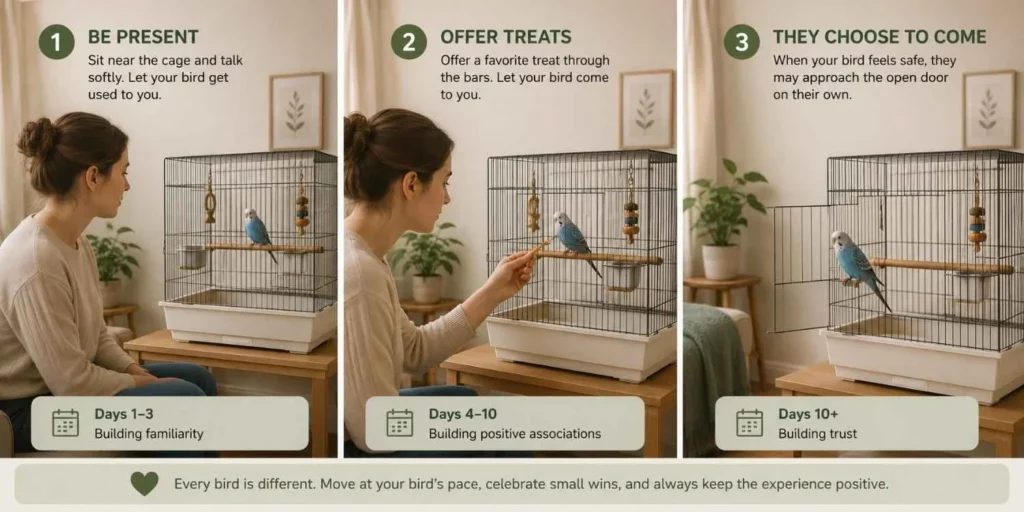
Building real trust with your bird follows a clear progression, often called the 3-Phase Bird Acclimation Timeline:
- Observation phase (roughly days 1 to 7): No handling attempts. Presence only, paired with a calm voice and consistent routine.
- Approach phase (roughly week 2): Offer a treat through the cage bars, letting the bird choose whether to approach. No hand entering the cage yet.
- Trust phase (week 3 onward): Open the cage door and let the bird decide whether to step toward the opening, gradually working toward voluntary hand contact.
Bird trust building exercises at this stage should always be led by the bird’s response, not a fixed timeline. A bird that’s still hiding at day 10 simply needs the observation phase extended, not a forced move to the next step.
Bonding with new pet bird companions works best when trust building feels optional to the bird at every stage. The moment handling feels forced, birds tend to associate hands with stress rather than safety, which can set the relationship back by weeks.
New Bird Eating Habits During Adjustment
New bird eating habits shift noticeably during the adjustment period, and distinguishing normal from concerning matters here.
Normal during the first several days:
- Eating less than usual, especially in the first 24 to 48 hours
- Preferring familiar foods over new ones offered
- Eating mostly when the room is quiet or the bird feels unobserved
Worth monitoring closely or contacting a vet about:
- Complete food refusal lasting more than two full days
- No droppings or a dramatic drop in droppings volume
- Visible weight loss
Keeping the bird’s prior diet unchanged for the first one to two weeks, rather than introducing new foods immediately, tends to smooth this part of the transition considerably. Diet changes and feeding routine are covered in full elsewhere; this section focuses specifically on how eating patterns shift during emotional adjustment rather than day to day feeding mechanics.
Adjustment Timeline at a Glance
How to Help a New Bird Settle In: Timeline Comparison
| Phase | Typical Timing | Bird Behavior | Owner Action | Handling Level |
| Shock and observation | Days 1 to 3 | Hiding, quiet, cautious | Minimal interaction, routine only | None |
| Cautious exploration | Days 4 to 10 | More eating, occasional sound | Calm talking, consistent schedule | None to minimal |
| Early trust | Weeks 2 to 3 | Approaches cage front voluntarily | Offer treats through bars | Bird initiated only |
| Building bond | Week 3 onward | Steps toward open door | Open cage, let bird choose | Gradual, bird led |
| Difficult history cases | Up to 2 to 3 months | Slower progression through above | Same phases, extended timelines | Bird led throughout |
Recommendation: Treat this timeline as a general guide rather than a deadline. A bird moving through these phases more slowly than average isn’t behind, it’s simply following its own pace.
Conclusion
How to help a new bird settle in comes down to patience more than technique. A quiet environment, a consistent routine, and trust building that the bird controls will get most birds through the adjustment period faster than any amount of active effort to bond sooner.
Quick Summary:
- Most birds need one to three weeks to genuinely settle, longer for difficult histories
- Hiding, quiet behavior, and reduced eating are normal in week one, not automatic red flags
- A quiet, stable comfort zone matters as much as the cage setup itself
- Trust building works best in bird led phases: observation, approach, then trust
- Persistent physical symptoms, unlike normal stress signs, warrant a vet visit
Next steps:
- Set up a quiet, low traffic space for your new bird before it even arrives home
- Resist the urge to handle or show off a new bird in the first few days
- Track daily changes in eating and activity rather than judging progress against day one
Frequently Asked Questions
How long does it take a bird to adjust to a new home?
Most birds need one to three weeks for a genuine adjustment period, moving through observation, cautious exploration, and early trust. Birds with a difficult prior history can take two to three months to fully relax.
What are the signs a bird is stressed after a move?
Common signs include hiding, reduced vocalization, picky eating, and flinching at normal household activity. These are typically normal in the first week and tend to ease as the bird settles rather than being an emergency on their own.
Is it normal for a new bird to hide constantly?
Yes, hiding or staying in a corner during the first several days is a normal caution response rather than a sign something is wrong. It usually decreases gradually as the bird learns the space is safe.
How do I set up a comfort zone for a new bird?
Place the cage in a quiet, low traffic room away from other pets and loud activity, keep the daily schedule consistent, and avoid relocating the cage during the first couple of weeks. A stable, predictable environment reduces stress faster than active attempts to interact.
Should I handle my new bird right away?
No, forcing handling in the first few days is one of the most common mistakes new owners make. Letting the bird initiate contact, starting with simple presence and calm talking, builds trust far more reliably than early hands on interaction.
Why is my new bird not eating much?
Reduced eating in the first 24 to 48 hours is common and usually resolves as stress decreases. Complete food refusal lasting more than two days, or a dramatic drop in droppings, should be checked by an avian vet rather than assumed to be normal adjustment.
How do I talk to a new bird to help it settle in?
Use a calm, normal speaking voice during everyday tasks like feeding, rather than forced or overly enthusiastic greetings. Hearing a familiar, steady voice throughout the day helps a bird associate your presence with safety rather than uncertainty.
What are good bird trust building exercises for beginners?
Start with presence only for the first week, move to offering treats through the cage bars in week two, then open the cage door and let the bird choose whether to approach in week three. Each phase should be led by the bird’s comfort level, not a fixed schedule.