

Quick answer: The minimum hamster cage size is 450 square inches of unbroken floor space, roughly a 30 by 15 inch footprint, with bigger always better. Most colorful pet-store cages fall far short of this, which is why DIY bin cages and large tanks have become the standard recommendation among experienced hamster owners.
Contents
- What Is the Minimum Hamster Cage Size?
- What Is the Best Hamster Cage Setup?
- Related Guides
- Frequently Asked Questions
What Is the Minimum Hamster Cage Size?
A hamster cage should offer at least 450 square inches of unbroken floor space for any species, Syrian or dwarf. That widely accepted minimum hamster cage size works out to roughly 30 inches long by 15 inches wide, or 40 inches by 12 inches. It must be one continuous level: stacked levels and attached tubes do not count toward the total. Animal welfare groups increasingly recommend 600 to 800 square inches as the real comfort zone.
The emphasis on unbroken floor space exists because hamsters are ground-dwelling burrowers, not climbers. In the wild, a Syrian hamster’s territory can stretch over a mile, and they run several miles every night. A cage that is tall but narrow, or split across tiny connected pods, gives them nowhere to sprint or dig. They also cannot establish separate sleeping, eating, and bathroom zones. Behavior problems like bar chewing, cage climbing, and repetitive pacing are the classic signs that the floor space is too small.
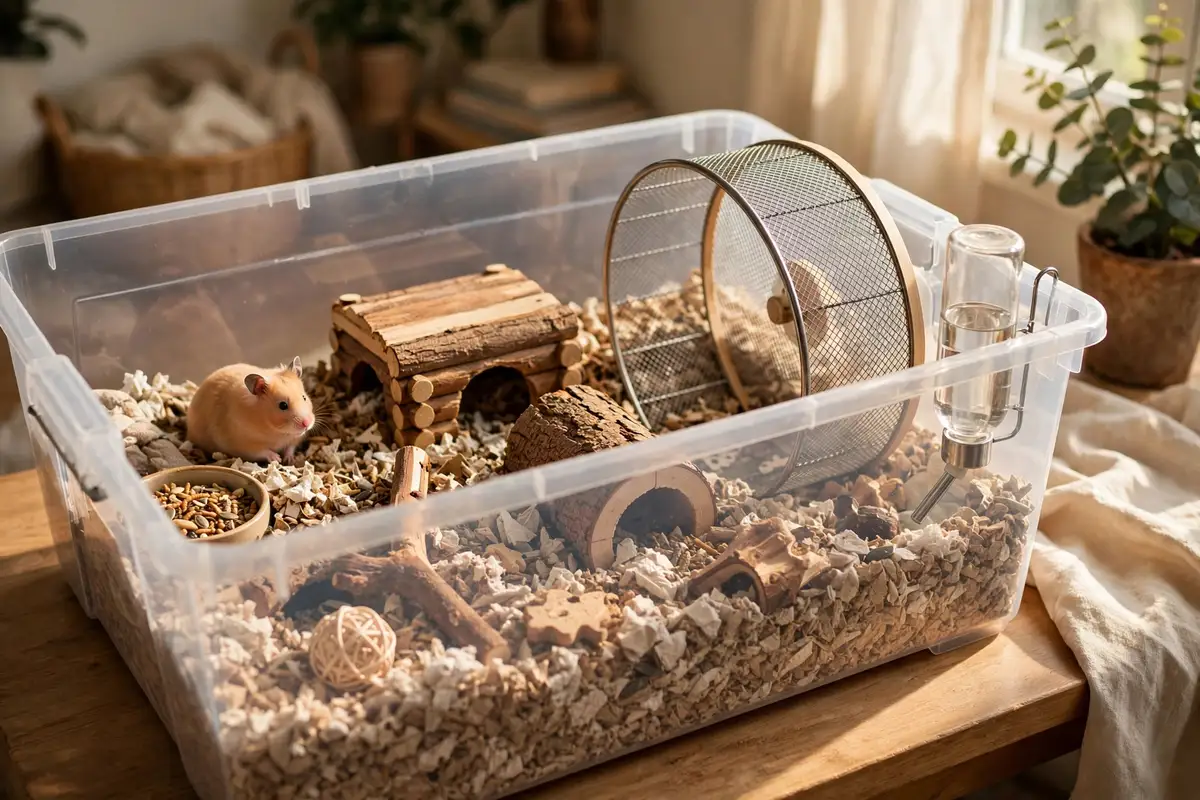
Species differences are smaller than most people expect. Dwarf hamsters are tinier, but they are also more energetic. They run astonishing distances each night, so they deserve the same 450 square inch minimum. Chinese hamsters fall in the same range. Give a Syrian at least 600 square inches if you can. They are the largest and most territorial of the common pet species.
| Cage option | Typical floor space | Meets the 450 sq in minimum? |
|---|---|---|
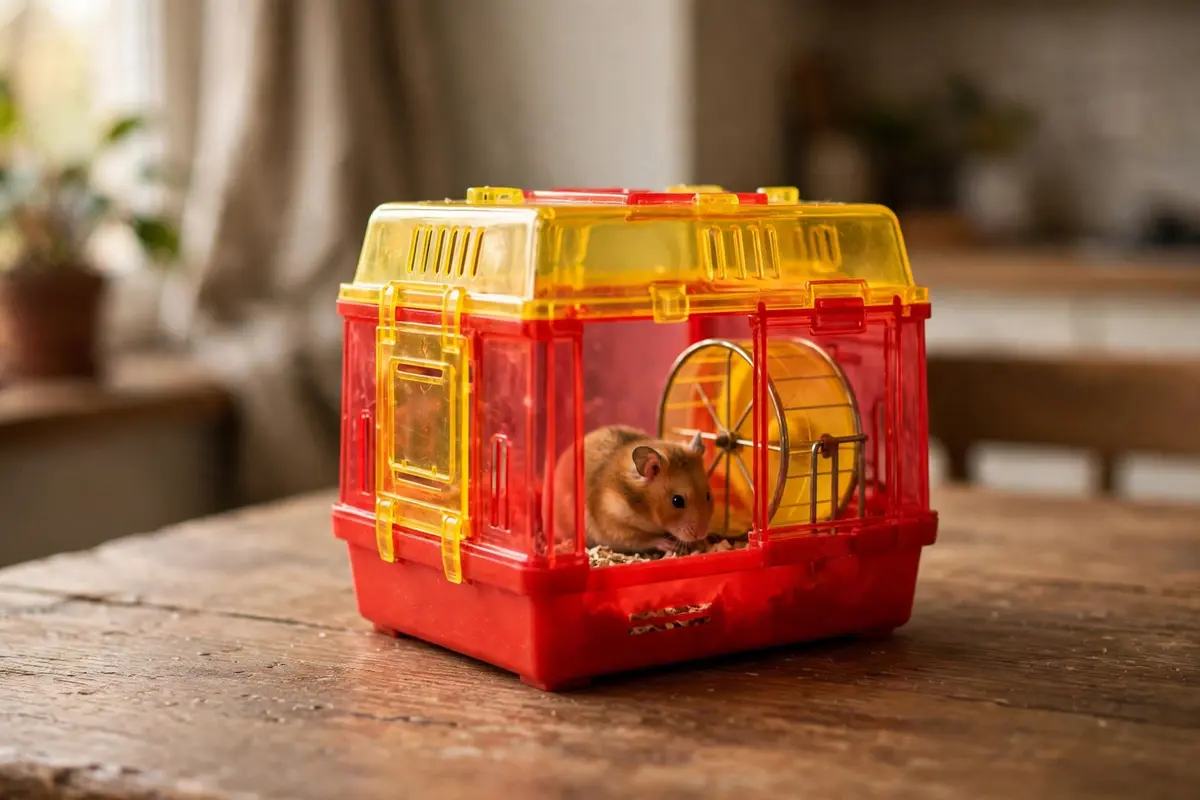
| Small colorful pet-store cage | 150 to 250 sq in | No, far too small |
| Medium wire-top cage | 300 to 400 sq in | Usually not |
| 40-gallon breeder tank (36 x 18 in) | 648 sq in | Yes, comfortable |
| Large DIY bin cage (50+ gallon bin) | 600 to 900+ sq in | Yes, excellent |
| Detolf-style glass cabinet conversion | 950+ sq in | Yes, premium option |
| Homemade wooden enclosure (4 x 2 ft) | 1,152 sq in | Yes, ideal |
Notice the pattern: almost nothing sold in the small-pet aisle of a typical store clears the bar. This is the single most common mistake new hamster owners make, and it is not their fault. The packaging shows a happy hamster, but the floor space tells the truth. When you shop with the minimum hamster cage size in mind, the difference between honest housing and marketing becomes obvious. Measure any cage yourself before buying: length times width of the base, ignoring levels, wheels, and tubes.
What Is the Best Hamster Cage Setup?
The best hamster cage setup starts with the right enclosure. Then layer in deep bedding, a properly sized wheel, and plenty of hiding places. Once your enclosure clears the minimum hamster cage size, the setup inside is what turns square inches into a real home. A large DIY bin cage is the most popular choice because it is cheap, escape-proof, and easy to clean. Cut a large rectangle out of the lid and cover it with wire mesh for ventilation. You get a secure habitat that beats almost every commercial cage.
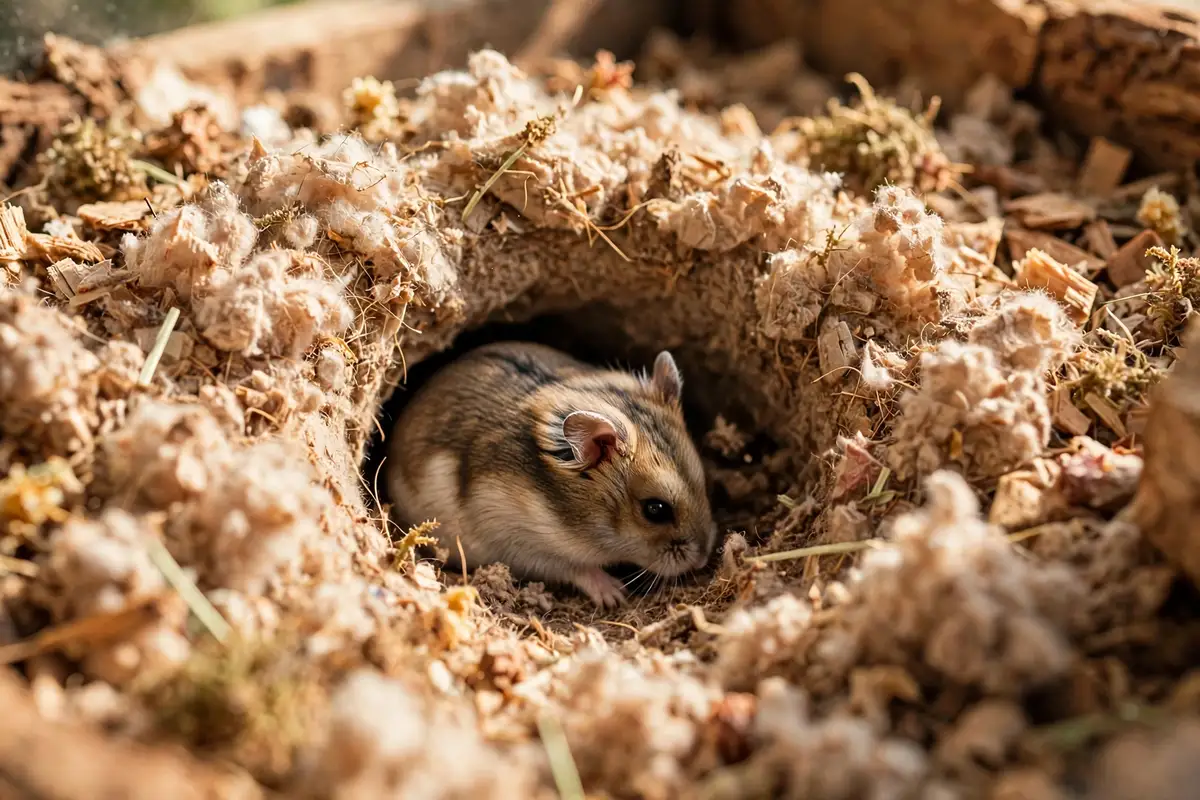
Bedding depth comes next. Hamsters are obsessive burrowers, and shallow bedding is the second most common setup mistake. Aim for 6 to 10 inches of bedding across at least one third of the cage, using paper-based bedding or aspen shavings. Never use cedar or pine shavings, since the aromatic oils irritate their respiratory systems. Deep bedding lets them dig real tunnels, which dramatically reduces stress behaviors.
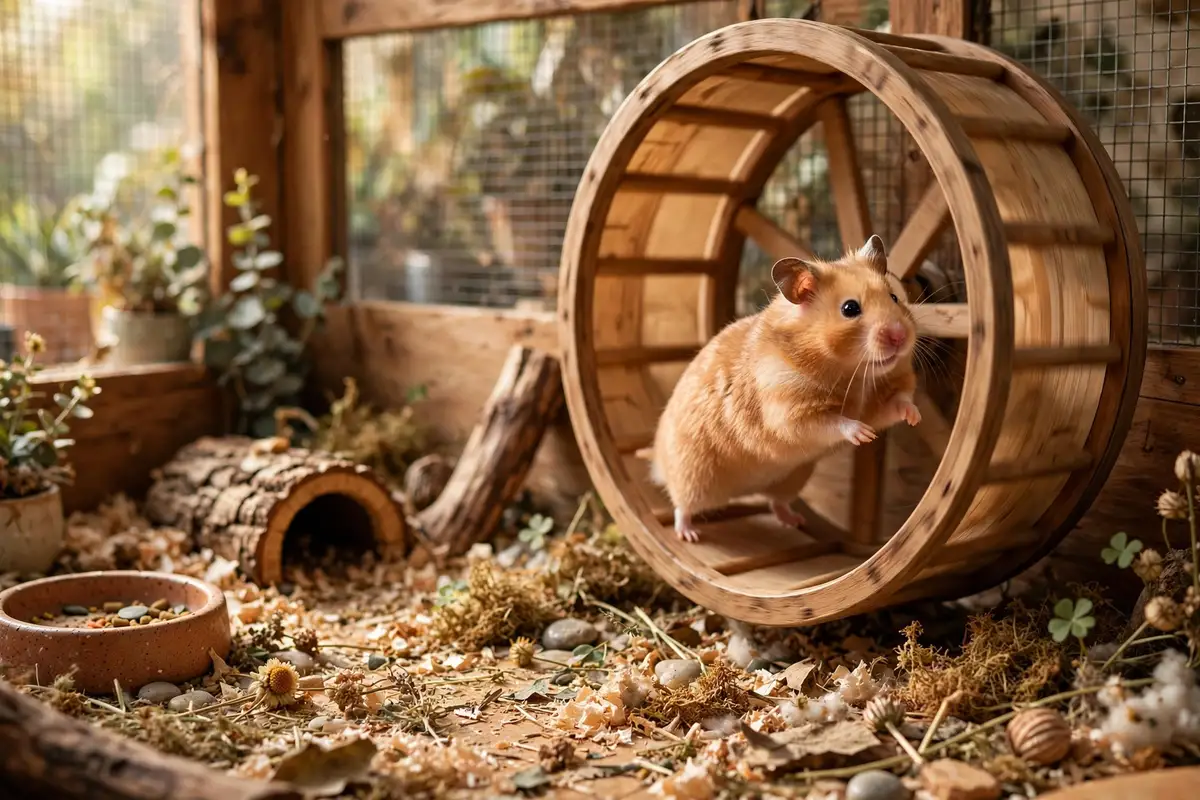
Wheel size is non-negotiable. A wheel that is too small forces the hamster to run with an arched back, which causes spinal pain over time. Syrians need a wheel at least 10 to 12 inches in diameter; dwarf species need 8 inches minimum. Choose a solid-surface wheel, never a wire or mesh wheel that can trap tiny feet. If you can hear the wheel from another room at night, a silent spinner style is worth the upgrade.
Bar spacing and safety details finish the job. For wire cages, keep bar spacing at 1/2 inch or less for Syrians. Dwarf hamsters need 1/4 inch or less, since they can squeeze through shockingly small gaps. Add at least two hideouts, a sand bath with chinchilla-safe sand (never dust), and chew toys. Provide a water bottle plus a small backup dish. Scatter-feeding part of the daily food instead of using only a bowl gives them the foraging work their brains expect.

A quick do-not list keeps the setup safe. Skip wire mesh wheels, cedar or pine bedding, and cotton nesting fluff (it can wrap around limbs). Avoid hamster balls as a substitute for space, and never add a cage mate for Syrians or Chinese hamsters, which are strictly solitary and will fight. Dwarfs can sometimes cohabit, but it requires a very large cage and constant monitoring.
Related Guides
- Pet Rat Care Guide: 10 Myths About the Smartest Pet
- GI Stasis in Rabbits: Signs and Emergency Steps
- Sugar Glider Care Manual: The Beginner’s Complete Guide
Frequently Asked Questions
Is a 20-gallon tank big enough for a hamster?
A standard 20-gallon long tank measures about 30 by 12 inches, which is roughly 360 square inches, below the 450 minimum. A 40-gallon breeder tank at 36 by 18 inches gives 648 square inches and works well. The minimum hamster cage size rule is about floor space, not gallons. Always calculate it yourself rather than trusting the rating on the box.
Do hamsters need a friend in the cage?
Syrian and Chinese hamsters are strictly solitary and must live alone; they will fight if housed together. Some dwarf species can live in same-sex pairs, but it demands a large cage, duplicate resources, and a backup plan to separate them. For beginners, one hamster per cage is the safe rule.
Can I keep my hamster in a small cage temporarily?
A very short stay of a day or two during travel is tolerable. But even temporary small housing stresses hamsters and triggers bar chewing and pacing. If you are waiting on a bigger cage to arrive, set up a large bin as a stopgap. That beats buying a tiny cage you will throw away.
How deep should hamster bedding be?
Provide 6 to 10 inches of bedding across at least part of the enclosure so your hamster can dig proper tunnels. Paper-based bedding holds tunnels best. Spot-clean soiled areas every few days and do a full change every three to four weeks. Keep some old clean bedding to preserve familiar scent.
What bar spacing is safe for dwarf hamsters?
Keep bar spacing at 1/4 inch or less for dwarf hamsters, since they can squeeze through gaps that look impossibly small. For Syrians, 1/2 inch spacing is the maximum. If you are unsure, a tank or bin cage with a mesh lid removes the escape question entirely.
This guide is for informational purposes and doesn’t replace professional veterinary advice.