

Quick answer: GI stasis in rabbits is a medical emergency. If your rabbit has not eaten or produced droppings for 12 hours, or is hunched, grinding its teeth, or bloated, call a rabbit-savvy veterinarian now. GI stasis can kill within 24 to 48 hours. Everything you do at home is only a bridge to the vet, never a replacement for treatment.
Contents
- What Is GI Stasis in Rabbits?
- The Emergency Clock: Symptom Timeline
- Emergency Action Checklist: What to Do Right Now
- What to Tell the Vet
- What Causes GI Stasis in Rabbits?
- Bridge Measures While You Wait for the Vet
- After the Vet Visit: The Road Back
- Preventing the Next Episode: Diet Is Everything
- Related Guides
- Frequently Asked Questions

What Is GI Stasis in Rabbits?
GI stasis, also called ileus, is a slowdown or complete stop of the gut’s squeezing movements that push food and fluid through a rabbit’s digestive tract. A rabbit’s gut must keep moving almost constantly. When it slows, food and hair dry out and pack together, gas builds up from bacterial overgrowth, and pain makes the rabbit stop eating entirely. That creates a vicious cycle: the less the rabbit eats, the less the gut moves, and the worse everything gets.
The House Rabbit Society’s guide to GI stasis, the silent killer, warns about this exact scenario. If a rabbit stops eating or producing feces for 12 hours or more, treat it as an emergency. Untreated, GI stasis can kill a rabbit within 24 to 48 hours, sometimes faster in small or already fragile rabbits.
One more thing every owner should understand: GI stasis is usually a symptom, not the root disease. Dental pain, another illness, dehydration, stress, or a fiber-poor diet can all trigger it. Fixing the gut without finding the trigger means it will come back.
The Emergency Clock: Symptom Timeline
GI stasis in rabbits develops in stages, and each stage tells you how much time you have. Read this table, find where your rabbit is right now, and act accordingly. When in doubt, assume the worse stage and call the vet.
| Time Since Signs Began | What You See | What It Means, and What to Do |
|---|---|---|
| Hour 0 to 6 | Droppings are smaller, fewer, or strung together with hair. The rabbit eats slowly, skips pellets, or ignores a favorite treat. | Early gut slowdown. Watch like a hawk. Offer fresh hay and wet greens, and call your vet for advice on whether to come in now. |
| Hour 6 to 12 | Refuses pellets, then refuses greens too. Droppings are tiny or absent. The rabbit sits hunched and moves less. | Stasis is likely underway. Call the vet now and start the emergency checklist below. Do not wait for the 12-hour mark if the rabbit looks painful. |
| Hour 12 to 24 | No droppings at all. Belly looks bloated or feels hard. Loud teeth grinding (pain), lethargy, cold ears. | Full emergency. The rabbit needs a rabbit-savvy vet immediately. Home measures are only a bridge to the clinic. |
| Beyond 24 hours | Extreme weakness, collapse, labored breathing, body going cold. | Life-threatening. Survival drops fast from here. Get to an emergency clinic now; call on the way. |
The single most reliable early warning is the litter box, not the food bowl. Rabbits hide pain well, but they cannot hide their droppings. Count pellets daily so you notice the change the hour it starts, not the day after.

Emergency Action Checklist: What to Do Right Now
Do these in order. Every step buys time, but none of them replaces the vet.
- Call a rabbit-savvy vet immediately. Not all vets treat rabbits well, and an emergency clinic that mostly sees dogs and cats can do more harm than good. Call your rabbit vet first; if the clinic is closed, ask for the nearest rabbit-capable emergency service. Tell them you suspect GI stasis so they triage you correctly.
- Keep the rabbit warm. A rabbit in stasis often runs cold, and cold ears are a warning sign. Wrap the rabbit loosely in a towel and place a warm (not hot) water bottle or a sock filled with warm rice beside it. The bottle should feel comfortable against your own wrist. Never use a heating pad on high or leave heat sources unattended.
- Offer hay, wet greens, and water. Put fresh timothy hay right in front of the rabbit’s nose. Offer wet leafy greens like romaine, cilantro, or parsley; the moisture helps. Switch the water bottle for a shallow bowl, which many sick rabbits drink from more easily. Do not force-feed dry pellets or syringes of food if the belly is bloated and hard; that needs a vet’s judgment first.
- Keep the bonded partner close. Do not separate a bonded pair. The stress of separation can make stasis worse, and many owners report that a mate’s presence keeps the sick rabbit fighting. If the rabbit is alone, sit quietly nearby so it knows it is not abandoned.
- Gentle belly massage, only if tolerated. With the rabbit on your lap or a soft surface, use light fingertip circles on the belly to help trapped gas move. If the rabbit tenses, flinches, or grinds its teeth louder, stop. Never press hard on a bloated belly.
- Encourage a little movement. A short, calm hop around a safe room can stimulate the gut. Do not chase or force exercise; coaxing is enough.
- Write down the timeline. Note when symptoms started, the last normal droppings, and what the rabbit last ate and drank. Also note anything new in the last 48 hours: diet change, stress, or travel. You will hand this to the vet.
- Get to the vet. Drive as soon as you can. Keep the rabbit warm and secure in a carrier with a towel, and keep the car quiet and calm.
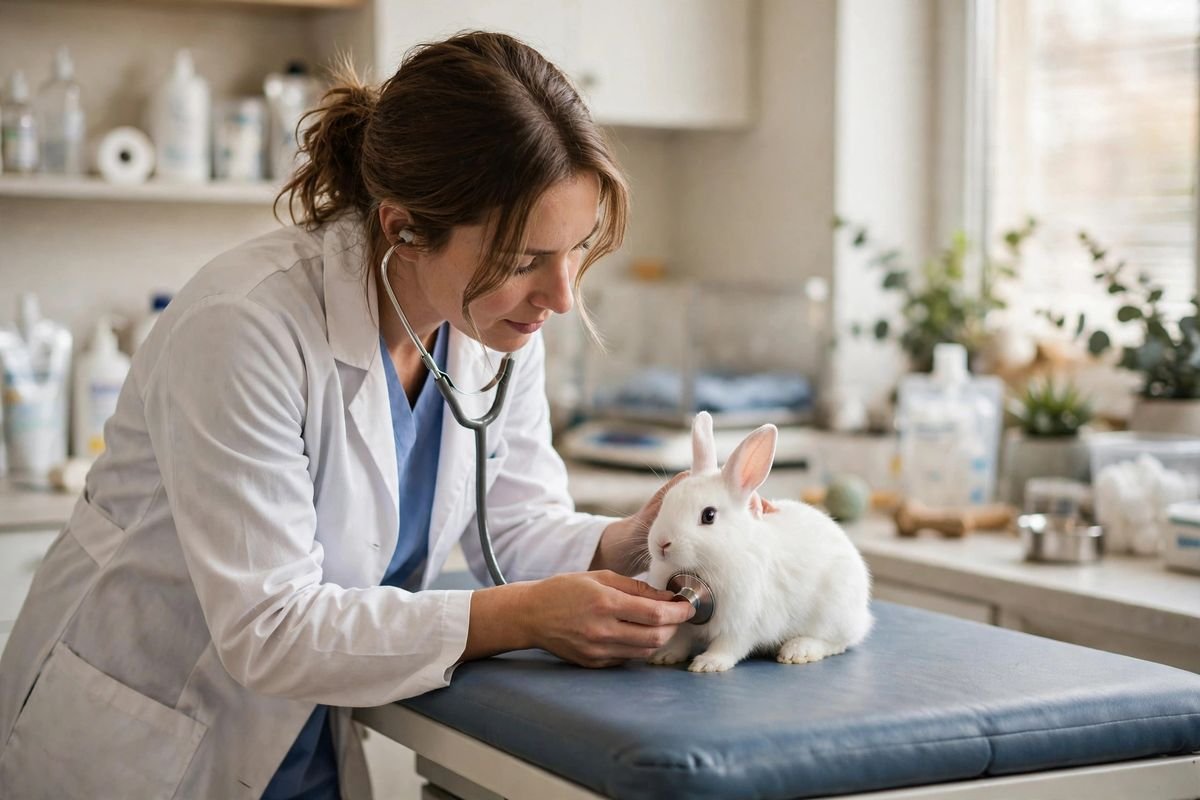
What to Tell the Vet
Walk in with answers and you will get faster, better care. Tell the vet:
- Exactly when the signs started, and what the first sign was
- The last time the rabbit produced normal droppings, and what the droppings look like now (smaller, fewer, none, mucus-covered)
- The last time the rabbit ate and drank, and what it ate
- Whether the belly looks bloated or feels hard, and whether the rabbit grinds its teeth
- Any recent changes: new food, fewer hay refills, travel, new pet, loud construction, loss of a bonded partner
- Anything you have already done at home (warming, massage, offered foods)
- The rabbit’s usual diet, in detail: type of hay, pellet brand and amount, daily greens, treats
- Whether the rabbit has a history of dental problems or previous stasis episodes
Ask the vet to check for the underlying cause, not just the stasis. A dental exam, a hands-on belly exam (abdominal palpation), and often x-rays help the vet see whether gas, a food mass, or something else is going on. Bloodwork can reveal hidden illness. GI stasis without a cause hunted down is GI stasis that returns.
What Causes GI Stasis in Rabbits?
Knowing the triggers is how you prevent the next episode of GI stasis in rabbits. The common causes, in rough order of how often owners run into them:
- Too little fiber. The number one cause. A diet short on grass hay and heavy on pellets, treats, or starchy foods slows the gut steadily until it stalls.
- Dehydration. A rabbit that drinks too little, or only from a bottle it dislikes, ends up with dry, packed gut contents that stop moving.
- Stress. Moving house, a new pet, loud noise, travel, or losing a bonded partner can shut a rabbit’s gut down within hours.
- Dental pain. Overgrown molars or tooth root problems make chewing painful, so the rabbit eats less hay, and less hay means a slower gut.
- Pain from another illness. Urinary problems, infections, arthritis, or any painful condition can trigger stasis as a side effect.
- Hair ingestion. Heavy shedding seasons fill the stomach with swallowed hair, but remember the hair is usually a result of the slowdown, not the original cause.
- Lack of exercise. A rabbit that sits in a small hutch all day has a lazier gut than one that runs, hops, and explores.
Notice that almost every cause is something an owner can influence. That is the hopeful part of this story, and it is why the prevention section below matters as much as the emergency part.
Bridge Measures While You Wait for the Vet
The hours between the phone call and the exam room are the hardest. Here is what helps, and what does not.
Do: keep the rabbit warm, offer hay and wet greens, and provide water in a bowl. Keep the bonded partner nearby, try gentle belly massage if tolerated, encourage calm movement, and keep a droppings log. Fresh pineapple juice and papaya tablets are sometimes suggested online for hair, but they do not restart a stalled gut. Treat them as folklore, not treatment.
Do not: give human painkillers or any medication without the vet’s explicit instruction, force-feed a bloated rabbit, or separate bonded partners. And never decide to “wait and see until morning” once the 12-hour mark approaches. Waiting is the most dangerous home remedy there is.
Repeat this to yourself: home measures buy time and comfort. They do not diagnose, they do not prescribe, and they do not replace the vet visit. The goal of every bridge measure is to get a warmer, calmer, slightly more comfortable rabbit into the exam room.
After the Vet Visit: The Road Back
Depending on what the vet finds, treatment may include fluids under the skin (subcutaneous fluids), pain relief, and gut-stimulating medication (motility drugs). The vet may also use warming and sometimes syringe feeding of recovery food, all decided after ruling out a true blockage. Do not attempt these at home without veterinary supervision; gut-stimulating drugs given when there is an actual obstruction can make things worse.
Recovery is often maddeningly slow. It can take days before droppings return, and the first pellets are usually small, hard, and misshapen, sometimes with mucus. That is normal and expected. Keep up the hay, the wet greens, the warmth, and the calm routine, and report progress to your vet regularly.
Once the crisis passes, schedule the cause hunt: dental check, diet review, and any bloodwork or x-rays the vet recommends. A rabbit that has had stasis once is at higher risk of having it again, so this follow-up is where future emergencies get prevented.

Preventing the Next Episode: Diet Is Everything
The best emergency is the one that never happens. Prevention is mostly diet, and the rules are simple:
- Unlimited grass hay, always. Timothy, orchard, or meadow hay should be available 24 hours a day and should make up the bulk of the diet. Refill the rack before it empties, not after.
- Limited pellets. A small measured amount of plain, high-fiber pellets per day is enough. Pellets are a supplement, not the meal.
- Daily leafy greens. A rotating variety of romaine, cilantro, parsley, dill, and other rabbit-safe greens keeps the gut hydrated and moving.
- Water in a bowl. Many rabbits drink more from a heavy ceramic bowl than from a bottle. Clean it daily.
- Exercise every day. Free-roam time in a rabbit-proofed room or a large pen keeps the gut as active as the rabbit.
- Dental checks. Have the vet check the molars at least yearly, and sooner if the rabbit starts dropping food or eating slower.
- Brush during shedding. Regular grooming in heavy molt seasons reduces swallowed hair.
- Keep stress low. Stable routine, quiet environment, and never separating bonded partners without a very good reason.
Make one more preparation today, while your rabbit is healthy: find your rabbit-savvy vet now and save the emergency clinic number in your phone. Then assemble a small kit with a towel, a warm water bottle, and your vet’s number. The emergency clock runs fast. Owners who are ready beat it.

Related Guides
- Rabbit Diet Guide: What Your Bunny Should Eat Daily
- How to Litter Train a Rabbit
Frequently Asked Questions
How fast can GI stasis kill a rabbit?
Untreated, GI stasis in rabbits can kill within 24 to 48 hours, and small or already ill rabbits can decline faster. That is why 12 hours without eating or droppings is treated as an emergency, not a wait-and-see situation.
Can a rabbit recover from GI stasis at home without a vet?
Do not count on it. Warmth, hay, wet greens, and gentle massage can support a rabbit while you arrange care. But they cannot diagnose the cause or provide fluids, pain relief, or gut-stimulating treatment. Home measures are a bridge to the vet, never a replacement.
What are the very first signs of GI stasis?
Smaller or fewer droppings, droppings strung together with hair, and a rabbit that eats slowly or refuses a favorite treat. These subtle signs often appear hours before the dramatic ones like hunching and teeth grinding, so the litter box is your best early warning system.
My rabbit is not pooping but still eating. Is that stasis?
It can be the earliest stage. Watch closely for six hours: if droppings shrink further or stop, or if appetite fades, call your vet. Do not wait a full day to see what happens.
Should I massage my rabbit’s belly during stasis?
Gentle fingertip circles can help trapped gas move and many rabbits tolerate it, but stop if the rabbit tenses or grinds its teeth louder. Never press hard on a bloated belly, and discuss any oral remedies with your vet first.
How do I prevent GI stasis from coming back?
Unlimited grass hay, limited pellets, daily leafy greens, water in a bowl, daily exercise, regular dental checks, and low stress. After an episode, work with your vet to find and fix the original trigger, because stasis without a cause addressed tends to return.
This guide is for informational purposes and doesn’t replace professional veterinary advice.