

Quick answer: A bearded dragon feeding chart maps the insects-to-greens ratio by age. Babies (0 to 3 months) eat about 70 to 80 percent insects, fed 2 to 3 times daily. Juveniles shift toward a 50/50 mix with 1 to 2 daily feedings. Adults (18 months and older) eat 70 to 80 percent greens with insects only 3 to 4 times a week. Fresh greens stay available daily at every age.
Contents
- What Do Bearded Dragons Eat?
- What Is a Bearded Dragon Feeding Schedule?
- Related Guides
- Frequently Asked Questions
What Do Bearded Dragons Eat?
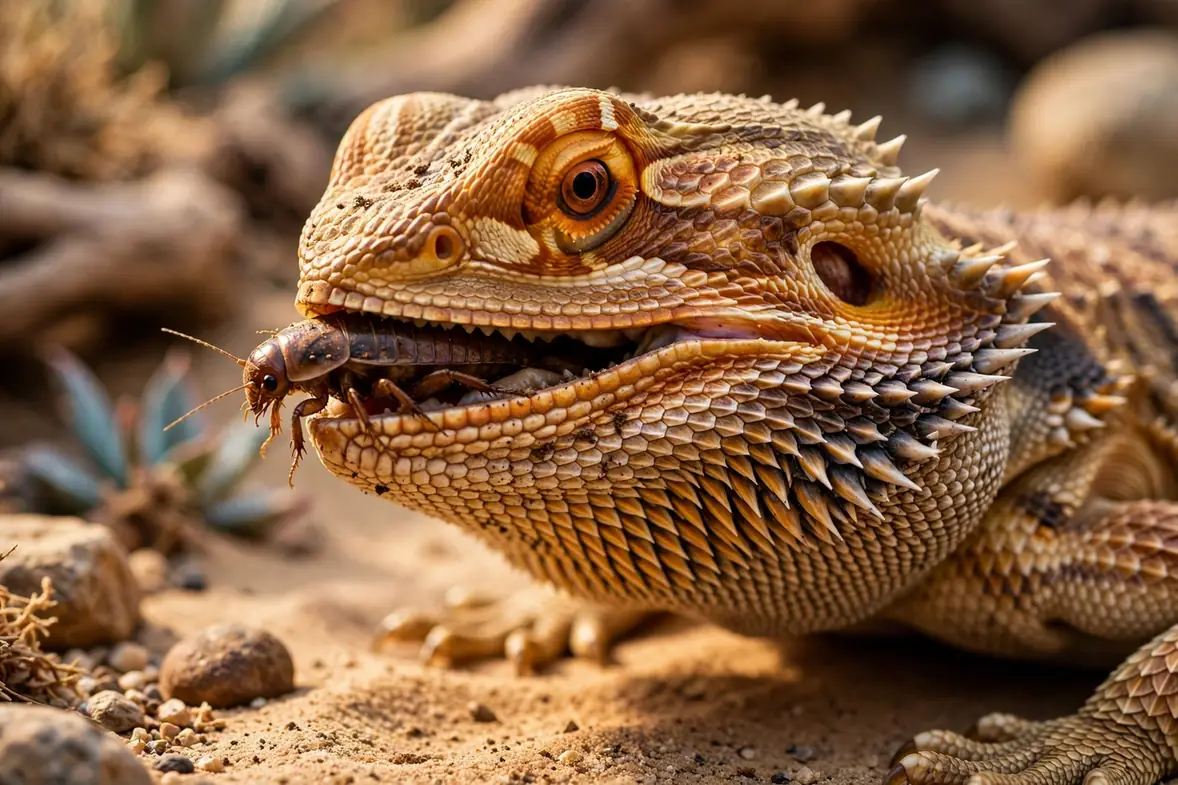
Bearded dragons eat a mix of live insects and fresh leafy greens, and the ratio between the two changes dramatically as they grow. Babies get roughly 70 to 80 percent of their nutrition from insects to fuel fast growth. Adults flip that ratio and get 70 to 80 percent from greens. Fruit is only an occasional treat. The single most important feeding skill is matching the plate to the life stage.
The best staple insects are dubia roaches and crickets. Dubia roaches have an excellent nutritional profile, are easy to keep in a colony, and cause fewer digestive problems than some alternatives. Crickets work well too, though they smell and are harder to keep alive between feedings. Round out the rotation with black soldier fly larvae, silkworms, and hornworms. Keep superworms and waxworms as rare treats only, since they are high in fat.
For greens, build every salad around dark leafy staples: collard greens, mustard greens, turnip greens, dandelion greens, and endive. Add color and variety with butternut squash, bell peppers, green beans, and shredded carrots. Fruits such as blueberries, strawberries, raspberries, and apples without seeds can appear a few times a week for adults. Never feed avocado, rhubarb, onions, mushrooms, citrus fruit, or fireflies, since all of these are toxic to bearded dragons.
Two handling rules apply at every meal. First, never offer an insect larger than the space between your dragon’s eyes; oversized prey can cause gut impaction and serious injury. Second, gut-load feeder insects for 24 hours before feeding. Give them nutritious foods like sweet potato and leafy greens, so the nutrition passes on to your dragon.

What Is a Bearded Dragon Feeding Schedule?
A bearded dragon feeding schedule is an age-based plan. It sets how often to offer insects, how many greens to serve, and how the insect-to-greens ratio shifts over time. Young dragons grow fast and need protein several times a day; adults grow slowly and would become obese on the same diet. The chart below is your at-a-glance reference. Individual dragons vary, so treat it as a starting point and adjust based on body condition.
| Life stage | Age range | Insects vs. greens | Insect feedings | Insects per session | Greens |
|---|---|---|---|---|---|
| Baby / hatchling | 0 to 3 months | 70 to 80 percent insects, 20 to 30 percent greens | 3 times daily | As many as eaten in 10 to 15 minutes, often 30 to 80 total per day | Finely chopped, offered daily |
| Juvenile | 3 to 12 months | About 60 percent insects, 40 percent greens | 2 times daily, dropping to 1 | As many as eaten in 10 to 15 minutes | Offered daily |
| Sub-adult | 12 to 18 months | About 50 percent insects, 50 percent greens | Once daily | 20 to 40 insects per session | Fresh salad offered daily |
| Adult | 18 months and older | 20 to 30 percent insects, 70 to 80 percent greens | 3 to 4 times per week, not daily | 10 to 20 insects per session | Fresh salad offered daily |
Feeding babies and juveniles
Hatchlings are eating machines. Offer live insects three times a day. Let them eat as many as they want within a 10 to 15 minute window, then remove any leftovers so loose insects cannot stress or bite your dragon. Keep a small dish of finely chopped greens in the enclosure from day one, even though babies mostly ignore it at first. Early exposure makes the transition to greens much easier later.
By three months your dragon becomes a juvenile and the schedule relaxes. Drop to two insect feedings a day, then to one as the first year ends, while steadily increasing the greens portion. This is also the age to establish the calcium routine described below, since growing bones demand a constant supply of it.

Feeding adults
The most common feeding mistake keepers make is feeding adults like babies. Adult bearded dragons have slow metabolisms and no natural off switch. They will happily eat daily insects straight into obesity, fatty liver disease, and gout. Offer insects only 3 to 4 times per week, about 10 to 20 per session, and make the daily salad the main event. Leave greens in the enclosure during the day for grazing and remove uneaten portions in the evening.
Watch the fat pads on your dragon’s head as a simple body-condition gauge. They should look plump but not swollen. Sunken pads can signal underfeeding, while a very round belly and sagging jowls point to overfeeding. Weighing your dragon monthly with a kitchen scale makes trends easy to spot.
Calcium dusting and supplements
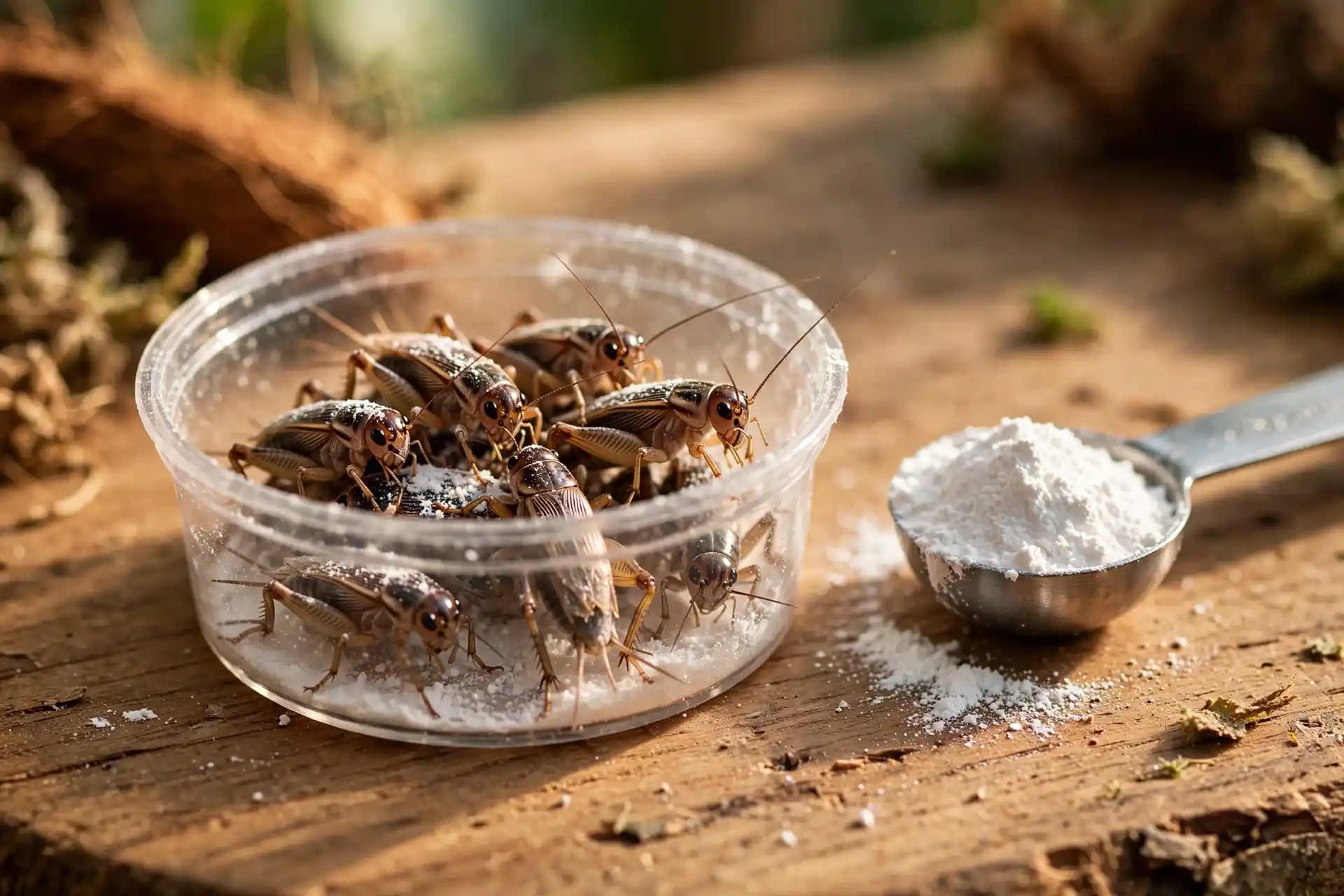
Calcium dusting is the quiet hero of a good bearded dragon feeding chart. Without enough calcium and proper UVB lighting, dragons develop metabolic bone disease, which is painful and preventable. Here is the dusting routine: drop feeder insects into a bag or cup with calcium powder. Shake gently. Dust before every insect feeding for babies and juveniles. For adults, dust insect feedings and give salads a light dusting too.
- Plain calcium without D3: every insect feeding for babies and juveniles; insect feedings plus salads for adults.
- Calcium with D3: 1 to 2 times per week, less often if your UVB setup is strong.
- Reptile multivitamin: once per week, dusted on insects or salad.
- UVB lighting: a quality UVB tube covering most of the enclosure, replaced on schedule, since D3 synthesis depends on it.
Which feeder insects should you rotate?
Variety in feeder insects protects against nutritional gaps, so aim to rotate at least three staples rather than relying on one. The table below groups the common choices by how often they belong in the bearded dragon feeding chart.
| Insect | Role in the diet | Why keepers like it |
|---|---|---|
| Dubia roaches | Everyday staple | Excellent protein-to-fat ratio, easy to breed, gentle on digestion |
| Crickets | Everyday staple | Widely available and affordable; gut-load well but smell and die off fast |
| Black soldier fly larvae | Everyday staple | Naturally high in calcium, soft-bodied and easy for babies to eat |
| Silkworms | Regular rotation | Soft, nutritious, and hydrating; pricier and harder to source |
| Hornworms | Occasional treat | Great for hydration but watery and expensive; 1 to 2 per week is plenty |
| Superworms and waxworms | Rare treat only | High in fat; overuse leads to obesity and picky eaters |
A quick caution on mealworms: their hard exoskeletons make them harder to digest, especially for babies. If you use them at all, keep them small, fresh-shed, and infrequent. Dubia roaches remain the gold standard staple for most keepers because they combine good nutrition with easy home breeding.
What does a sample feeding day look like?
Schedules feel abstract until you see them as a day. For a baby dragon, the day runs like this. Lights on, then an insect feeding within the first hour: dubia roaches or crickets, calcium-dusted, 10 to 15 minutes of eating. Refresh the small greens dish at midday, then a second insect feeding in the afternoon and a third in the early evening. Remove uneaten insects after each session and take leftover greens out before lights out.
For an adult dragon, the day is calmer. Lights on, then a fresh salad of collard greens, squash, and a few colorful veggies, lightly misted, left in the enclosure for daytime grazing. On insect days (3 to 4 per week), offer 10 to 20 calcium-dusted dubia roaches in a separate mid-morning session. Remove the salad in the evening so nothing wilts and spoils overnight.
Water and hydration
Many bearded dragons ignore standing water, so hydration comes mostly from food. Fresh greens, hornworms as occasional treats, and light misting of salads all help. Still, keep a shallow water dish in the enclosure and offer a lukewarm bath once or twice a week. Most dragons drink from the bath, which also aids shedding. A dehydrated dragon has wrinkled skin and sunken eyes, so check both during handling.
Related Guides
- Aquatic Turtle Care Manual for Beginners
- Sugar Glider Care Manual: Complete Beginner’s Guide
- Pet Rat Care Guide: 10 Myths About the Smartest Pet

Frequently Asked Questions
How many dubia roaches should I feed my bearded dragon?
It depends on age. Babies eat as many as they want in 10 to 15 minutes, three times daily, which can total dozens per day. Adults need only 10 to 20 roaches per session, 3 to 4 times per week. Always keep each roach smaller than the space between your dragon’s eyes.
Can bearded dragons eat fruit every day?
No. Fruit is high in sugar and should be an occasional treat only, a few times a week for adults and rarely for babies. Think of a few blueberries or a small piece of strawberry as dessert, not part of the daily salad. Overfeeding fruit can cause digestive upset and weight gain.
Why won’t my bearded dragon eat greens?
Babies often ignore greens because their instincts prioritize insects, which is normal. Keep offering finely chopped salads daily anyway. For stubborn juveniles and adults, try moving, brightly colored veggies like shredded squash, hand-feeding, or wiggling the greens. Reducing insect feedings slightly also builds appetite for salad.
How do I know if I’m overfeeding my bearded dragon?
Signs of overfeeding include a very round belly, sagging jowls, and swollen fat pads on the head. Adults fed insects daily almost always gain too much weight. Check body condition weekly, weigh monthly, and remember the adult rule in the bearded dragon feeding chart: greens daily, insects only a few times per week.
Do bearded dragons need a water bowl?
Yes, keep a shallow water dish available even if your dragon rarely drinks from it. Most hydration comes from fresh greens and occasional baths. Replace the water daily and clean the dish regularly. A lukewarm soak once or twice a week also helps with hydration and shedding.
This guide is for informational purposes and doesn’t replace professional veterinary advice.