

Quick answer: An aquatic turtle is a semi-aquatic reptile that needs a large filtered tank, a dry basking platform, UVB lighting, and water kept at 75 to 80°F. This aquatic turtle care guide follows one rule: build the habitat before you buy the turtle. Most beginner failures come from tiny tanks and missing UVB, both easy to prevent with the right setup.
Contents
- What Is an Aquatic Turtle?
- Aquatic Turtle Care Guide: Build the Tank Before You Buy the Turtle
- What Size Tank Does an Aquatic Turtle Need?
- Water, Temperature, and Lighting: The Exact Numbers
- What Do Aquatic Turtles Eat?
- Is an Aquatic Turtle a Good Pet for Beginners?
- Complete Aquatic Turtle Care Guide: The Daily and Weekly Routine
- 7 Beginner Mistakes That Kill Turtles
- How Much Does an Aquatic Turtle Cost?
- How Long Do Aquatic Turtles Live?
- Common Health Issues to Watch For
- Related Guides
- Frequently Asked Questions

What Is an Aquatic Turtle?
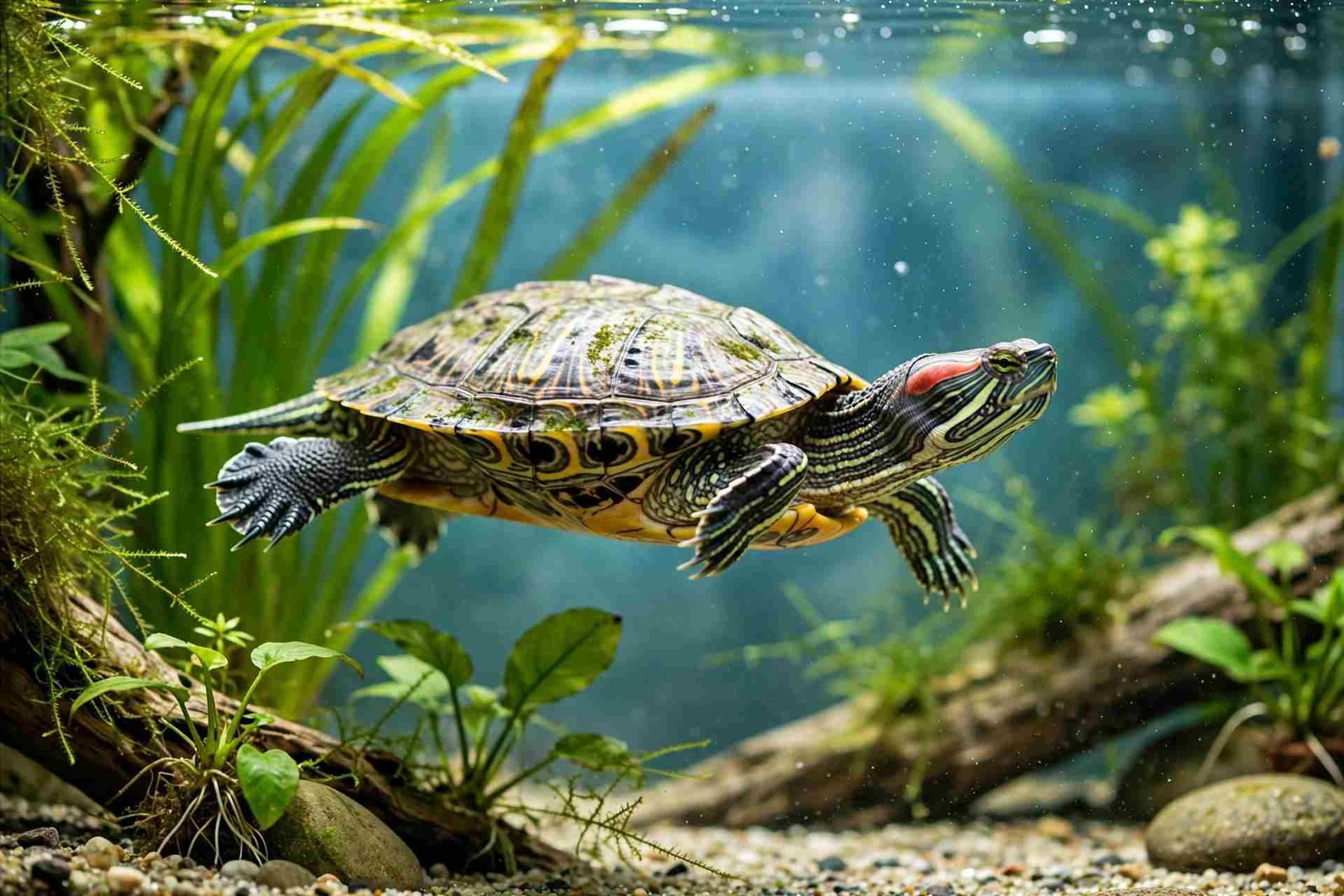
An aquatic turtle is a freshwater reptile that splits its life between swimming and basking. The most common pet species is the red-eared slider, recognizable by the red stripe behind each eye. Painted turtles, map turtles, and mud turtles are also popular, and the same core care principles apply to all of them.
Unlike fish, turtles are not a “fill the tank and forget” pet. They are messy, long-lived, and surprisingly interactive. They recognize their keepers, beg for food, and follow movement outside the glass. However, they also need dry land, specialized lighting, and powerful filtration. Understanding this dual life, half swimmer and half sunbather, is the foundation of good aquatic turtle care.
One more thing beginners should know up front: turtles live for decades, not years, which is why this guide starts with the habitat. The tank you build in week one decides your turtle’s health for the next thirty years.
Aquatic Turtle Care Guide: Build the Tank Before You Buy the Turtle
Here is the rule that separates thriving turtles from suffering ones: set up the complete habitat at least one week before the turtle arrives. Fill the tank, start the filter, dial in the temperatures, and test the lights. A turtle dropped into an uncycled, unheated tank on day one is already behind.
Why does this matter so much? Turtles produce an enormous amount of waste for their size. A new filter needs days to grow the beneficial bacteria that convert toxic ammonia into safer compounds. During that cycling period, water chemistry swings wildly. A turtle added too early swims in its own toxins while its immune system takes the hit.
Set everything up on a Saturday, then monitor water temperature and clarity through the week. Test with a simple liquid test kit: you want ammonia and nitrite at zero before the turtle moves in. Meanwhile, confirm the basking spot holds steady at 85 to 95°F and the UVB lamp covers the platform. By the time you bring your turtle home, its world is already stable.
This habitat-first approach also saves money. Beginners who buy the turtle first tend to panic-buy undersized gear, then replace everything within months. Buying once, at the right size, costs less than buying twice. The shopping list and size tables below show exactly what “right size” means.
What Size Tank Does an Aquatic Turtle Need?
The standard rule is 10 gallons of water for every inch of shell length. A hatchling red-eared slider at 2 inches needs at least a 20-gallon tank to start. That same turtle will reach 10 to 12 inches as an adult and eventually need 100 gallons or more. Plan for the adult, not the baby.
Depth matters just as much. Water should be at least 1.5 to 2 times the turtle’s shell length so it can swim freely and right itself if flipped. Shallow tubs stunt swimming muscles and make feeding awkward. Deeper is better, as long as the turtle can reach the basking platform easily.
| Turtle Size (shell length) | Minimum Tank Size | Better Choice |
|---|---|---|
| Hatchling (1-2 inches) | 20 gallons | 40 gallons (grows into it) |
| Juvenile (3-5 inches) | 40-50 gallons | 75 gallons |
| Adult slider (7-12 inches) | 75-120 gallons | Stock tank or pond |
To make that concrete, here is how fast a red-eared slider actually grows. Around 2 inches at purchase, 3 to 4 inches by the end of year one, and 5 to 7 inches by year three. Full maturity at 9 to 12 inches arrives around year five to seven. Females grow larger than males. That tiny 2-inch baby in the pet store needs a 100-gallon setup within five years. Planning for the adult is exactly why you avoid buying three tanks.
Think beyond glass, too. Large plastic stock tanks work brilliantly for adult turtles, cost less than aquariums, and are nearly indestructible. Whatever you choose, add a secure mesh lid. Turtles are escape artists, and a fall from tank height can crack a shell.

Water, Temperature, and Lighting: The Exact Numbers
Getting the numbers right is not optional. Turtles are cold-blooded, so every bodily process, from digestion to immunity, runs on the temperatures you provide. Too cold and the turtle stops eating; too hot and it stresses. Aim for the ranges in the table and verify with thermometers, not guesswork.
| Zone | Target Range | How to Achieve It |
|---|---|---|
| Water | 75-80°F (24-27°C) | Submersible heater with thermostat |
| Basking spot | 85-95°F (29-35°C) | Basking bulb over the dry platform |
| UVB light | 10-12 hours daily | UVB tube over basking area, replaced every 6-12 months |
| Night | No lights needed | Timer shuts all lamps off; room temp is fine |
UVB (ultraviolet B light) deserves special emphasis because it is the most skipped item in beginner setups. Without UVB, turtles cannot synthesize vitamin D3, which means they cannot absorb calcium. The result is metabolic bone disease: soft, deformed shells and a slow decline. A UVB tube positioned 12 to 18 inches above the basking platform, running 10 to 12 hours a day on a timer, prevents this entirely.
Place two thermometers, one at the basking spot and one at the far end of the water. This confirms the temperature gradient (warm end to cooler end) instead of leaving you to guess. During the first week, test ammonia and nitrite daily with a liquid kit. You will see ammonia spike first, then nitrite, then both fall to zero as beneficial bacteria colonies establish. Add the turtle only after both read zero for two days straight.
Filtration is the other non-negotiable. Turtles are far messier than fish, so use a canister filter rated for at least twice your tank’s volume. Even with strong filtration, change 25 to 40 percent of the water every week and use a dechlorinator on tap water. Scoop out uneaten food daily as well. Clean water prevents the skin and shell infections that fill reptile vet waiting rooms.
What Do Aquatic Turtles Eat?
Aquatic turtles are omnivores with a useful pattern: the young lean carnivorous and adults lean herbivorous. Hatchlings need more protein for growth, while adults thrive on a vegetable-heavy diet. A quality commercial pellet formulated for aquatic turtles makes a reliable base at every age.
Offer food in the water, since turtles need water to swallow. Feed juveniles daily and adults every other day, giving only what disappears in a few minutes. Overfeeding is one of the fastest routes to dirty water and an obese turtle, so measure portions rather than eyeballing them. A practical rule: offer pellets roughly equal to the size of the turtle’s head (not counting the neck). Give adults a loose handful of greens daily. If food still floats uneaten after five minutes, you served too much.
| Food Group | Examples | How Often |
|---|---|---|
| Staple pellets | Aquatic turtle pellets, sized to the turtle | Daily (young) / every other day (adult) |
| Leafy greens | Dandelion greens, collard greens, red leaf lettuce, duckweed | Daily for adults |
| Protein treats | Earthworms, shrimp, crickets, small fish pieces | 1-2 times per week |
| Calcium | Cuttlebone pieces, calcium-dusted greens | Available at all times |
Avoid iceberg lettuce, which is mostly water with little nutrition, and skip raw meat from the kitchen, which can carry bacteria. Some keepers feed in a separate tub to keep the main tank cleaner. This works well as long as the feeding tub water is dechlorinated and warm. Always wash your hands after handling the turtle or its food, since turtles can carry salmonella without looking sick.

Is an Aquatic Turtle a Good Pet for Beginners?
An aquatic turtle can be a good beginner reptile, but only for a beginner who respects the setup. The turtle itself is hardy and forgiving of small mistakes. The equipment list, however, is longer and pricier than most first-timers expect, and that is where beginners stumble.
They suit patient people who enjoy maintenance routines. If you like the rhythm of weekly water changes, testing parameters, and watching an animal grow over decades, you will love it. On the other hand, if you want a pet you can cuddle, a turtle will disappoint you. Handling should be minimal; they are display animals that thrive on good husbandry rather than affection.
Families with small children should think carefully. Turtles carry salmonella, and young kids inevitably put hands in mouths. With strict hand-washing rules and adult supervision, it can work, but the responsibility lands on the parents. For a teenager or adult ready to commit to the habitat-first approach, an aquatic turtle is one of the most rewarding starter reptiles available.
Complete Aquatic Turtle Care Guide: The Daily and Weekly Routine
Once the habitat is built correctly, daily turtle care takes about five minutes and the weekly session about thirty. Here is the exact rhythm.
Daily, spend five minutes: offer food, remove anything uneaten, check that the basking lamp and UVB are on, and glance at water clarity and temperature. Turtles are creatures of habit, so feed at roughly the same time each day. This short routine catches most problems early, because you will notice the day your turtle skips a meal or avoids the basking dock.
Weekly, dedicate about thirty minutes. Change 25 to 40 percent of the water, and rinse filter media in old tank water (never tap water, which kills beneficial bacteria). Then wipe algae from the glass and test ammonia and nitrite. Monthly, inspect the UVB bulb’s age, deep-clean decorations, and weigh your turtle. Steady weight gain in juveniles and stable weight in adults means the diet is right.
Seasonally, watch room temperature swings. In winter, heaters work harder and water evaporates faster, so top up with dechlorinated water and check the basking temperature more often. A simple logbook, even a notes app, turns all of this into a five-second habit and gives your vet useful history if problems ever arise.
7 Beginner Mistakes That Kill Turtles
Most turtle deaths in the first year trace back to the same handful of preventable errors. Read this list twice, because avoiding these seven mistakes puts you ahead of the majority of new keepers.
- The 10-gallon forever tank. A hatchling fits in a 10-gallon tank for a few months, then outgrows it fast. Owners who never upgrade end up with stunted, stressed turtles swimming in circles. Buy with the adult size in mind from day one.
- No UVB light. The single most common killer. Without UVB, shells soften and deform over months in a condition called metabolic bone disease. A proper UVB tube costs less than one vet visit and prevents the problem entirely.
- A fish filter on a turtle tank. Filters rated for the exact tank volume get overwhelmed by turtle waste within days. Always buy a filter rated for at least twice your tank size, preferably a canister model.
- Feeding only pellets, or only lettuce. Pellets alone miss the fiber and enrichment of greens; lettuce alone misses protein and vitamins. The diet table above shows the balance: pellets plus greens plus weekly protein.
- Handling like a hamster. Frequent handling stresses turtles and spreads salmonella. Admire them through the glass, keep handling brief and purposeful, and wash hands every single time.
- Releasing an unwanted turtle outdoors. Red-eared sliders are invasive in many regions and devastate local wildlife. If you cannot keep your turtle, rehome it through a rescue. Never release it.
- Skipping the water conditioner. Tap water contains chlorine and chloramine that burn gills and destroy filter bacteria. A few drops of dechlorinator per bucket is cheap insurance.
Already made one of these mistakes? Most are fixable. Upgrade the tank, add UVB immediately, and do a 50 percent water change with dechlorinated water. Turtles rebound surprisingly fast once conditions improve, so act this week rather than feeling guilty about last month.

How Much Does an Aquatic Turtle Cost?
The turtle is the cheapest part. A red-eared slider hatchling often costs $20 to $50, which tricks beginners into thinking this is a budget pet. The habitat is where the real money goes, and buying it right the first time is still cheaper than replacing junk gear twice.
| Item | Typical Cost | Notes |
|---|---|---|
| Turtle (red-eared slider) | $20 – $50 | Adopt from a rescue if you can |
| Tank (40-75 gallons to start) | $150 – $400 | Stock tanks are cheaper for adults |
| Canister filter (2x rated) | $80 – $250 | The most important purchase |
| Heater, basking bulb, UVB tube, dock | $80 – $150 | UVB tubes need replacing yearly |
| Food, conditioner, test kit | $40 – $80 / year | Ongoing costs stay low |
| Realistic first-year total | $370 – $930 | Drops sharply after setup |
After the first year, annual costs usually fall to $100 to $200 for food, bulb replacements, and water treatments. Vet visits are the wild card. Find a reptile vet before you need one, because not every clinic treats turtles, and an emergency visit without an established vet gets expensive fast.
How Long Do Aquatic Turtles Live?
Aquatic turtles live 20 to 40 years with proper care, and some individuals pass 50. This lifespan is the real price of admission, longer than most dogs and many marriages. Buy the turtle only if you can picture its tank in your life decades from now.
Longevity depends almost entirely on husbandry. Turtles with correct UVB, clean warm water, and a varied diet routinely reach their thirties. Turtles in cold, dirty, UVB-less tanks rarely see ten. The habitat-first rule is not just about comfort; it literally adds decades.
Because of this lifespan, have a succession plan. Talk with family about who takes the turtle if you cannot. Reptile rescues exist in most regions and will rehome sliders, but the waiting lists are long precisely because so many owners skipped this conversation. A turtle is a promise measured in decades, so make it deliberately.
Common Health Issues to Watch For
Healthy turtles are alert, eat eagerly, bask daily, and have firm shells and clear eyes. Learn that baseline in the first month, because early detection makes every condition below far easier to resolve.
- Shell rot: soft spots or foul-smelling patches on the shell, usually from dirty water or insufficient basking. Improve water quality and basking access first, then see a reptile vet if it spreads.
- Respiratory infection: wheezing, bubbles from the nose, swimming lopsided, or refusing to bask. Often triggered by cold water. This needs a vet promptly; it does not resolve on its own.
- Swollen or closed eyes: frequently linked to poor water quality or vitamin A deficiency. Clean water and a diet with proper greens help, but persistent swelling warrants a vet visit.
- Metabolic bone disease: soft or pyramided shell from missing UVB or calcium. Prevention is everything here; advanced cases need veterinary care and corrected lighting.
- Parasites: weight loss despite good appetite, or visible worms in droppings. A vet can diagnose with a fecal test and prescribe treatment.
For deeper reading, this water turtle care overview covers the same health and husbandry fundamentals from another angle: water turtle care basics. When in doubt, a reptile vet visit beats internet guesswork every time.
Related Guides
- How Long Do Red-Eared Sliders Live?
- Best Filters for Turtle Tanks
- Turtle Basking: Lighting and Temperature Guide
Frequently Asked Questions
Can aquatic turtles live in a tank without a basking area?
No. Every aquatic turtle needs a dry platform where it can climb completely out of the water under a heat lamp. Basking regulates body temperature, dries the shell to prevent fungal infections, and delivers UVB exposure. A turtle with no basking area will decline within months.
How often should I change my turtle’s water?
Change 25 to 40 percent of the water every week, even with a strong filter. Scoop out uneaten food and waste daily. Turtles produce far more waste than fish, so the “filter handles it” mindset leads to dirty water and sick turtles. Use dechlorinator on all new tap water.
Do aquatic turtles need a heater?
Yes, in most homes. Water should stay at 75 to 80°F year-round, and room temperature alone rarely holds that steady, especially at night and in winter. A submersible heater with a built-in thermostat keeps the range automatic. Always verify with a thermometer rather than trusting the dial.
Can two turtles live in the same tank?
Sometimes, but it often ends badly. Turtles are territorial and may bully, bite, or outcompete tankmates, especially males. If you try it, provide a very large tank with sight barriers and separate basking spots. Be ready to separate them permanently at the first sign of aggression.
Why is my turtle not basking?
Check three things in order. Basking temperature should be 85 to 95°F, and ramps must reach the water surface for easy platform access. Also remember that a new turtle needs days to settle in. If the setup is correct and basking still stops, watch for illness signs like lethargy or appetite loss and consult a reptile vet.
What is the easiest aquatic turtle for beginners?
The red-eared slider is the most forgiving starter species. It is the turtle this aquatic turtle care guide uses for most examples: hardy, widely available, and well documented. Painted turtles are a close second. Avoid species with specialized needs, like softshells, until you have experience. Whichever you choose, the habitat-first rule applies equally.
How can I tell if my turtle is male or female?
Look at the claws, tail, and underside. Adult males have noticeably longer front claws, longer thicker tails with the vent set further from the body, and a slightly concave plastron (bottom shell). Females have shorter claws, shorter tails, flat plastrons, and grow larger overall. Sexing hatchlings is unreliable, so wait until the turtle reaches about 4 inches.
Do indoor aquatic turtles hibernate?
Healthy indoor turtles with steady heat and light generally do not brumate (the reptile version of hibernation). If your turtle turns lethargic and stops eating in autumn despite correct temperatures, check the heater and UVB first, then consult a reptile vet. Outdoor pond turtles in cold climates do brumate, which is a separate setup entirely.
What do I do with my turtle when I go on vacation?
For trips under a week, a healthy adult is usually fine with an automatic feeder and a topped-up tank. A friend checking in midweek is even better. For longer trips, arrange a sitter who can feed, verify temperatures, and confirm the filter is running. Never leave a turtle without filtration, even briefly.
This guide is for informational purposes and doesn’t replace professional veterinary advice.