

Quick answer: A healthy budgerigar diet is about 60 to 75 percent formulated pellets and 20 to 25 percent vegetables and leafy greens. Seed is only a small daily allowance, a treat. Break the all-seed habit with a slow 4 to 6 week pellet conversion. Raise the pellet share in weekly steps while watching your bird’s weight and droppings. Never attempt a cold-turkey switch, since budgies carry almost no fat reserves and can decline quickly if they stop eating.
Contents
- Why is an all-seed diet dangerous for budgerigars?
- What do budgerigars eat?
- How do I switch my budgie from seeds to pellets?
- What should I do if my budgie refuses pellets?
- Related Guides
- Frequently Asked Questions
Why is an all-seed diet dangerous for budgerigars?
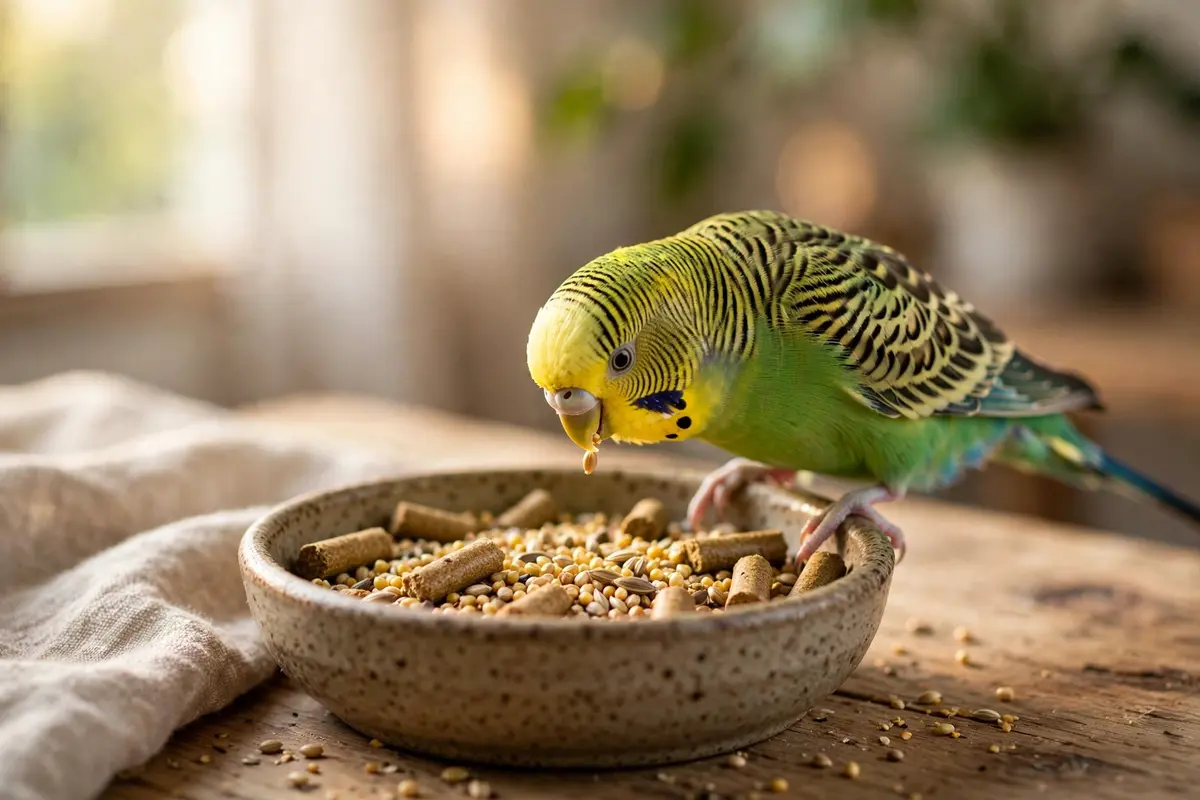
An all-seed diet is dangerous for budgerigars. Seed mixes are high in fat and low in calcium, vitamin A, and several amino acids, so birds on seed alone commonly develop fatty liver disease, vitamin A deficiency, and poor feather quality. The deeper problem is selective eating. A budgie does not eat the whole mix: it picks out its favorite seeds (usually the fattiest ones, like millet and sunflower) and leaves the rest. That means even a “fortified” mix cannot fix the imbalance.
Think of it this way. A wild budgerigar flies miles a day across the Australian outback, burning off the fat from grass seeds. Your pet burns almost none of it. The same seed mix that sustains a wild flock slowly fattens a caged bird, and the damage is quiet. Owners often notice nothing until the bird is lethargic, its beak overgrows, or a vet visit reveals an enlarged liver.
The good news: you do not need to eliminate seed entirely, and you do not need to fight your bird. A healthy budgerigar diet keeps seed in the picture as a small treat. A conversion plan moves it from the main event to a supporting role, step by step, over several weeks.
What do budgerigars eat?
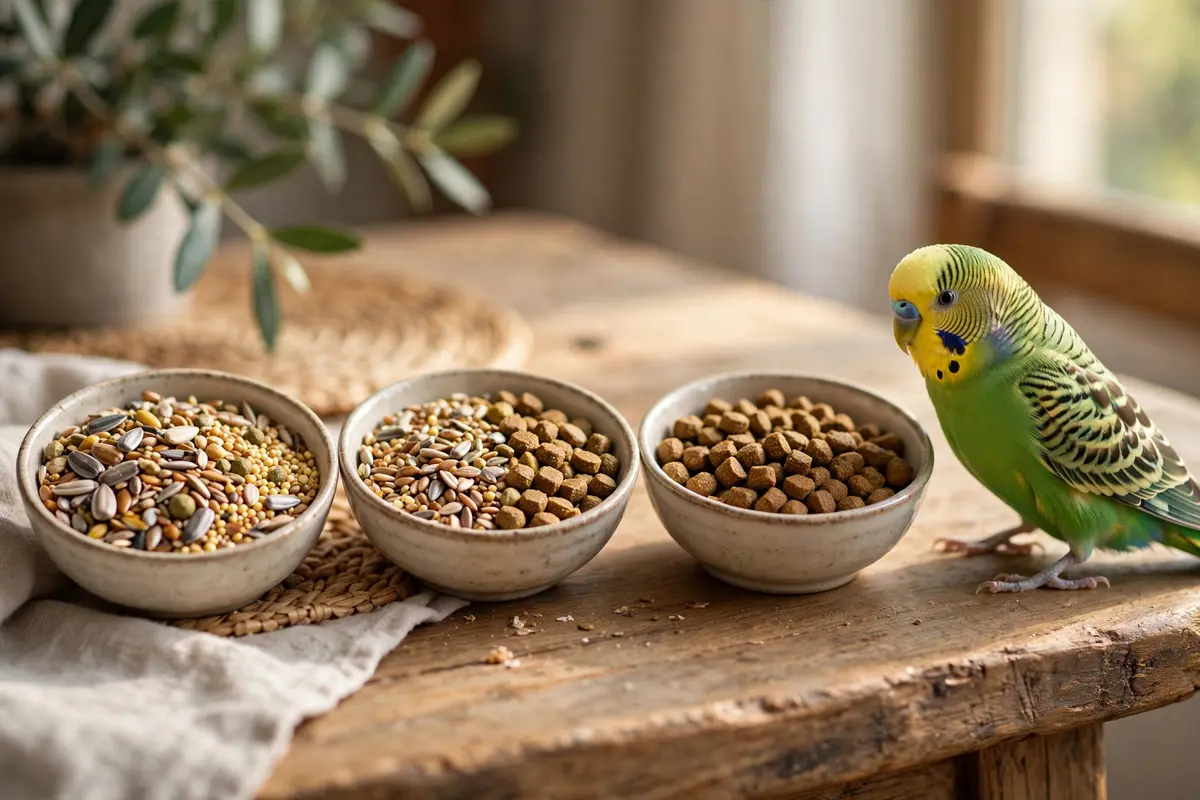
Budgerigars eat a balanced mix of formulated pellets (about 60 to 75 percent of the daily diet), fresh vegetables and leafy greens (about 20 to 25 percent), and a small measured portion of seed. Occasional treats round out the mix. This ratio is the target budgerigar diet most avian veterinarians recommend, and the conversion plan below is designed to get your bird there. Pellets are the backbone because every bite is nutritionally complete, which defeats selective eating entirely. Vegetables and greens supply vitamin A, hydration, and variety; seed becomes a treat, not the staple.
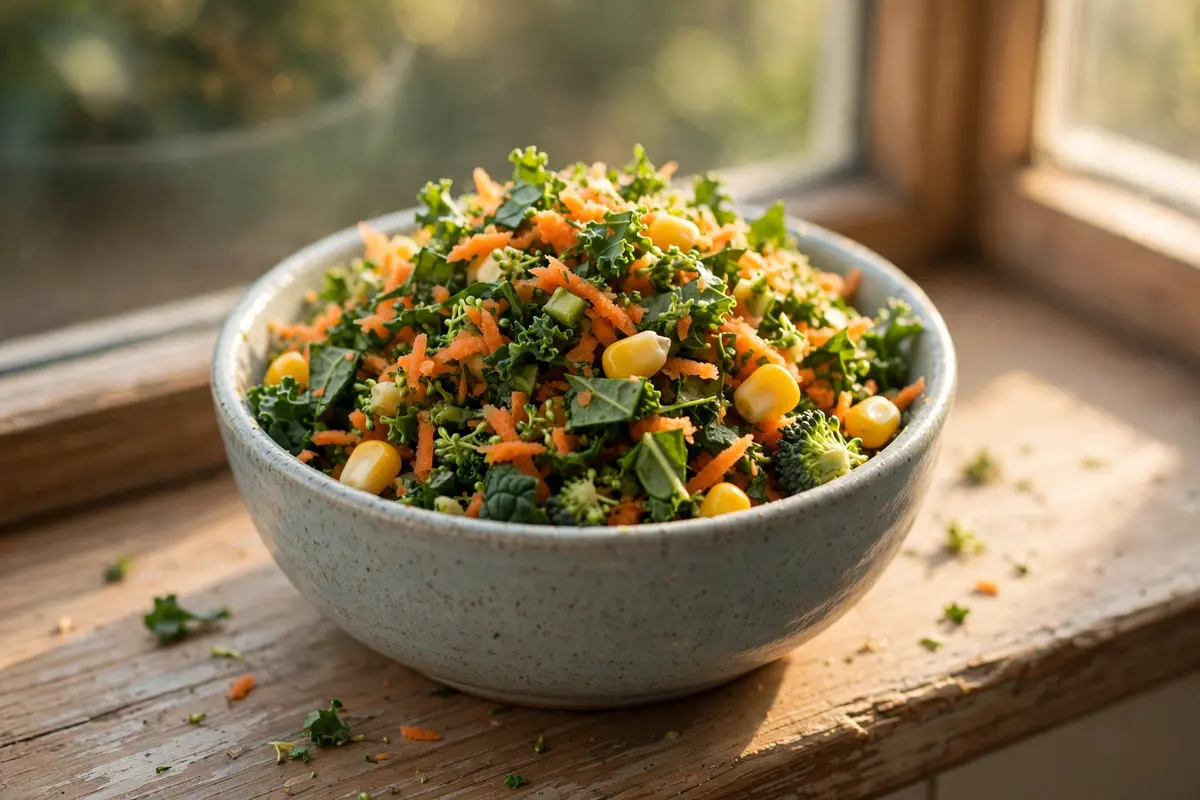
A practical daily portion for one budgie looks like this. Offer 1 to 1.5 level teaspoons of pellets, available all day, plus 1 to 2 tablespoons of chopped vegetables fresh each morning, plus roughly 1.5 teaspoons of seed as a treat portion. Keep a cuttlebone or mineral block in the cage at all times for calcium and beak conditioning. Change drinking water at least once a day.
Safe vegetables to offer daily or a few times a week:
- Leafy greens: kale, romaine lettuce, dandelion greens, Swiss chard
- Grated or finely chopped carrot, broccoli florets, bell pepper (seeds removed), zucchini, corn kernels, peas
- Sprouted seeds, which are softer, more nutritious, and an excellent bridge food during pellet conversion
Serve vegetables washed, chopped small, and raw. Remove uneaten fresh food after a few hours so it does not spoil in the cage.
Toxic foods to never feed a budgie:
- Avocado, chocolate, caffeine (coffee, tea), alcohol
- Onion and garlic in any form
- Mushrooms, rhubarb, and raw dried beans
- Apple seeds and fruit pits, which contain cyanide compounds (the flesh is fine)
Treats have a place too. A small piece of millet spray makes a wonderful training reward during conversion, because you can use it to reward any interest in pellets. The rule is simple: treats, including seed, should stay under about 10 percent of total daily intake once conversion is complete.
How do I switch my budgie from seeds to pellets?
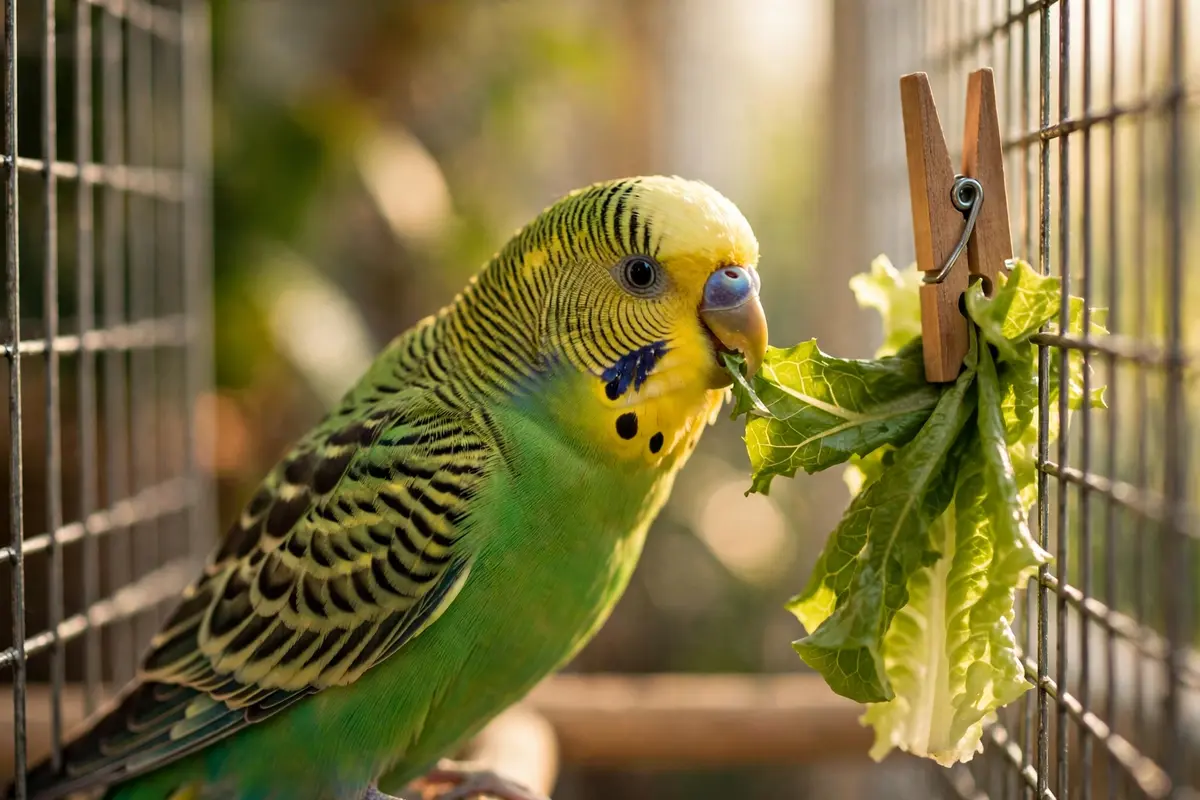
Switch your budgie from seeds to pellets with a gradual pellet conversion over 4 to 6 weeks. Start with 75 percent seed and 25 percent pellets mixed together, then raise the pellet share by 25 percent each week until pellets dominate. This slow pace works because budgies are deeply neophobic (suspicious of new things). A sudden change can cause a stubborn bird to simply stop eating.
Before week one, buy a small bag of budgie or parakeet sized pellets from a reputable brand. Smaller pellet sizes convert better, since many budgies reject large chunks outright. Have a small kitchen scale ready: weighing your bird weekly is the single most important safety check during conversion.
The week-by-week conversion table
| Week | Seed share | Pellet share | What to do this week |
|---|---|---|---|
| 1 | 75% | 25% | Mix pellets into the usual seed. Place a second dish of plain pellets at the highest perch (birds prefer eating up high). |
| 2 | 50% | 50% | Increase pellets. Offer a few pellets from your hand or fingers in the morning when the bird is hungriest. |
| 3 | 25% | 75% | Seed is now the minority. Crush some pellets and sprinkle the dust over the seed so the taste becomes familiar. |
| 4 | 10 to 15% | 85 to 90% | Serve seed only as a small separate treat dish, given in the evening after a full day of pellet access. |
| 5 to 6 | Treat portion only | Full staple | Hold this ratio. Vegetables and greens continue daily. Seed becomes a training treat, not a meal. |
A few techniques make each week easier:
- Morning hunger window: offer pellets first thing in the morning for an hour before the seed appears. A slightly hungry budgie investigates more boldly.
- Sprouted seed bridge: sprout some of the seed mix for 24 to 48 hours, then mix a few pellets in with the sprouts. Birds that accept sprouts often accept pellets next, since the texture is halfway there.
- Moisten the pellets: dampen a spoonful of pellets with warm water to make a soft mash. Some birds that ignore dry pellets will try mash, then graduate to dry.
- Try another size or brand: if your bird ignores one pellet for two full weeks, switch to a smaller size or a different flavor rather than pushing harder.
- Weigh weekly: weigh at the same time of day. A small fluctuation is normal, but a drop of more than 10 percent in a week means going back one step in the table.
An alternative schedule some owners prefer is faster on paper: add 10 percent more pellets every 3 days, finishing in about a month. Both plans work, so pick the one whose pace you can monitor honestly. The real failure mode is not the schedule, it is nobody watching the bird.
What should I do if my budgie refuses pellets?
If your budgie refuses pellets, first check that it is actually eating at all. Look for cracked pellet crumbs or beak marks in the dish, and confirm the bird’s weight is stable before changing tactics. Many owners panic at week two because the dish looks full, but budgies often crush and taste pellets without visibly “eating” them at first. Real refusal means no pellet crumbs, no interest after two weeks, and weight trending down.
Troubleshooting the most common refusal patterns:
- Ignores pellets completely: restart the current week with a different pellet size or brand. Budgies are texture critics; a smaller or differently shaped pellet often breaks the stalemate.
- Eats around the pellets: grind a tablespoon of pellets into powder and mix it into the seed so every bite carries pellet flavor, then slowly reduce the seed again.
- Eats pellets only when hand-fed: that is a win, not a problem. Hand-feeding builds the taste association; keep a plain pellet dish nearby and most birds start visiting it within a week or two.
- Weight dropping: stop advancing the ratio immediately and return to the previous week’s mix where the bird ate confidently. If weight keeps falling, or the bird stops eating entirely for a full day, contact an avian vet promptly. Budgies carry almost no fat reserves.
- Only eats one vegetable or one treat: rotate offerings and temporarily reduce the favorite so it cannot become the next addiction. Variety is the goal, not any single superfood.
The single most common mistake is rushing because the owner is impatient. A conversion that takes eight weeks with a healthy, eating bird is a success. The finished budgerigar diet is what matters, not the speed of the journey. A three-week conversion that ends with a bird refusing all food is a failure. Let the bird set the pace and keep the scale honest. Remember that seed never has to disappear entirely: it just needs to move from the main course to a small, measured treat.

Related Guides
- Cockatiel Care Handbook: Beginner Tips, Tricks and Training
- African Grey Parrot Care: The 60-Year Commitment Guide
- Bird Body Language: 15 Signals Every Owner Should Know
Frequently Asked Questions
Can a budgie live on seeds alone?
No. An all-seed diet is high in fat and deficient in vitamin A, calcium, and key amino acids. Over time, that leads to fatty liver disease, weak bones, and dull feathers. Budgies can survive on seed for a while, but they rarely thrive. Their lifespan is typically shorter than birds on a balanced budgerigar diet of pellets and vegetables.
How long does pellet conversion take for a budgie?
Most budgies convert in 4 to 6 weeks using the gradual weekly-ratio method, though stubborn birds can take 8 to 12 weeks. Younger birds usually convert faster than older ones with years of seed habit. If your bird is eating confidently and holding weight, the timeline does not matter; steady progress beats speed.
What is the best pellet brand for budgies?
Look for a pellet formulated specifically for budgies or parakeets. Choose a small size your bird can comfortably crack, with whole grains listed first and no added sugar or artificial dyes. Harrison’s, Roudybush, and ZuPreem Natural are widely used options. The best pellet is ultimately the one your individual bird will actually eat.
Should I remove seeds completely during conversion?
No, keep offering a measured seed portion throughout conversion, shrinking it weekly per the table. Removing seed entirely can cause a stubborn budgie to stop eating, which is dangerous because small birds have minimal energy reserves. The goal is seed as a small treat, not seed as zero.
Can budgies eat fruit?
Yes, in small amounts. Offer tiny pieces of apple (no seeds), berries, melon, or banana a few times a week as a treat. Fruit is sugary, so it should stay a minor part of the diet compared to vegetables and pellets. Always wash produce and remove uneaten fresh food within a few hours.
Why is my budgie throwing pellets out of the dish?
Budgies often toss unfamiliar items out of the dish while investigating them, which is normal curiosity rather than rejection. It can also mean the pellet size is wrong for your bird. Try a smaller pellet, offer some moistened mash, and place a second dish at a higher perch, since budgies prefer eating from elevated spots.
This guide is for informational purposes and doesn’t replace professional veterinary advice.