

Quick answer: Reverse sneezing in dogs is a harmless throat spasm that sounds like loud snorting and usually stops within 30 seconds. End it faster by gently covering the nostrils for a few seconds or stroking the throat. Call your vet if episodes last over a minute, happen very often, or come with nasal discharge.
Contents
- What Is Reverse Sneezing in Dogs?
- What Does Reverse Sneezing Sound and Look Like?
- What Triggers Reverse Sneezing Episodes?
- What Is the 20-Second Fix for Reverse Sneezing?
- How Is Reverse Sneezing Different From Sneezing, Coughing or Choking?
- When Should I Worry and Call the Vet?
- Related Guides
- Frequently Asked Questions
What Is Reverse Sneezing in Dogs?
Reverse sneezing, technically called paroxysmal respiration, is a sudden spasm of the throat and soft palate that makes a dog inhale air in rapid, noisy bursts. Think of a normal sneeze played in reverse: air gets sucked in through the nose in loud snorts instead of blasting out. Episodes look alarming but are almost always harmless, ending on their own within 10 to 30 seconds.
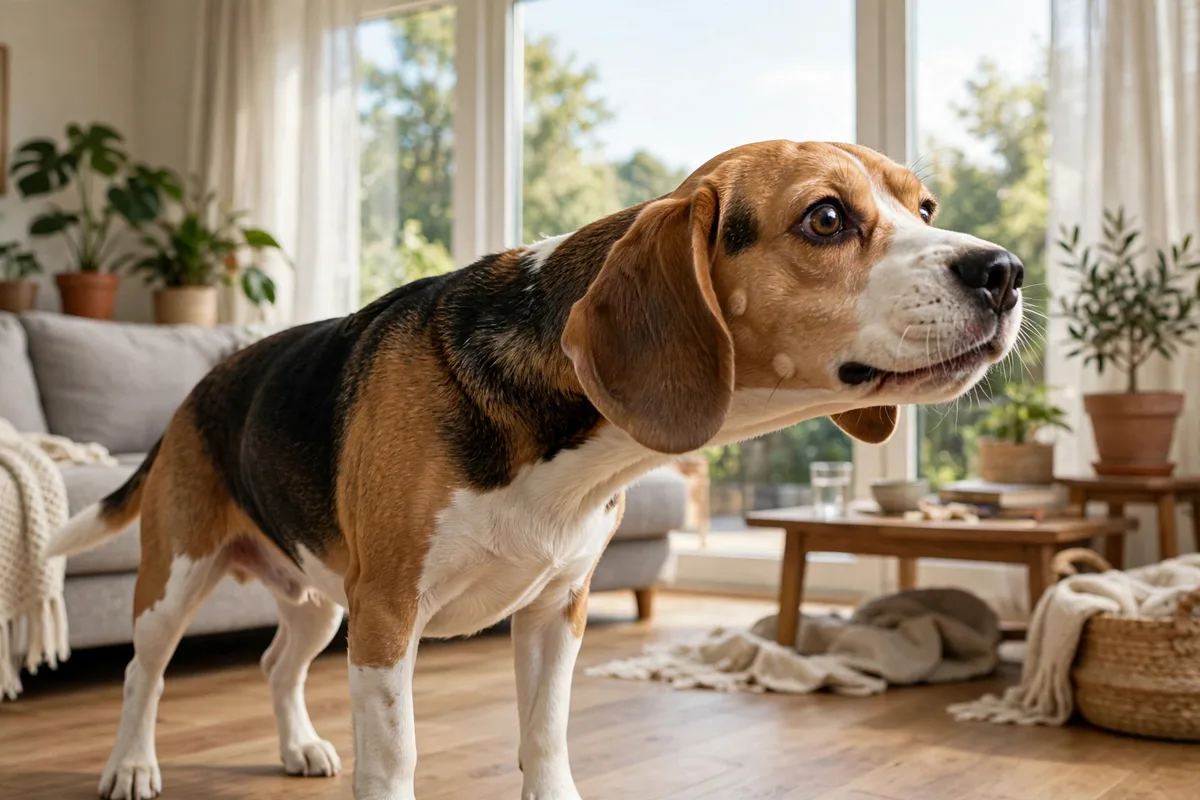
The spasm happens when the soft palate, the flappy tissue at the back of the throat, gets irritated and starts fluttering, narrowing the airway. The dog responds with forceful inward snorts to clear it. Once the irritation settles, the episode stops as suddenly as it started.
What Does Reverse Sneezing Sound and Look Like?
You will know it the first time you see it. The dog freezes, stretches its neck forward and down, and makes a series of loud, rapid inward snorts, like a goose honking. The chest heaves and the eyes may bulge. It is dramatic enough that most first-time witnesses are convinced their dog is choking.
The key clue is posture: neck extended, standing still, nose slightly down, with repeated noisy inhales. A choking dog paws at its mouth, gags, and panics instead. Once you have seen the reverse-sneeze performance a few times, you will recognize it instantly.
What Triggers Reverse Sneezing Episodes?
Almost anything that irritates the throat or nasal passages can set one off. Common triggers include excitement, pulling hard on a leash, eating or drinking too fast, dust, pollen, strong scents like perfume, and sudden temperature changes. Flat-faced breeds like pugs and bulldogs are prone to episodes with even mild triggers because of their short airways.
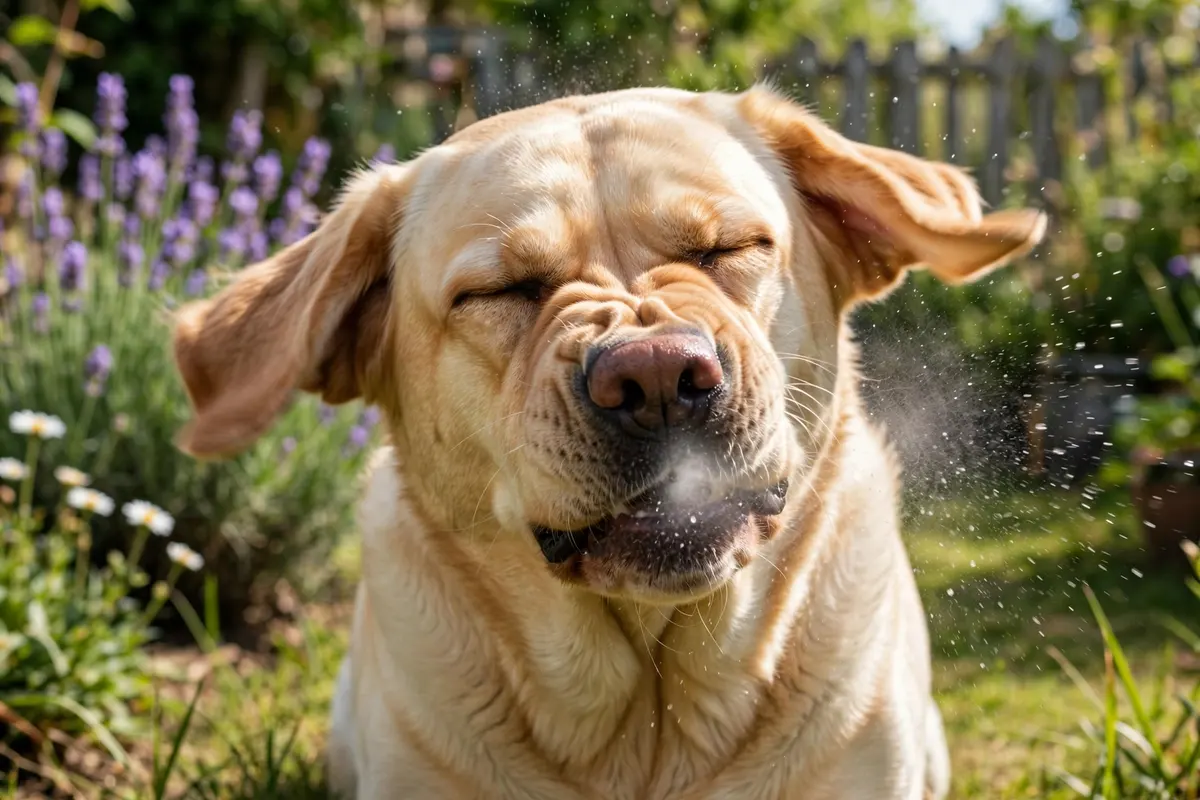
Note when episodes happen to find your dog’s trigger. If they follow walks, try a harness instead of a collar; if they follow meals, try a slow-feeder bowl. If they cluster in spring, mention possible seasonal allergies to your vet.
What Is the 20-Second Fix for Reverse Sneezing?
The fastest way to end reverse sneezing in dogs is to get your dog to swallow, which resets the soft palate. Gently cover both nostrils for about five seconds so the dog opens its mouth and swallows, or lightly stroke the front of the throat downward. A tiny lick of water or a treat works for some dogs too.
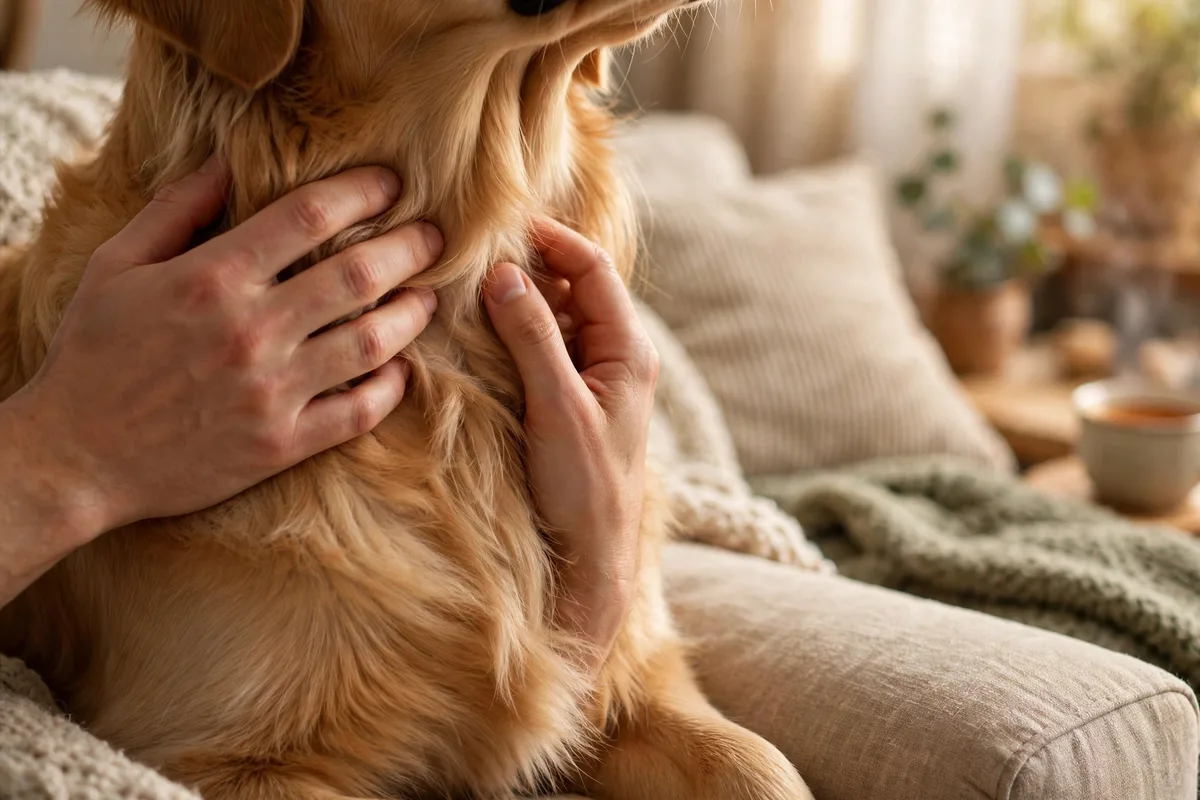
Stay calm: if you panic and hover, the dog’s stress rises and the episode feels longer. Speak in a relaxed voice, try the nostril or throat technique once, and wait. Most episodes resolve on their own within 30 seconds without any intervention.
How Is Reverse Sneezing Different From Sneezing, Coughing or Choking?
Because reverse sneezing looks dramatic, owners constantly confuse it with emergencies. This table lays out the differences at a glance.
| Sound or Event | Airflow Direction | Body Posture | Typical Duration | Urgency |
|---|---|---|---|---|
| Reverse sneezing | Rapid inhales through the nose | Stands still, neck stretched forward | 10 to 30 seconds | Low |
| Regular sneezing | Forceful exhales through the nose | Head jerks forward briefly | A few seconds | Low |
| Coughing | Exhales through the mouth, often honking | Crouches, chest heaves, may gag at the end | Seconds to minutes, can repeat | Medium, see a vet if persistent |
| Choking | Struggling, gagging, little airflow | Panics, paws at mouth, may collapse | Until cleared | Emergency |
The practical rule is simple. A reverse sneezing dog looks uncomfortable but stays still and keeps breathing. A choking dog is in visible distress and cannot breathe properly. When in doubt, act, and a vet visit after a scary first episode is always reasonable.
When Should I Worry and Call the Vet?
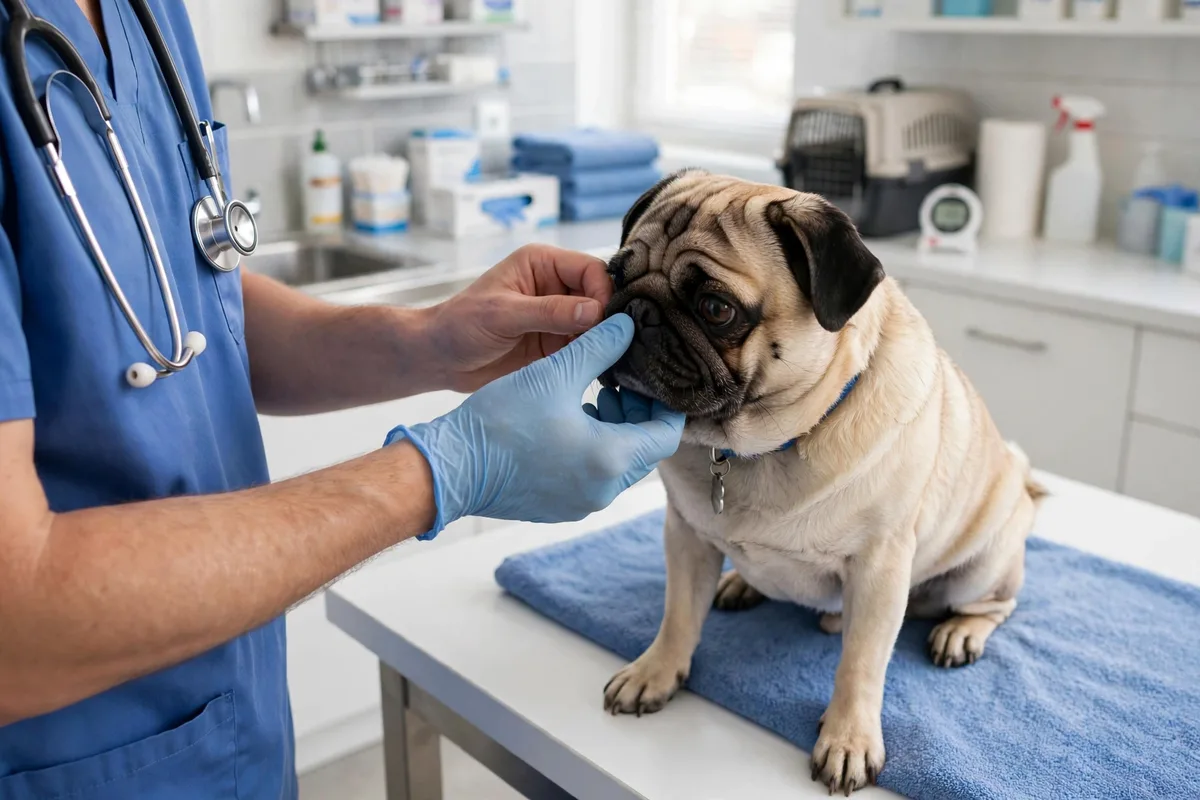
It becomes a vet matter when the pattern changes. Call your vet if an episode lasts longer than a minute, or if episodes happen many times a day or keep increasing. Also call if they come with warning signs: nasal discharge (especially bloody or discolored), lethargy, appetite loss, noisy breathing between episodes, or a changed bark. These can point to nasal mites, a foreign object, infection, or polyps.

Before you visit, record a short video of an episode. They rarely happen on cue in the clinic, and a video lets the vet confirm the diagnosis in seconds. For most dogs the appointment ends with reassurance, which is a perfectly good outcome.
Related Guides
- Dog Throwing Up: 12 Causes Ranked by Urgency
- Puppy Diarrhea: What’s Normal and What’s an Emergency
- Why Is My Dog So Itchy: 10 Causes
Frequently Asked Questions
Is reverse sneezing in dogs dangerous?
No, reverse sneezing is not dangerous in itself. It is a brief, self-limiting spasm that resolves on its own and does not damage the airway. Learn the posture and airflow difference from choking, and get a vet check if the pattern changes or other symptoms appear.
Can reverse sneezing kill a dog?
Reverse sneezing itself cannot kill a dog; dogs keep breathing throughout and it always passes. What kills is a true airway emergency mistaken for reverse sneezing. If your dog cannot catch its breath, paws at its mouth, or turns blue, treat it as an emergency immediately.
Why does my pug reverse sneeze so often?
Flat-faced breeds like pugs, bulldogs, and shih tzus have short nasal passages and elongated soft palates, making the throat more prone to spasms. Frequent episodes are common and usually harmless in these breeds. Still, mention the frequency to your vet, since these dogs can have related airway issues.
Should I take my dog to the vet the first time it reverse sneezes?
A single classic episode in a healthy dog does not need an emergency visit. Mention it at your next routine appointment and record video of future episodes. Go sooner if an episode lasted over a minute or any discharge, lethargy, or appetite change appeared.
Can I prevent reverse sneezing episodes?
You can reduce frequency by managing triggers: switch to a harness, use a slow-feeder bowl, and reduce dust and strong scents at home. You probably cannot eliminate episodes entirely, and that is fine, since they are harmless.
This guide is for informational purposes and doesn’t replace professional veterinary advice.