

Quick answer: Why is my dog throwing up? Most often because of something mild: eating too fast, grass, an empty stomach, or table scraps. The color of the vomit tells you more than the act itself. Yellow foam on an empty stomach is usually harmless bile. Red blood, dark coffee grounds, or repeated retching with nothing coming out means you should call your veterinarian right now.
Contents
- What Causes Vomiting in Dogs?
- What Do Dog Vomit Colors Mean?
- Why Is My Dog Throwing Up but Acting Normal?
- What Should I Do After My Dog Throws Up?
- Why Is My Dog Throwing Up Foam With Nothing Coming Out?
- What Do I Tell the Vet When I Call?
- Related Guides
- Frequently Asked Questions

What Causes Vomiting in Dogs? The 12-Cause Urgency Ladder
Dog vomiting causes range from harmless habits to true emergencies. The trick is ranking them, so here they are as a ladder from least to most urgent. Find where your dog’s episode sits, then read on for what each level means for you.
- Eating too fast. The classic “scarf and barf.” Undigested kibble comes back up within minutes, still shaped like the food. Urgency: low. A slow-feeder bowl usually ends it.
- Grass eating. Many dogs graze on grass and then vomit once. The grass itself irritates the stomach lining on the way back up. Urgency: low, unless it happens daily.
- Bilious vomiting syndrome. Yellow bile vomit on an empty stomach, usually early morning or late night. Bile sits too long in an empty stomach and irritates the lining. Urgency: low to moderate. A small bedtime snack often fixes it.
- Motion sickness. Car rides, especially in puppies under one year old. Drooling, then vomiting, then completely fine at home. Urgency: low.
- Dietary indiscretion. Trash raids, rich table scraps, or the mysterious thing found at the park. Vomiting once or twice, then back to normal. Urgency: low to moderate.
- Sudden diet change. A new food switched overnight instead of over 7 to 10 days. The gut protests the surprise. Urgency: low. Transition slowly and it stops.
- Food intolerance or allergy. Recurring vomiting tied to a specific protein or ingredient, sometimes with itchy skin or soft stools alongside. Urgency: moderate. Worth a vet visit and a proper elimination diet.
- Gastritis. Inflammation of the stomach lining, often after something irritating was eaten. Repeated vomiting, sometimes with reduced appetite. Urgency: moderate. See your vet if it lasts more than a day.
- Intestinal parasites. Roundworms and other worms, mostly in puppies and dogs that eat soil or feces. Watch for a potbelly, poor weight gain, or visible worms. Urgency: moderate. Needs a vet visit and proper deworming.
- Pancreatitis. Inflammation of the pancreas, often triggered by a fatty meal like bacon grease or a stolen burger. Repeated vomiting plus abdominal pain, a hunched posture, and lethargy. Urgency: high. This needs veterinary treatment.
- Foreign body obstruction. A swallowed sock, toy, corn cob, or bone stuck in the gut. Foreign object signs include repeated vomiting with no stool production, abdominal pain, and loss of appetite. Urgency: emergency.
- Bloat (GDV). The stomach fills with gas and twists, cutting off blood flow. The dog retches violently but produces little or nothing, the belly swells hard like a drum, and drooling follows. Urgency: critical emergency. Minutes matter, and surgery is the only fix.
Notice the pattern. Single episodes with a clear trigger sit at the bottom of the ladder. Repeated vomiting, pain, blood, or anything near the top means the vet takes over from here.
What Do Dog Vomit Colors Mean? The Vomit Decoder
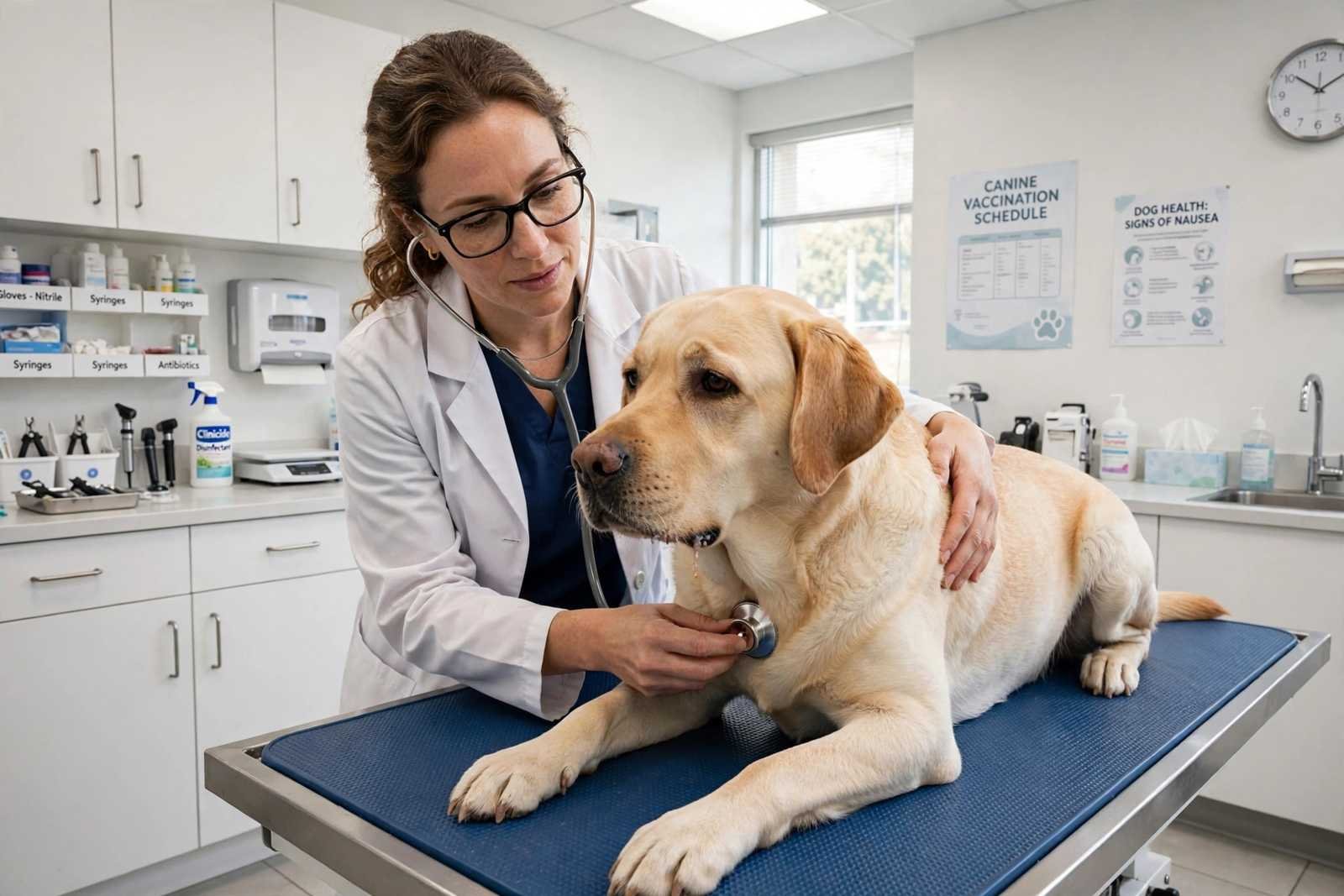
Dog vomit colors tell you what came back up and roughly where it came from. The first distinction is bile vs food vomit. Food vomit looks like the meal (brown, chunky), while bile vomit is yellow or green liquid with no food in it. Use this vomit color chart to decode what you see in the bowl or on the carpet.
| What You See | What It Usually Means | Urgency |
|---|---|---|
| Undigested food, brown and chunky | Ate too fast, or regurgitation (food never reached the stomach) | Low |
| Yellow or yellow-green liquid or foam | Bile from an empty stomach (bilious vomiting syndrome) | Low if once; vet if frequent |
| White foam | Stomach irritation or swallowed air; repeated dry retching can signal bloat | Watch closely |
| Clear liquid | Saliva or water, often from drinking too fast | Low; caution if repeated |
| Green with grass | Grass eating, or bile mixed with grass | Low |
| Bright teal or blue | Possible rodent poison ingestion | Critical emergency |
| Pink or red streaks | Fresh blood from irritation, a small tear, or ulcers | Call the vet now |
| Dark brown, like coffee grounds | Digested blood, possibly from internal bleeding or ulcers | Emergency |
| Black or tarry | Digested blood from higher in the gut | Emergency |
| Brown and foul-smelling | Possibly digested food, or feces ingestion | Vet if foul or repeated |
One practical tip: take a photo before you clean up. It feels odd, but your veterinarian can read a photo of the vomit faster than any description you give over the phone.

Why Is My Dog Throwing Up but Acting Normal?
A dog throwing up once and then bouncing straight back to normal usually has a mild, one-time cause. Think too-fast eating, grass, or a minor stomach upset. When the dog stays bright, playful, eating, and drinking normally afterward, you can generally monitor at home instead of rushing to the clinic.
Use the 24-hour rule. One episode plus a normal dog equals watchful waiting. Two or more episodes in 24 hours equals a vet call. So does any red flag: blood, lethargy, repeated retching, abdominal pain, or refusal to drink. Acting normal is reassuring, but it is not a guarantee, so keep counting episodes and watching energy levels through the day.
What Should I Do After My Dog Throws Up?
After a single mild episode, the home protocol is simple and conservative. Start with rest, then rebuild the diet step by step.
When to withhold food: remove food for 6 to 12 hours to let the stomach settle. Skip the fast for puppies, toy breeds, and diabetic dogs unless your vet advises it, since their blood sugar can drop quickly.
Water, but slowly: offer small, frequent sips. A full bowl gulped down in one go can trigger another round. Ice cubes work well for dogs that drink too fast.
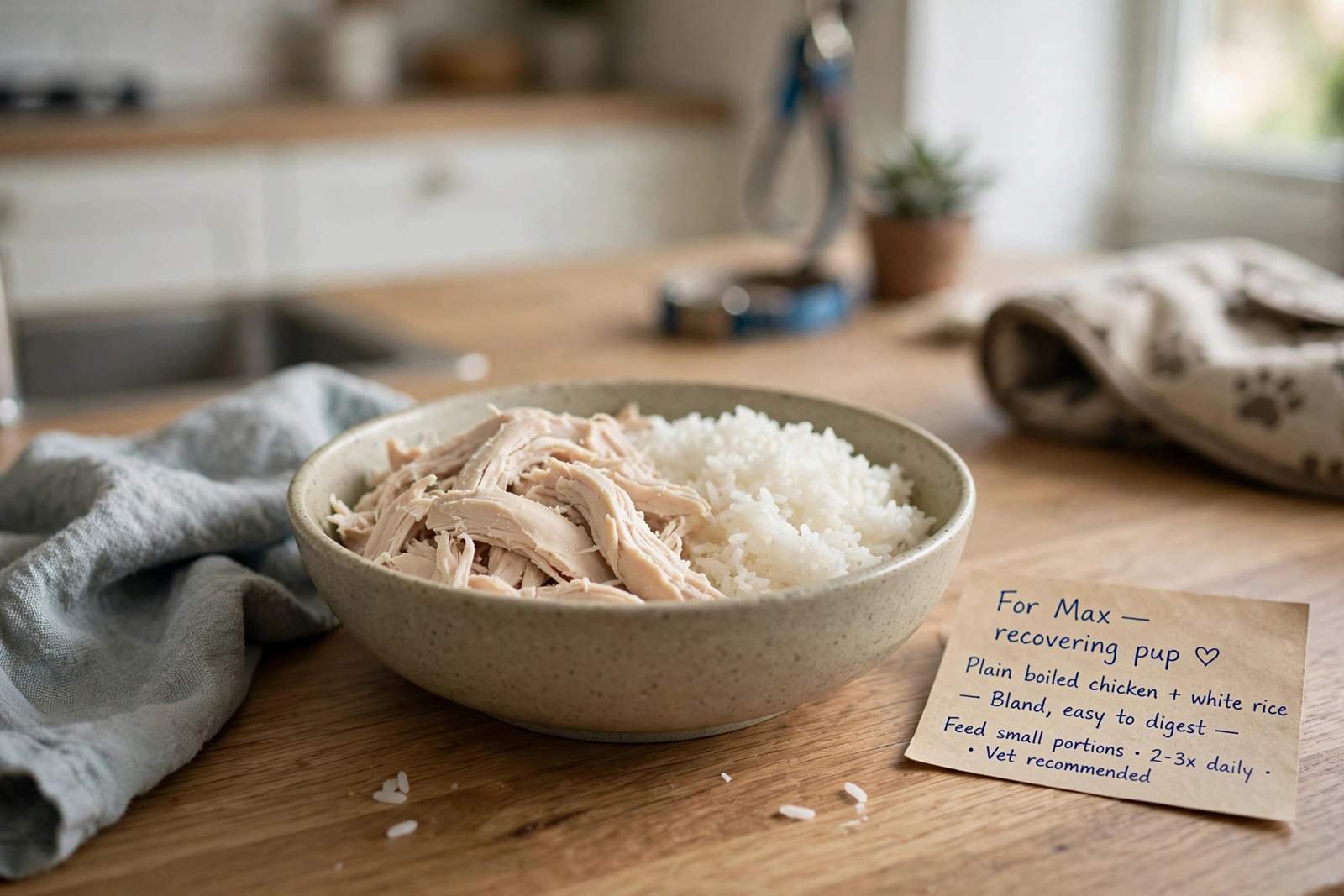
Bland diet after vomiting: when the fast ends, feed small, frequent meals of plain boiled chicken breast and white rice for 24 to 48 hours. Aim for about one part chicken to two parts rice. Then transition back to regular food gradually over 3 to 5 days.
What not to do: never give human anti-vomiting medicine unless your veterinarian specifically instructs you. These drugs can mask a serious problem or be unsafe at dog doses. Healthline’s guide on what to do if your dog begins vomiting covers the same cautious approach.
Why Is My Dog Throwing Up Foam With Nothing Coming Out? The Bloat Warning
This is the one scenario where you skip every other step in this guide. If your dog retches repeatedly but brings up little or nothing, usually white foam or saliva, check the belly. In bloat (gastric dilatation-volvulus, GDV), the stomach fills with gas and twists, cutting off blood flow. These bloat warning signs decide everything:
- Unproductive retching (trying to vomit, but nothing comes up)
- A swollen, hard belly that feels tight like a drum
- Restlessness and pacing, unable to settle
- Excessive drooling
- Rapid breathing or collapse
Bloat is a surgical emergency. Do not wait to see if it passes, because it does not. Large, deep-chested breeds face the highest risk: Great Danes, German Shepherds, Boxers, Standard Poodles, and similar builds. Feeding one large meal a day, eating very fast, and exercising right after meals all raise the odds. Call your emergency veterinarian or drive there immediately.

What Do I Tell the Vet When I Call?
Have these six facts ready and the call takes two minutes. Vets triage almost entirely on these details, so the notes you keep at home become the shortcut to the right decision.
- How many episodes in the last 24 hours, and when the first one happened
- What the vomit looked like (a photo on your phone is even better)
- What the dog ate in the last 24 hours, including anything stolen
- Whether anything is missing that could have been swallowed (socks, toys, corn cobs)
- Appetite, water intake, and energy level right now
- Any other symptoms: diarrhea, blood, pain, bloating, retching without result
Related Guides
- Puppy Diarrhea: What’s Normal and What’s an Emergency
- Why Is My Dog So Itchy? 10 Causes and What Actually Helps
Frequently Asked Questions
Why does my dog throw up yellow bile in the morning?
That is usually bilious vomiting syndrome: bile sits in an empty stomach overnight and irritates the lining. Dogs fed once daily or with long overnight fasts are the typical cases. A small bedtime snack or an earlier breakfast often stops it. If it happens several mornings in a row, see your vet.
Is it normal for dogs to throw up after eating grass?
Yes, and it is one of the most common reasons for a single mild episode. Grass tickles the stomach lining, and the dog vomits it back up. Occasional grass vomiting in an otherwise healthy dog needs no treatment. Daily grass eating with vomiting deserves a vet visit, since it can signal ongoing nausea.
How many times can a dog throw up before it becomes an emergency?
There is no magic number, but a useful rule is this: one episode in 24 hours with a normal dog can be monitored. Two or more episodes in 24 hours means you should call your vet now rather than waiting. The same goes for vomiting that continues into a second day, or any single episode with blood, pain, bloating, or lethargy.
Can I give my dog anything to stop the vomiting?
Do not give human anti-nausea or anti-diarrhea medicine unless your veterinarian specifically tells you to. The safest home measures are withholding food for 6 to 12 hours, offering small sips of water, and then a bland diet. If vomiting continues despite this, the dog needs a vet exam, not a home remedy.
Why does my dog throw up undigested food hours after eating?
When owners ask “why is my dog throwing up” food hours after eating, the answer is often regurgitation rather than true vomiting. The food never reached the stomach, and it happens passively without retching. Eating too fast is the common cause. If it happens often, or with weight loss, your vet should investigate the esophagus.
How long should I wait before feeding my dog after vomiting?
Wait 6 to 12 hours after the last episode, then offer a small bland meal and see if it stays down. Puppies, toy breeds, and diabetic dogs should not be fasted without veterinary guidance. If the dog vomits the bland meal too, stop feeding and call your vet.
This guide is for informational purposes and doesn’t replace professional veterinary advice.