

Quick answer: Fleas on cats are beaten with a 3-front war: treat the cat with cat-safe products only, deep-clean the home room by room to break the flea life cycle, and keep up prevention afterward. Never use dog flea products on a cat, since the ingredient permethrin can be fatal to cats. Expect the full battle to take 2 to 4 weeks.
Contents
- How Do You Spot Fleas on Cats Early?
- What Is Flea Dirt on Cats?
- The 3-Front War: Why Treating Only the Cat Fails
- Front 1: How to Get Rid of Fleas on Cats
- Warning: Never Use Dog Flea Products on Cats
- What Cat Flea Treatment Actually Works?
- Front 2: The Room-by-Room Home Cleanup Protocol
- Your 4-Week Battle Plan: What Happens When
- Front 3: Prevention After the War
- Related Guides
- Frequently Asked Questions

How Do You Spot Fleas on Cats Early?
Catching fleas on cats early makes the whole war shorter. The first sign is usually behavior, not bugs. A cat that scratches more than usual, grooms one spot obsessively, or suddenly hates being petted along the back may be telling you something.
Part the fur and look at the skin, especially around the neck, the base of the tail, the belly, and behind the ears. Live fleas are tiny, dark brown, fast movers, about the size of a sesame seed or smaller. However, you may never see one, even in a real infestation, because cats are excellent groomers and eat many of the fleas they catch.
That is why flea dirt is the more reliable clue, and it gets its own section below. Other warning signs include small scabs along the back, thinning fur from overgrooming, and restlessness at night. In kittens or heavy infestations, pale gums can signal anemia, which needs a vet visit promptly rather than home treatment.
What Is Flea Dirt on Cats?
Flea dirt is flea feces, and it is mostly digested blood. It looks like tiny black specks scattered through the fur, easy to mistake for ordinary dirt. The difference matters, because flea dirt means live fleas are feeding on your cat right now.
The classic test takes ten seconds. For example, collect some specks on a damp white paper towel or tissue. If they dissolve into reddish-brown smears, that is blood, and you are looking at flea dirt. Regular dirt just makes grey smudges. This simple test is how many owners confirm an infestation before they ever spot a live flea.
Check the spots where fleas feed most: the neck, the base of the tail, the belly, and the groin. On dark-furred cats, flea dirt hides well, so run the paper test even when the coat looks clean. Finding flea dirt is your signal to open all three fronts of the war below, starting today.
The 3-Front War: Why Treating Only the Cat Fails
Most failed flea battles lose for one reason: the owner treats the cat and ignores the house. Fleas run through four life stages: egg, larva, pupa, and adult. Only the adults live on your cat. The eggs, larvae, and pupae live in carpets, bedding, and floor cracks. That is why killing the adults on the cat never ends the problem alone.
A single female flea can lay more than 25 eggs in one day, and those eggs roll off the cat into the environment within hours. Pupae sit in tough cocoons that resist most treatments, then hatch when they sense heat, movement, or the vibrations of your footsteps. This is the engine of reinfestation.
So the war has three fronts, fought at the same time. The first is the cat: kill adults and stop the biting. Next comes the home: remove eggs, larvae, and pupae room by room. The third is prevention: keep new fleas from starting the cycle again. Skip any front and the cycle restarts. Harvard Health’s flea guide for pets and homes describes the same four-stage life cycle and the same two-pronged home and pet approach.
Front 1: How to Get Rid of Fleas on Cats
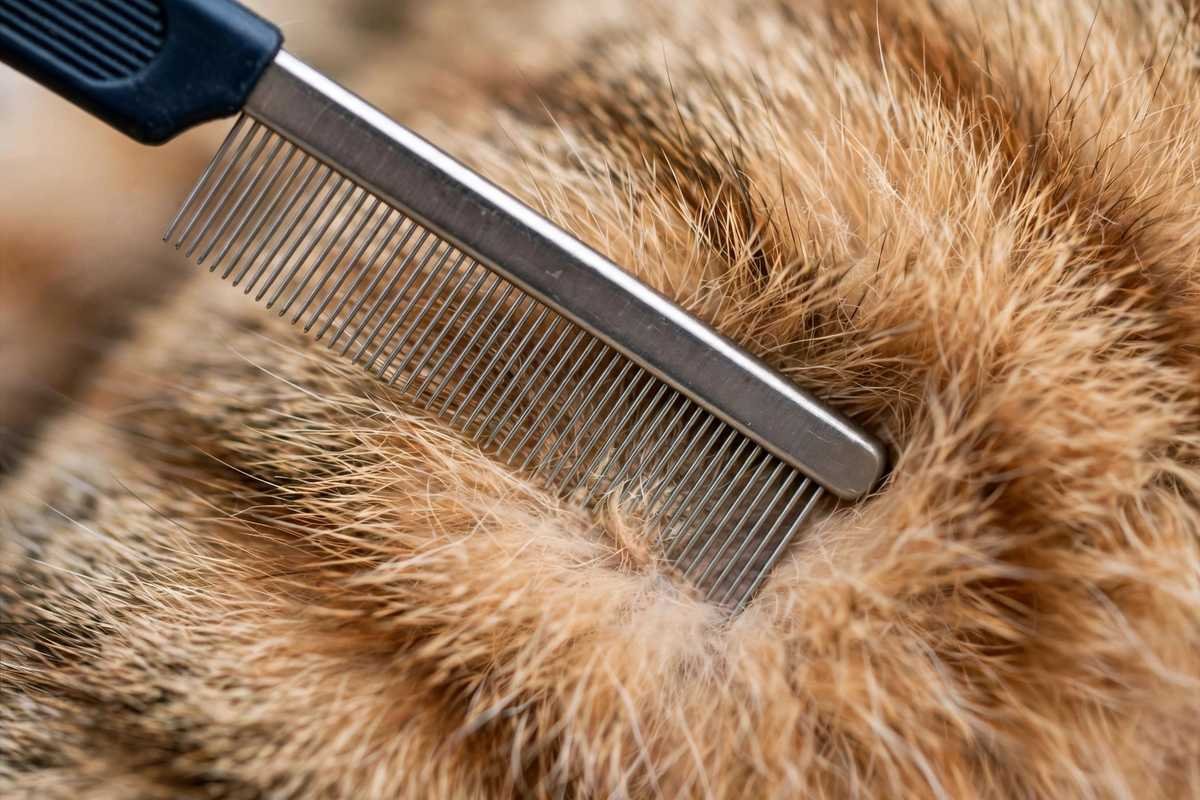
Front one starts with a flea comb, and the comb routine is the most underrated weapon in this war. Use a fine-toothed flea comb every day during an infestation. Work through the fur in sections, focusing on the neck, the base of the tail, the belly, and behind the ears, where fleas gather.
Then, keep a bowl of warm soapy water beside you and dunk the comb after every few strokes. The soap breaks the water’s surface tension so captured fleas drown instead of jumping back out. Wipe the comb on a white paper towel as you go; what you find also doubles as your daily progress report.
Bathing can help but deserves caution. A bath with a mild cat-safe soap kills the adult fleas on the cat at that moment. But it does nothing about the eggs in your carpet, and many cats find bathing extremely stressful. Never use dog flea shampoo, essential oils, or dish soap formulas meant for other animals. If you bathe, keep it quick. Also, keep water out of the ears, dry the cat thoroughly, and follow up with the vet-prescribed treatment below. For most cats, the comb plus the right product beats a bath.
Warning: Never Use Dog Flea Products on Cats
Read this before you buy anything: many flea products made for dogs contain permethrin, an ingredient that can be fatal to cats. Cats lack the liver enzymes needed to break it down, so even a small amount absorbed through the skin can cause tremors, seizures, and death. This includes dog spot-on treatments, dog flea shampoos, and dog flea collars. Never apply a dog product to a cat, never split a large-dog dose for a cat, and store dog and cat products on separate shelves so a tired hand cannot grab the wrong box. If a dog product ever touches your cat, wash it off with mild soap and lukewarm water immediately and call your veterinarian or an emergency clinic right away. Speed matters enormously here.
Unfortunately, this warning exists because the mistake is heartbreakingly common in multi-pet homes. Someone treats the dog, has product left over, and figures a smaller dab will work on the cat. It will not. It can kill. Cat-safe products only, every time, with no exceptions and no improvising.
What Cat Flea Treatment Actually Works?
The products that actually end infestations come from your veterinarian, not the supermarket shelf. Vet-prescribed topicals and oral preventatives are tested for safety in cats at the correct doses, which is exactly what over-the-counter guesswork cannot promise. Ask your vet which type suits your cat’s age, weight, and health.
For instance, topical spot-on treatments are the most common recommendation. They are applied to the skin at the back of the neck, where the cat cannot lick. Some, such as those based on selamectin, also cover ear mites and heartworm prevention in cats, which makes them a practical all-rounder. Oral preventatives given monthly are another vet option for cats that will take a pill or a flavored chew.
What to avoid: cheap unbranded flea collars and essential oil blends (tea tree oil is toxic to cats). Also skip garlic or brewer’s yeast supplements (garlic damages feline red blood cells). Also avoid any product whose label does not explicitly say it is for cats. “Natural” does not mean safe, and for cats it often means the opposite. One more rule: treat every cat in the household, not just the itchy one, or the untreated cat keeps feeding the cycle.

Front 2: The Room-by-Room Home Cleanup Protocol
Front two is where wars are actually won, because the home holds the eggs, larvae, and pupae. Work through this checklist room by room, and repeat the vacuuming rhythm below for the full month. Half measures here are the number one reason infestations “come back.”
| Area | What to Do | How Often |
|---|---|---|
| Cat bedding and blankets | Wash in hot water (around 60°C) and dry on high heat, which kills eggs, larvae, and pupae | Weekly during the war |
| Your own bedding | Same hot wash treatment if the cat sleeps on your bed | Weekly during the war |
| Carpets and rugs | Vacuum slowly in overlapping passes; the vibrations also trigger pupae to hatch so they can be caught | Daily for 7 to 10 days, then twice weekly for a month |
| Upholstered furniture | Vacuum cushions, crevices, and under cushions; steam clean if possible | Daily at first, then weekly |
| Hard floors and baseboards | Vacuum cracks and edges where eggs collect; mop with soapy water | Twice weekly |
| Cat’s favorite spots | Window sills, cat trees, carriers: vacuum and wipe down; wash removable covers hot | Weekly |
| Car and entryway | Vacuum seats and mats if the cat travels; shake out doormats | Once, then as needed |
Three details make or break this protocol. First, empty the vacuum canister or seal the bag and take it outside immediately after every session, because fleas can crawl back out. Second, skip total-release foggers while the cat is in the house. They rarely reach the cracks where pupae hide, and they fill the air your cat breathes. Third, steam cleaning carpets is the best deep option if you have access to one, since sustained heat kills every life stage on contact.

Your 4-Week Battle Plan: What Happens When
Flea elimination typically takes 2 to 4 weeks, and knowing the timeline keeps you from quitting right before you win. Pupae keep hatching in waves. Therefore, seeing a few fleas in week two or three does not mean you are failing. It means the cycle is flushing out. Here is what to expect:
| Week | Your Actions | What You Will See |
|---|---|---|
| Week 1 | Start vet-prescribed treatment on all cats; daily flea combing; daily vacuuming; hot-wash all bedding | Adult fleas drop fast; scratching eases within days |
| Week 2 | Keep combing daily; vacuum every other day; second hot wash of bedding | A few new fleas may appear as pupae hatch; this is normal, not failure |
| Week 3 | Comb every other day; vacuum twice weekly; check flea dirt with the paper test | Sightings should be rare; flea dirt test comes back clean most days |
| Week 4 | Shift to prevention schedule; resume normal cleaning; keep monthly product on calendar | No live fleas, no fresh flea dirt for a full week means you have won |
If you are still finding live fleas after week four, something is feeding the cycle. Common culprits: an untreated pet in the house, a missed favorite sleeping spot, or a product that was applied late or washed off. Re-check every front, and call your vet before switching products, since doubling up treatments can be dangerous.
Front 3: Prevention After the War
Winning the war means nothing if you invite the next invasion. Year-round vet preventatives are the simplest insurance, because fleas survive indoors through winter and ride in on shoes, pant legs, and other pets. In addition, keep the monthly treatment on a calendar reminder and treat it like a vaccination: non-negotiable.
Outdoor and indoor-outdoor cats need the tightest routine, since they meet fleas in grass, under porches, and from neighborhood animals. Keep the yard trimmed and clear leaf litter where larvae hide. In multi-pet homes, dogs and cats each need their own species-correct products, stored separately. Apply them on the same schedule so no animal becomes the weak link.
Quarantine every newcomer. A new cat, a foster, or a cat returning from boarding should get a flea check and start prevention before joining the household. Two weeks of separation with its own bedding saves you from restarting the whole war. Finally, keep the flea comb in the routine even after victory. A quick weekly pass catches the next problem while it is still one flea, not one thousand.
Related Guides
- Cat Hairballs: Causes, Remedies and When They’re Dangerous
- Diabetes in Cats: Symptoms, Treatment and Remission Chances
Frequently Asked Questions
How long does it take to get rid of fleas on cats?
Expect 2 to 4 weeks of consistent effort. Adult fleas die within days of proper treatment, but pupae in your carpets keep hatching in waves, so you will see stragglers. The war is won when you find no live fleas and no fresh flea dirt for a full week.
Can indoor cats get fleas?
Yes, and it surprises owners every time. Fleas hitchhike indoors on your shoes and clothing, on visiting pets, and through open windows. Indoor cats are not safe without prevention, As a result, year-round vet preventatives matter even for cats that never go outside.
Can fleas on cats spread to humans?
Fleas prefer cats and dogs, but they will bite people, usually around the ankles, leaving small red itchy dots. The bigger human risk is indirect: fleas can transmit tapeworm larvae and, rarely, other infections. Clearing the infestation protects the whole household.
Why do I still see fleas after treatment?
Almost always, pupae hatching. The treatment kills adults on the cat, but cocoons in your home survive and release new adults over 2 to 3 weeks. Keep vacuuming, since the vibrations trigger hatching and let you catch each wave. If live fleas persist past week four, re-check every front and call your vet.
Are flea collars safe for cats?
Only collars made specifically for cats and recommended by your vet. Cheap unbranded collars and any dog flea collar can be dangerous, since dog products may contain permethrin, which is toxic to cats. When in doubt, choose a vet-prescribed topical or oral product instead.
Can fleas make my cat seriously ill?
Usually they cause itching and irritation. However, heavy infestations can cause anemia, especially in kittens, plus skin infections from scratching and tapeworms from swallowed fleas. Pale gums, lethargy, or weight loss alongside fleas means a vet visit now, not later.
This guide is for informational purposes and doesn’t replace professional veterinary advice.