

Quick answer: Most cat biting is communication, not meanness. The first step in learning how to stop cat biting is figuring out which of the five bite types you are dealing with. Then watch the warning signs that come before the teeth, and redirect the energy to toys every time. Never punish: punishment increases fear and makes biting worse. Most owners see a real change within two to three weeks of consistent redirection.
Contents
- The Play vs Aggression Decoder
- Body Language Warning Signs
- Why Punishment Backfires
- The Redirect Protocol: How to Stop Cat Biting Without Punishment
- When a Bite Means Something Else
- Related Guides
- Frequently Asked Questions
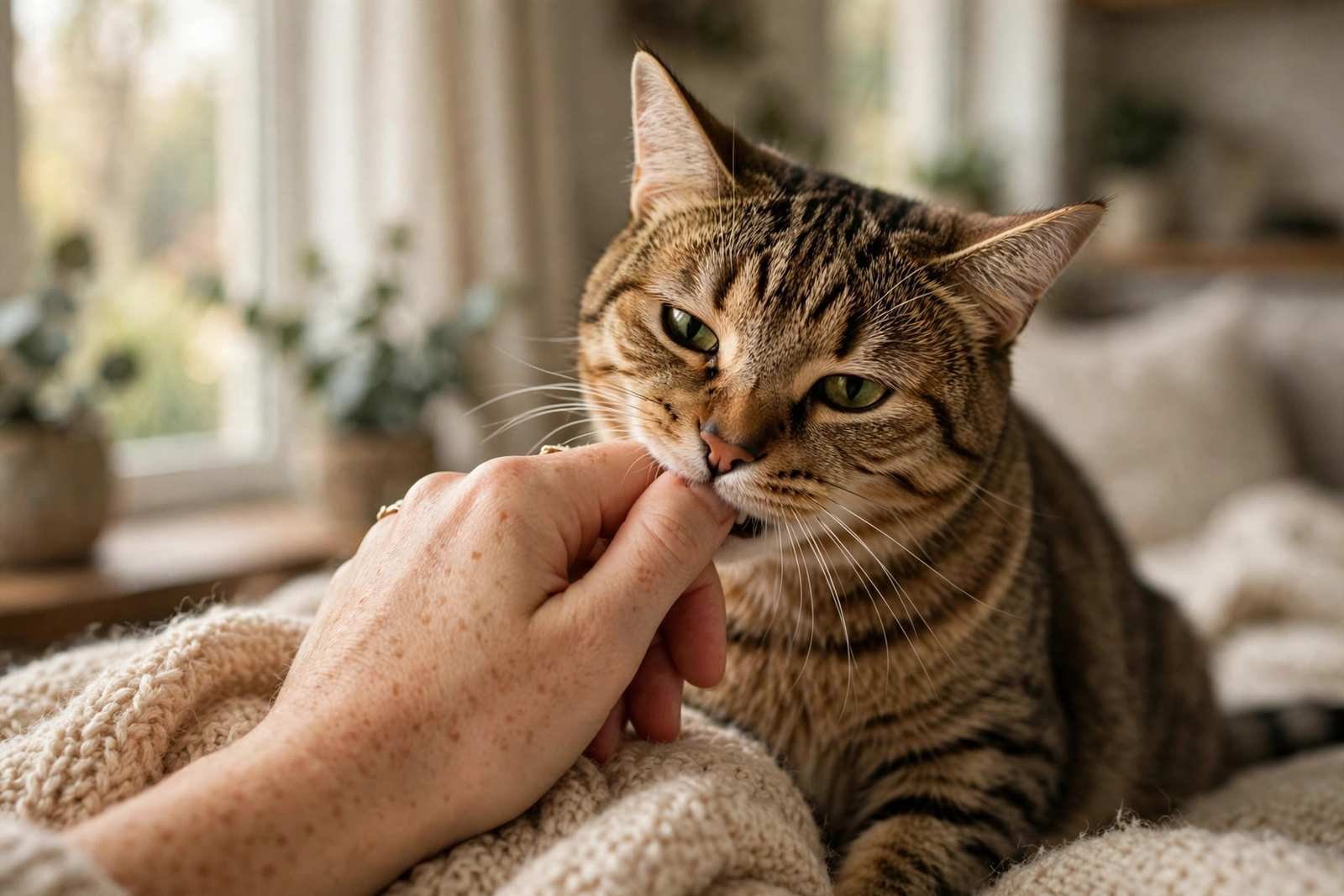
The Play vs Aggression Decoder
Not all bites are created equal, and treating them all the same way is why most biting advice fails. A love bite during cuddle time needs a completely different response than a fear bite from a cornered cat. Before you decide what to do, run every bite through this decoder.
| Bite Type | How It Feels | Body Language Clues | What To Do |
|---|---|---|---|
| Love bite | Gentle, controlled nibble with no real pressure; never breaks skin | Purring, kneading, slow blinks, fully relaxed body | Enjoy it. Keep your hand still. Pause petting briefly if the pressure starts to rise |
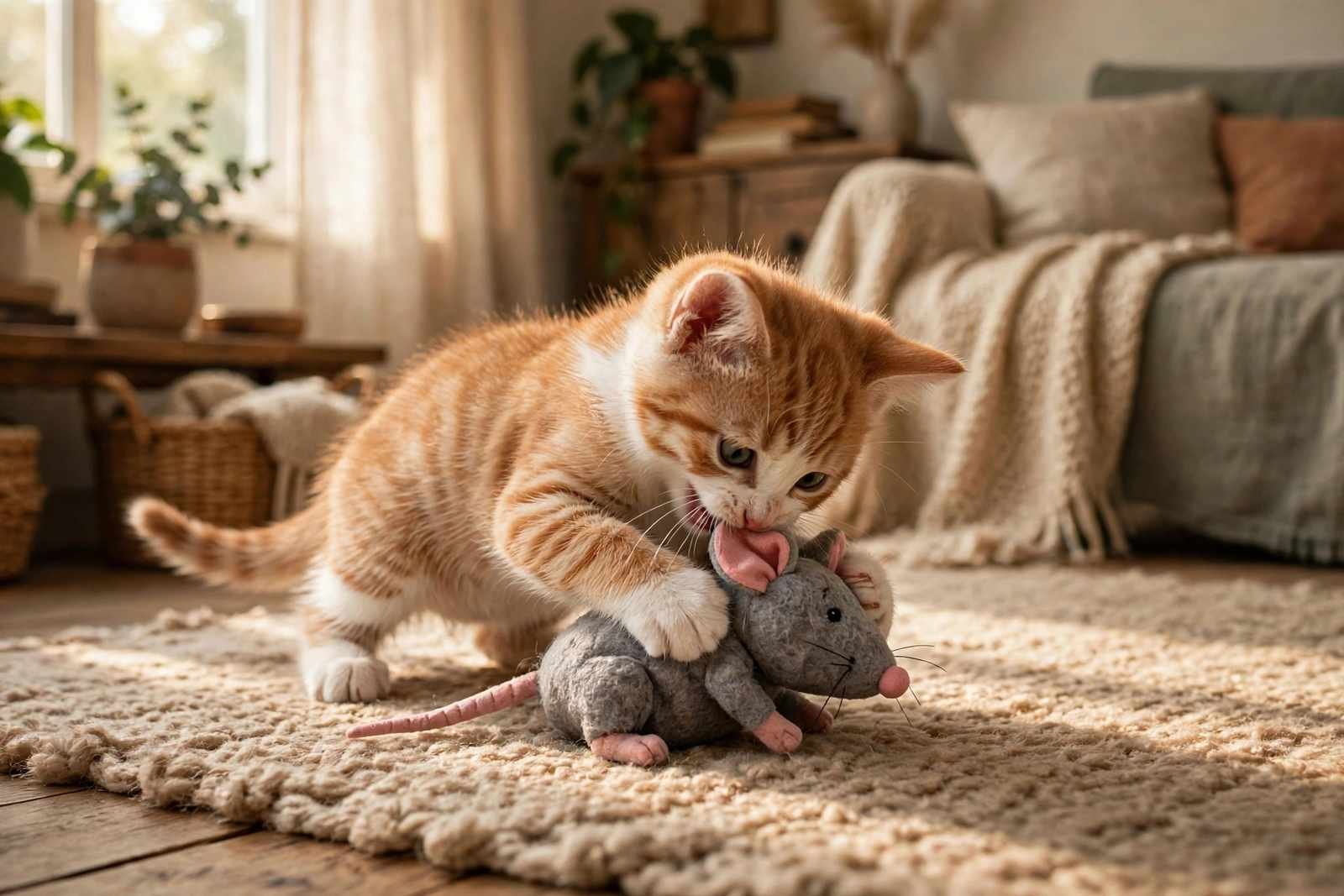
| Play bite | Firm grip, sometimes with back-leg bunny kicks; no broken skin | Dilated pupils, tail thrashing, ears forward, stalking or pouncing | Go still, disengage, and redirect to a toy immediately |
| Overstimulation bite | Sudden sharp nip after a stretch of calm petting; often a single bite | Tail starts lashing, skin ripples along the back, ears rotate sideways, pupils widen | Freeze, then withdraw slowly. Keep future petting sessions shorter |
| Fear or defensive bite | Hard, fast bite and release; the cat wants distance, not a fight | Crouched low, ears flat, hissing, dilated pupils, body tense | Back off and give space. Remove whatever is scaring the cat |
| Redirected aggression | Hard bite that seems to come from nowhere, often minutes after the trigger | Highly aroused: staring at a window, chattering at birds, tail puffed or lashing | Do not touch the cat. Leave the room and let it calm down for 20 to 30 minutes |
Two patterns matter most. First, play bites and love bites are the only ones aimed at interaction, and both respond to redirection. Second, the other three are the cat asking for distance or relief. All three get worse if you push in instead of backing off. When in doubt, assume the cat needs space: you can always re-engage later, but you cannot un-bite.
Body Language Warning Signs
Most bites are announced. Owners call them sudden because they missed the countdown, not because it never happened. Here is the sequence, in order, from calm to teeth. Learn to stop at step one or two and the bite at step five never arrives.
1. The tail. Still and relaxed, then a slow twitch at the tip, then full lashing. A lashing tail during petting is the clearest “enough” signal a cat has.
2. The ears. Neutral and forward, then rotating sideways like little airplane wings, then flattened. Sideways ears mean irritation; flat ears mean the bite is close.
3. The skin. Rippling along the back or shoulders as arousal builds. If you see the fur start to move on its own, the cat is no longer relaxed.
4. The pupils. Slow dilation in normal room light. Wide pupils plus a stiffening body means the cat has switched from relaxed to reactive.
5. The voice. Growling or hissing. This is the last warning, not the first. If you only react here, you have skipped four earlier chances to stop.
Overstimulation has one extra tell: the cat was purring and content minutes ago, so the switch feels like betrayal. It is not. The tail and ears almost always telegraphed it first. Shorten your petting sessions, watch the tail, and stop while the cat is still happy.
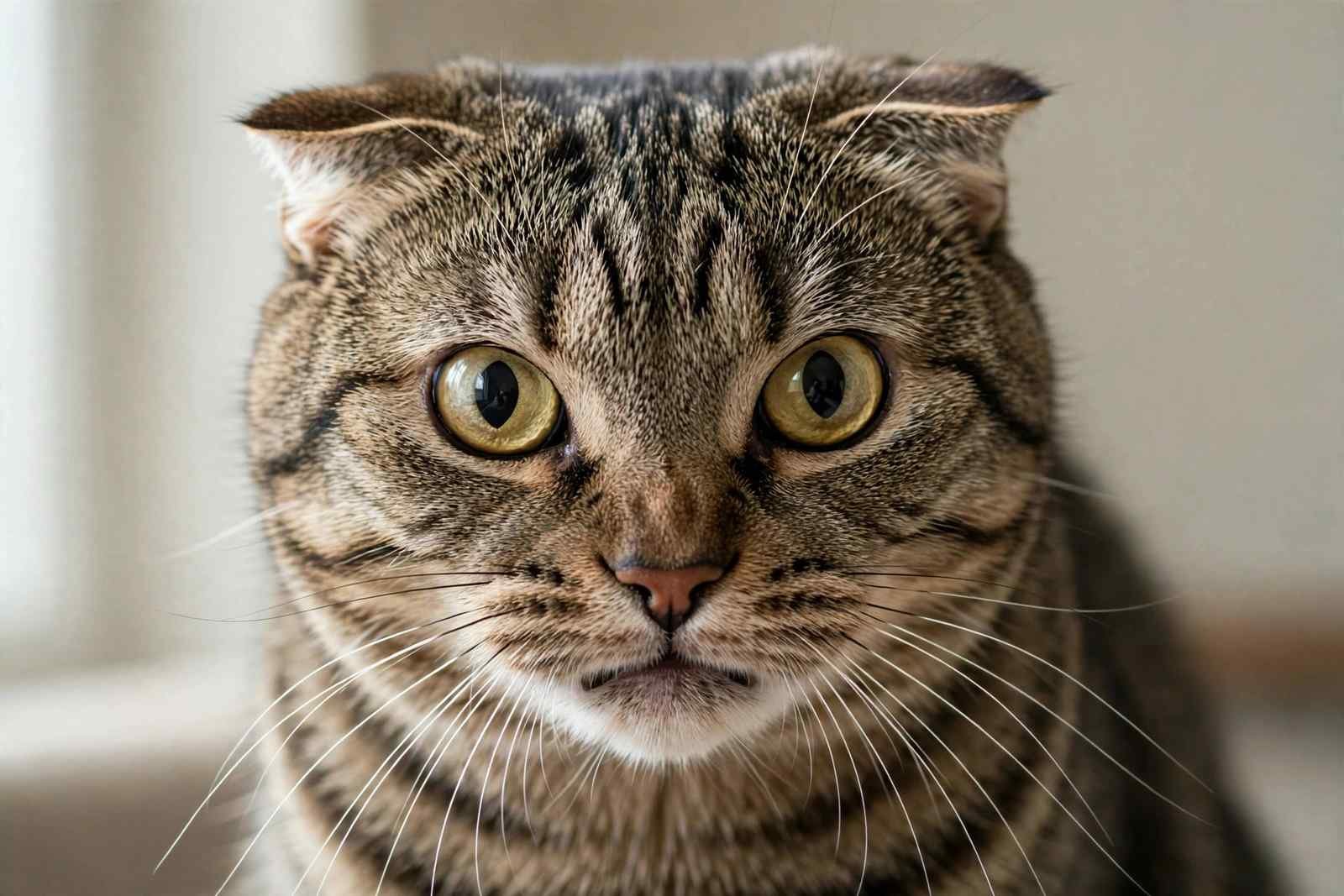
Why Punishment Backfires
The rule is absolute: never punish a biting cat. No yelling, no spraying with water, no tapping the nose, no locking the cat in a carrier as a “time out,” no scruffing. Here is why punishment fails, and why it specifically makes biting worse.
Punishment teaches fear, not manners. A cat punished for biting does not learn that biting is wrong. It learns that its human is unpredictable and scary. That raises the cat’s baseline anxiety, and an anxious cat bites more, not less.
It can look like play. Wrestling paws away, tapping a nose, or grabbing a cat mid-bite all involve fast hand movements near the cat’s face. To a predator wired for play, that reads as an invitation to wrestle harder, and the game escalates.
It breaks trust. The same hands that punish are the hands the cat is supposed to trust for petting and feeding. A cat that flinches at approaching hands is a cat that bites approaching hands.
What works instead: remove what the cat wants. For play bites and attention-seeking bites, that means you. Go completely still, then calmly walk away. A bite that ends the fun teaches far faster than any spray bottle, because the consequence is directly connected to the behavior.
This is not just opinion. The Cornell Feline Health Center’s guide to feline aggression states that any type of physical punishment can increase a cat’s fear or anxiety and worsen aggression. It recommends startling or redirecting without physical contact instead.
The Redirect Protocol: How to Stop Cat Biting Without Punishment
Redirection is the whole game of how to stop cat biting: give the biting energy a legal target every single time, and make your hands the most boring objects in the house. Follow these seven steps in order.
- Make hands boring. Never wiggle fingers at a cat as a game, and never let a kitten “practice” on your hands just because it is cute now. It will not be cute at five kilograms with adult teeth.
- The 3-second freeze. The instant teeth touch skin, stop moving completely. Movement triggers the chase reflex; stillness is confusing and uninteresting. Then calmly withdraw your hand and end the interaction.
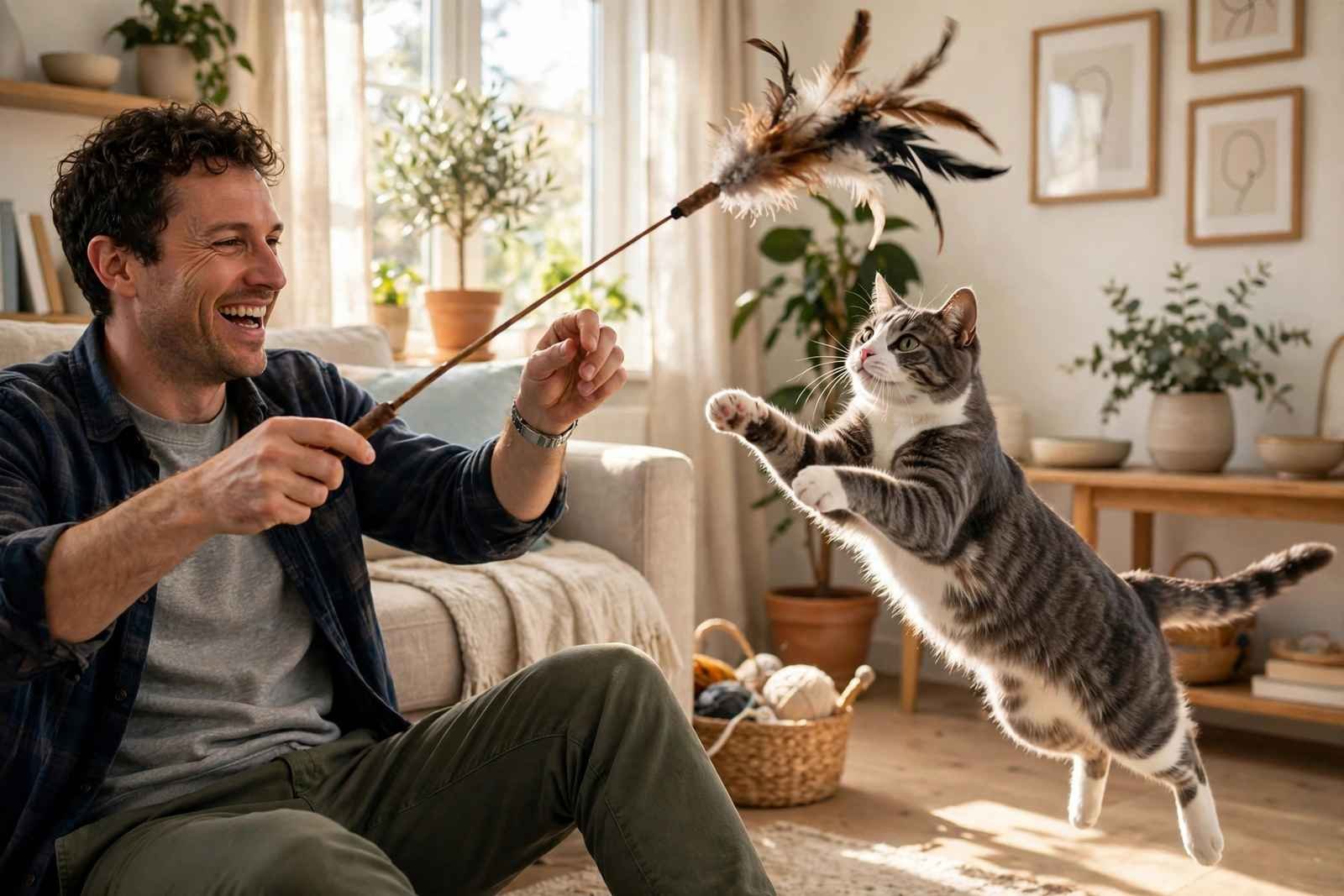
- Redirect at a distance. Keep a wand toy or a tossable plush mouse within reach in the rooms where biting happens. The moment you spot pre-bite body language, or right after a freeze, offer the toy, never your hand. Move the toy like prey: darting, pausing, hiding around corners.
- Schedule the hunt. Two structured play sessions a day, ten to fifteen minutes each, ending with a “catch” and then a small meal or treat. A cat that has hunted, caught, and eaten has far less leftover drive to ambush your ankles at midnight.
- Reward the calm. When the cat sits near you without mouthing, or chooses a toy over your hand, mark the moment: a treat, a word, a gentle chin scratch. You are paying for the behavior you want to see more of.
- Enforce the household rule. Everyone who touches the cat follows the same protocol. One family member who wrestles with bare hands will undo the redirection work of three others.
- Give kittens extra reps. Kittens who missed littermate lessons, such as orphans and single kittens, never learned to soften their bites (bite inhibition) while playing with siblings. They need more play sessions and more patience, not firmer corrections.
When a Bite Means Something Else
Most biting is behavioral, and the protocol above handles it. Three situations need a different response.
Pain. A cat that suddenly bites when touched in one spot, hisses during grooming, or has changed how it jumps and moves may be hurting. Arthritis, dental disease, and skin pain all turn ordinary touch into something worth defending against. A vet visit comes before any behavior plan here.
Deep puncture wounds. Cat teeth are needles, and a bite that breaks skin deeply should be washed immediately with soap and running water. Call your doctor the same day. Cat bites infect easily because of the bacteria in feline mouths, and a bite that becomes swollen, red, or painful needs prompt care.
Escalation. If the biting gets harder, more frequent, or more unpredictable despite two to three weeks of consistent redirection, stop guessing and involve your veterinarian. Some cases need a medical workup first, and some need a referral to a veterinary behaviorist. That is a treatment plan, not a failure.

Related Guides
- Cat Hairballs: Causes, Remedies and When They’re Dangerous
- Why Does My Cat Knead? The Real Reasons
Frequently Asked Questions
Why does my cat bite me when I pet her?
That is usually overstimulation: the cat has simply had enough petting (petting-induced aggression). The cat enjoys the petting, then crosses a threshold and bites to make it stop. Watch the tail and ears, keep sessions short, and stop at the first twitch. Over weeks, you can gradually lengthen petting time as long as the cat stays relaxed.
Should I spray my cat with water when it bites?
No. Spraying is punishment, and punishment raises fear and anxiety, which makes biting worse. It also teaches the cat to fear you rather than to stop biting. Freeze, withdraw, and redirect to a toy instead.
How do I teach a kitten not to bite hands?
Learning how to stop cat biting starts with a simple rule: never use hands as toys, even when the kitten is tiny. Redirect every bite to a toy, end play the moment teeth touch skin, and give the kitten at least two structured play sessions a day. Kittens raised without littermates need extra patience, because they missed the early lessons in softening bites that siblings teach each other.
Why does my cat bite me gently and then lick me?
That is a love bite: a gentle, controlled nibble that usually comes with purring or kneading. It is affection, not aggression. Keep your hand still and enjoy it. If the pressure starts to increase, calmly pause petting for a moment and let the cat reset.
My cat bites my ankles when I walk by. What is that?
Classic play biting (play aggression). Your moving feet look like prey, especially to a young or under-stimulated cat. Do not jerk your feet away, since sudden movement triggers more chasing. Freeze, toss a toy ahead of you to redirect, and add scheduled play sessions to burn off the hunting drive.
When should I worry about cat biting?
Worry when the pattern changes suddenly, when bites are unprovoked and hard, when the cat seems to be in pain, or when any bite breaks skin deeply. Sudden aggression can have a medical cause, so a vet check is the first step. Deep bites need same-day medical attention for you as well.
This guide is for informational purposes and doesn’t replace professional veterinary advice.