

Quick answer: This siberian husky care guide starts with the essentials. A Siberian Husky needs 1 to 2 hours of vigorous exercise every single day, escape-proof fencing (they dig under and climb over standard fences), and an owner who accepts extreme shedding twice a year. They are affectionate, clean, and quiet indoors, but they have intense prey drive, cannot be trusted off-leash, overheat easily, and are famously terrible guard dogs. Huskies live 12 to 14 years and suit active owners with secure yards, not first-time owners wanting an easy dog.
Contents
- The Fantasy vs. The Reality
- Brutal Truth 1: Your Fence Is a Suggestion
- Brutal Truth 2: Never Trust Them Off-Leash
- Brutal Truth 3: Exercise Is Non-Negotiable
- Brutal Truth 4: They Melt in Heat
- Brutal Truth 5: The Shedding Is Unreal
- Brutal Truth 6: Terrible Guard Dog, Loud Conversationalist
- Brutal Truth 7: Your Garden Will Be Excavated
- Brutal Truth 8: Training a Free Thinker
- Brutal Truth 9: Containment Costs Real Money
- Exercise: How Much They Actually Need
- Feeding Your Husky
- Grooming and Coat Care
- Training the Independent Mind
- What Husky Health Issues Should a Siberian Husky Care Guide Cover?
- The First 30 Days With Your Husky
- Cost of Owning a Husky
- Adoption vs. Breeder
- Is a Husky Right for You? The Honest Quiz
- Frequently Asked Questions
- Related Guides
The Fantasy vs. The Reality
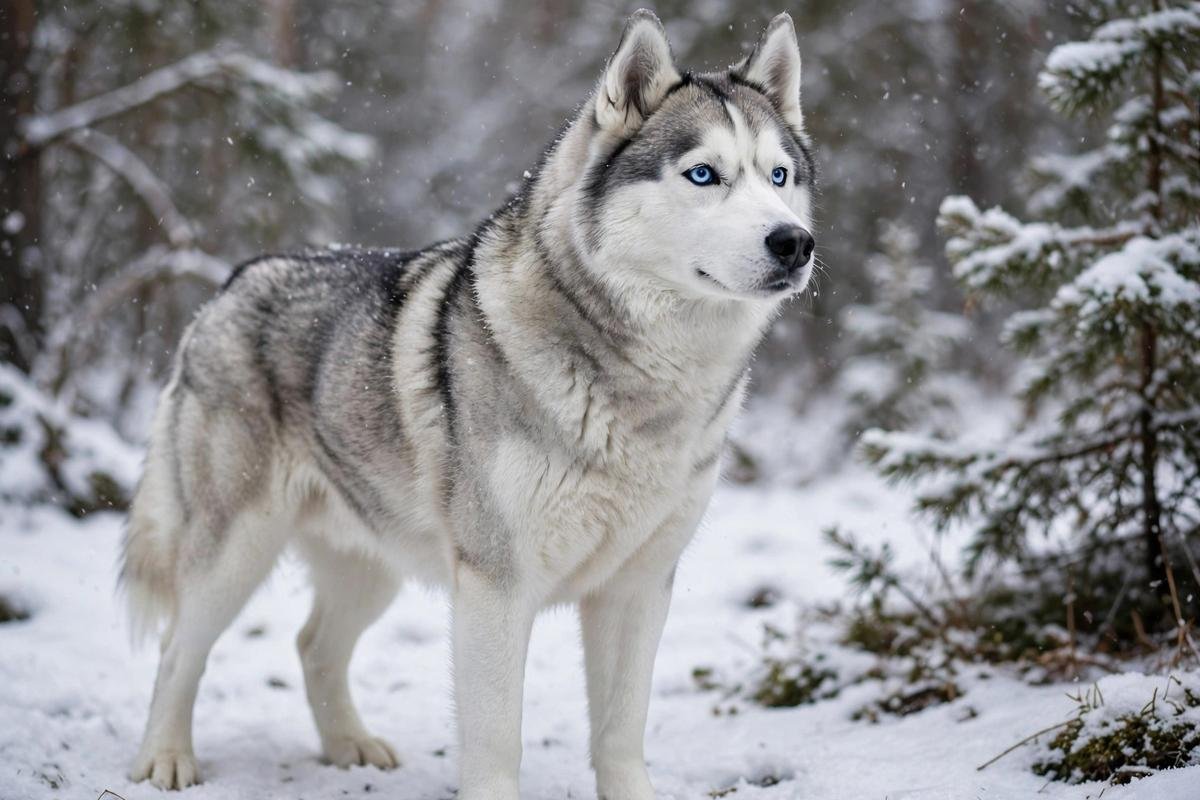
Almost everyone falls for the Siberian Husky the same way. You see those ice-blue eyes, that wolf-like silhouette against the snow, and something ancient in your brain whispers: I need this dog. Movies, Instagram reels, and Game of Thrones made the breed look like a majestic adventure companion who happens to live in your house.
Here is what those reels do not show: the husky sprinting down the street at 7 a.m. because it squeezed through a gap you swore was too small. The living room carpeted in shed fur in May. The neighbor knocking because your dog has been “talking” at full volume for an hour. The hole under your fence that appeared overnight.
This all-about-Siberian-Husky guide is built differently from most care articles. Instead of opening with the breed’s lovely temperament, we start with the nine brutal truths that decide whether you should get one at all. If you read them and still want a husky, the second half gives you the complete owner guide. It covers exercise, diet, grooming, training, health, costs, and the first month. Fair deal?
Brutal Truth 1: Your Fence Is a Suggestion
Huskies are the Houdinis of the dog world. A standard four-foot fence is a minor inconvenience. They climb chain-link like a ladder, dig under wooden fences in a single afternoon, and can clear surprising heights when motivated. Breed rescues are full of huskies surrendered after their third or fourth escape, and “lost husky” posts dominate local pet groups for a reason.
Escape-proofing for a husky means a six-foot fence minimum. Bury the bottom, or add an L-shaped footer of wire extending inward along the ground, so digging hits metal. Gates need locks, because huskies learn to lift latches. Some owners add roller bars on top of fences. This is not paranoia. It is the baseline cost of keeping this breed safe.
If you rent, or your yard cannot be modified, a husky can still work, but only with a strict management plan: leashed potty breaks, long-line outdoor time, and zero unsupervised yard access. An unsecured husky will eventually roam, and roaming huskies get hit by cars or picked up by animal control.
Brutal Truth 2: Never Trust Them Off-Leash
Siberian Huskies have one of the strongest prey drives in the dog world. Squirrels, rabbits, cats, small dogs, chickens, anything that runs triggers a chase instinct bred into them over thousands of years as sled dogs. Once a husky locks onto a target and bolts, your recall cue becomes background noise.
This is the single most dangerous misunderstanding new owners have. “But he always comes back” is famous last words in husky groups. Experienced owners treat off-leash freedom as permanently off the table outside fenced areas. Long lines (15 to 30 meters) give your dog running room while keeping control. Secure dog parks are fine. Open trails are not, unless the dog is leashed.
The prey drive also shapes multi-pet homes. Many huskies live fine with cats they grew up with, but introductions must be slow and supervised, and some individuals can never be trusted around small animals. If you keep rabbits, guinea pigs, or free-roaming birds, think very carefully.
Brutal Truth 3: Exercise Is Non-Negotiable
A tired husky is a well-behaved husky, and “tired” for this breed means something different than it does for most dogs. We are talking about animals bred to run 100 miles a day pulling sleds in Arctic cold. A twenty-minute stroll around the block barely registers as a warm-up.
Skip exercise for a few days and you will meet the other husky. That’s the one that chews drywall, shreds couch cushions, howls for hours, and redesigns your garden. Destructive behavior in huskies is almost never spite. It is an athlete with no outlet inventing its own entertainment.
The honest math is in the exercise section below, but the headline is this: plan on one to two hours of real, vigorous activity daily, for the dog’s entire life. Not just in the fun puppy phase. For twelve to fourteen years. If your lifestyle cannot absorb that, every other part of husky ownership gets harder.
Brutal Truth 4: They Melt in Heat
Huskies wear a double coat engineered for minus 40 degrees. In hot climates that coat becomes a liability. They overheat faster than most breeds, and heatstroke can kill a dog in under an hour. Owners in warm regions need a genuine heat management plan, not just good intentions.
The rules are simple but strict. Exercise only in early morning or late evening during warm months. Always carry water, never leave the dog in a car even briefly, and provide air conditioning or a genuinely cool indoor space during heat waves. Watch for heavy panting, drooling, glazed eyes, or stumbling, which signal dangerous overheating.
And no, you should never shave a husky to “help” it cool down. The double coat insulates against heat as well as cold, and shaving ruins the coat’s structure while exposing skin to sunburn. Regular brushing that removes loose undercoat is the correct way to help.
Brutal Truth 5: The Shedding Is Unreal
Husky owners joke that shedding season and non-shedding season are the only two seasons. Twice a year, usually spring and fall, huskies “blow” their undercoat in spectacular fashion. Tufts of fur come out in handfuls. You will find it in your food, your car vents, and places the dog has never been.
Even between blow-outs, huskies shed steadily. A good vacuum and lint rollers in every room become part of your life. People with serious allergies or a deep attachment to black clothing should take this seriously. The grooming section below covers how to manage it, but manage is the right word. You will not eliminate it.
Brutal Truth 6: Terrible Guard Dog, Loud Conversationalist
If you want a dog that intimidates intruders, look elsewhere. Huskies are famously friendly with strangers. Many will happily greet a burglar and show them where the treats are. What they lack in guarding instinct they make up for in volume: huskies rarely bark much, but they howl, woo, grumble, and hold forth at length.
This vocal nature is charming in videos and less charming at 6 a.m. when your husky decides the neighborhood needs a performance. Apartment living is possible for a well-exercised husky, but thin walls plus a talkative dog plus close neighbors is a combination that ends badly. Know your living situation honestly.
Brutal Truth 7: Your Garden Will Be Excavated
Digging is not a husky flaw. It is a husky feature. In the Arctic, sled dogs dug shelters in the snow to stay warm. In your backyard, that instinct translates to craters in the lawn, excavated flower beds, and cool pits dug under the porch. Some owners give up and designate an official digging pit filled with sand, which genuinely helps.
Combine digging with the escape artistry from Truth 1 and you see why yards need the buried footer. A bored husky left alone in a yard will remodel it. This is another reason the exercise requirement matters so much: a well-run husky digs far less.
Brutal Truth 8: Training a Free Thinker
Huskies are intelligent, which is not the same as obedient. They learn commands quickly and then hold a private referendum on whether to follow them. Recall, as covered above, may never be reliable. Leash pulling is the default setting. They are also dramatic: ask a husky to do something it finds unreasonable and you may get a full-throated argument.
Training works, but it demands patience, humor, and high-value rewards. Harsh methods backfire badly with this breed and damage trust. Puppy classes, consistent boundaries from day one, and accepting that your dog will always have opinions are the path forward. If you need a dog that obeys instantly, a husky will frustrate you.
Brutal Truth 9: Containment Costs Real Money
Add it up: taller fencing with buried footers, locks, possibly roller bars, a secure crate, and long lines. Then add puzzle toys to fight boredom and higher-than-average food bills for an active medium-large dog. The purchase or adoption fee is the cheapest part of husky ownership. The cost section below breaks down real numbers, but go in expecting the first year to run well above what a “normal” dog costs.
Still here? Good. That means you might actually be husky material. Everything below is the practical care guide for owners who passed the reality check.
Exercise: How Much They Actually Need
Exercise for a husky is not a nice-to-have. It is the foundation everything else rests on. A well-exercised husky is calmer, quieter, less destructive, and easier to train. Here is what “enough” looks like at each life stage.
| Age | Daily Exercise | Best Activities |
|---|---|---|
| Puppy (2-6 months) | Short play sessions, 5 min per month of age, 2-3x daily | Free play, gentle fetch, socialization outings |
| Adolescent (6-18 months) | 60-90 minutes | Long walks, flirt pole, beginner bikejoring on soft ground |
| Adult (18 months – 8 years) | 90-120 minutes vigorous | Running, hiking, canicross, bikejoring, sled work, agility |
| Senior (8+ years) | 45-60 minutes gentle | Leisurely walks, swimming, sniffy strolls |
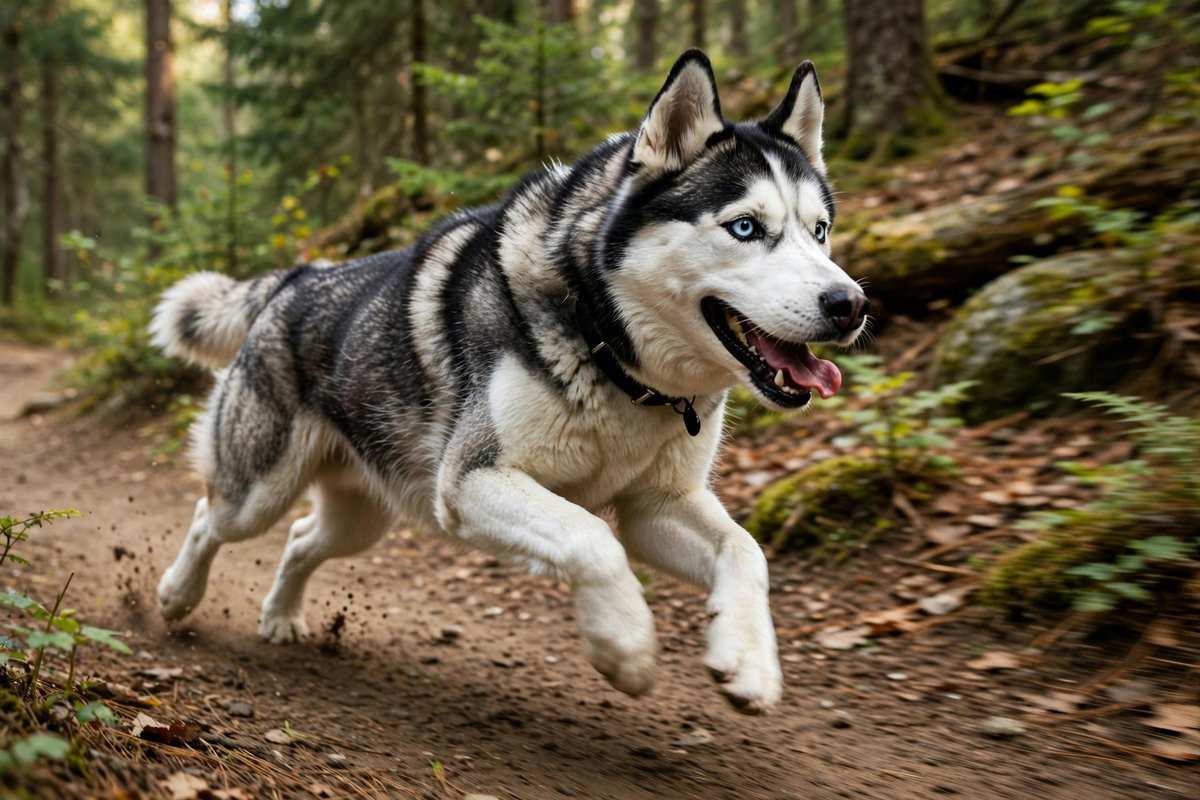
Mental exercise counts too. Scent games, puzzle feeders, and trick training tire out a husky’s busy brain. Many owners find that 20 minutes of nose work calms their dog more than an extra walk. In summer heat, shift hard exercise to dawn and dusk, and use indoor brain games during the day.
Forced running on hard surfaces should wait until growth plates close around 12 to 18 months. Before that, let puppies set their own pace with free play. An adolescent husky with endless energy is normal. It is not hyperactivity that needs suppressing. It is an athlete in training.
Feeding Your Husky
Huskies have a famously efficient metabolism. Bred to run all day on relatively little food, they often eat less than other dogs their size. Do not be surprised if your 50-pound husky eats like a 35-pound dog. Overfeeding is a common beginner mistake that leads straight to weight gain.
Feed a high-quality food with real meat as the first ingredient and protein around 22 to 32 percent. Puppies need puppy-formulated food until 12 months. Most adults do well on two meals a day. Active sled or sport dogs may need performance formulas with higher fat.
| Dog | Typical Daily Amount | Notes |
|---|---|---|
| Puppy (8-16 weeks) | 1.5 – 2.5 cups, 3-4 meals | Puppy formula; divide into small frequent meals |
| Puppy (4-12 months) | 2 – 3 cups, 2-3 meals | Adjust to growth; keep lean |
| Adult (35-50 lbs) | 2 – 3 cups, 2 meals | Less than expected; monitor waistline |
| Very active adult | 3 – 4 cups, 2 meals | Performance formula for sport/sled dogs |
| Senior | 1.5 – 2.5 cups, 2 meals | Senior formula; watch weight as activity drops |
These are starting points, not gospel. Every food has different calorie density, so follow the bag’s guidelines first, then adjust by body condition. You should feel ribs easily under a light fat cover and see a visible waist from above. Huskies are prone to zinc deficiency, which shows as crusty skin lesions around the mouth and eyes, so a diet with adequate zinc matters. Treats should stay under 10 percent of daily calories.
Grooming and Coat Care
The good news: huskies are naturally clean dogs with little odor and rarely need baths. The bad news is everything in Brutal Truth 5. Your main job is managing the undercoat before it manages your house.
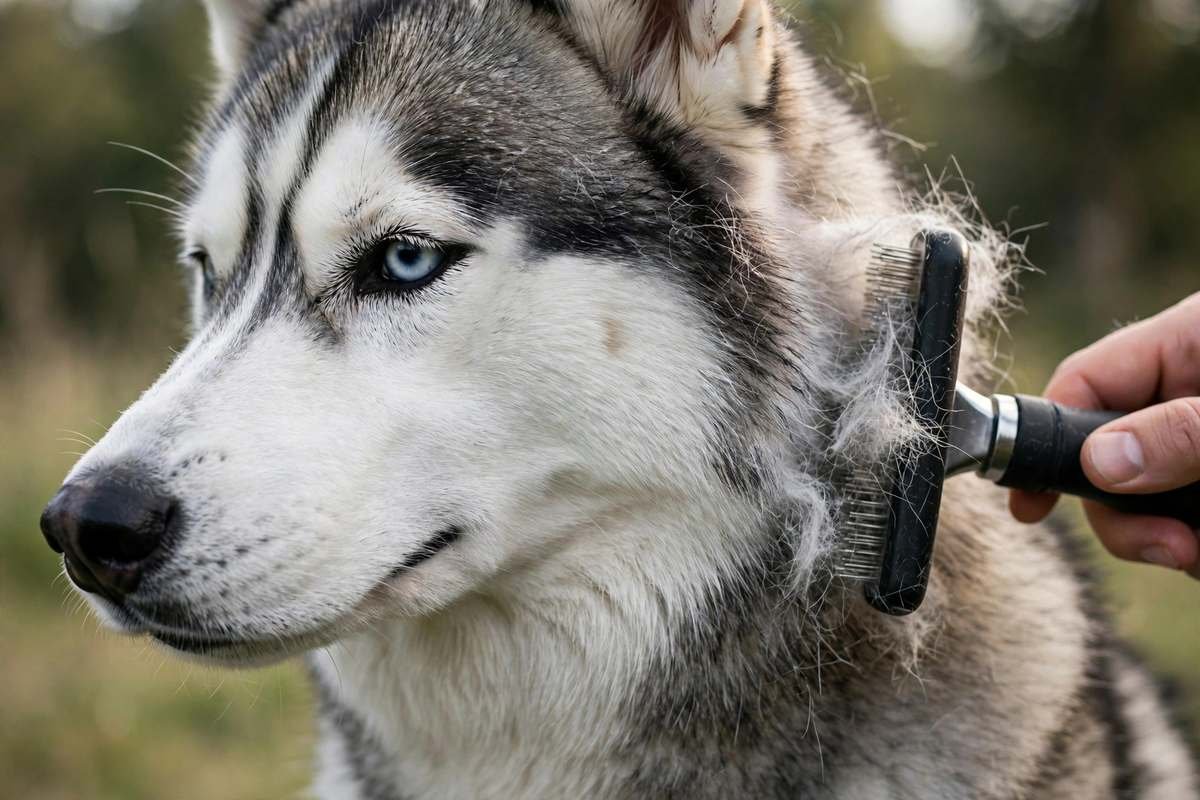
- Brushing: Weekly with an undercoat rake most of the year; daily during the twice-yearly blow-out. A slicker brush finishes the job on the outer coat.
- Bathing: Every 2 to 3 months or when genuinely dirty. Over-bathing strips the coat’s natural oils. Always dry thoroughly, as damp undercoat can cause hot spots.
- Nails: Trim every 3 to 4 weeks. Active dogs wear them down naturally, but check anyway.
- Ears and teeth: Weekly ear checks and several-times-weekly tooth brushing prevent the two most neglected health issues.
- Never shave: Worth repeating. The double coat regulates temperature both ways and protects against sunburn.
During blow-out season, a high-velocity dryer (used outdoors or in a garage) blasts out loose undercoat dramatically faster than brushing alone. Many owners swear by it. Work in sections, keep sessions short, and reward generously, since not every husky loves the noise at first.
Training the Independent Mind
Training a husky is less like programming a computer and more like negotiating with a clever roommate. They understand what you want. They are simply weighing whether it is worth their time. Your job is to make cooperation the best deal on the table.
Start with the essentials: name recognition, sit, down, stay, leave it, and loose-leash walking. Keep sessions short, five to ten minutes, and end on a win. Huskies bore quickly with repetition, so vary the routine and train in different locations once basics are solid. High-value treats, real meat or cheese, outperform dry biscuits for most huskies.
Loose-leash walking deserves special attention because pulling is the breed’s factory setting. Stop moving the instant the leash tightens, reward slack, and be relentlessly consistent. A front-clip harness helps while you train. Accept that a perfect heel may never happen, a relaxed loose leash absolutely can.
Crate training is a gift to husky owners. It gives the dog a den, protects your house during the chewing phase, and makes travel and vet stays easier. Introduced properly with meals and treats, most huskies take to crates well. What does not work: punishment-based training, yelling, or “dominance” techniques. Huskies shut down or push back, and you lose the trust that makes everything else possible.
What Husky Health Issues Should a Siberian Husky Care Guide Cover?
Huskies are generally hardy, with a lifespan of 12 to 14 years. But the breed has known vulnerabilities, and no siberian husky care guide is complete without them. Reputable breeders screen for these, which is one reason health testing matters so much when choosing a puppy.
| Condition | What It Is | Prevention / Screening |
|---|---|---|
| Hip dysplasia | Malformed hip joint causing arthritis | OFA/PennHIP screening of parents; keep puppy lean |
| Eye conditions | Cataracts, corneal dystrophy, progressive retinal atrophy | Annual eye exams; breeder CERF/CAER testing |
| Hypothyroidism | Underactive thyroid causing weight gain, lethargy | Blood screening; managed with daily medication |
| Zinc deficiency | Crusty lesions around mouth, eyes, and pressure points | Zinc-adequate diet; vet-guided supplementation |
| Gastric dilatation-volvulus (bloat) | Life-threatening stomach twisting | Smaller meals, no hard exercise right after eating |
Beyond the table: keep up with vaccinations, year-round parasite prevention, and dental care. Pet insurance is worth serious consideration for this breed, since emergency surgery for a swallowed toy or an escape-related injury can run into thousands overnight.
The First 30 Days With Your Husky
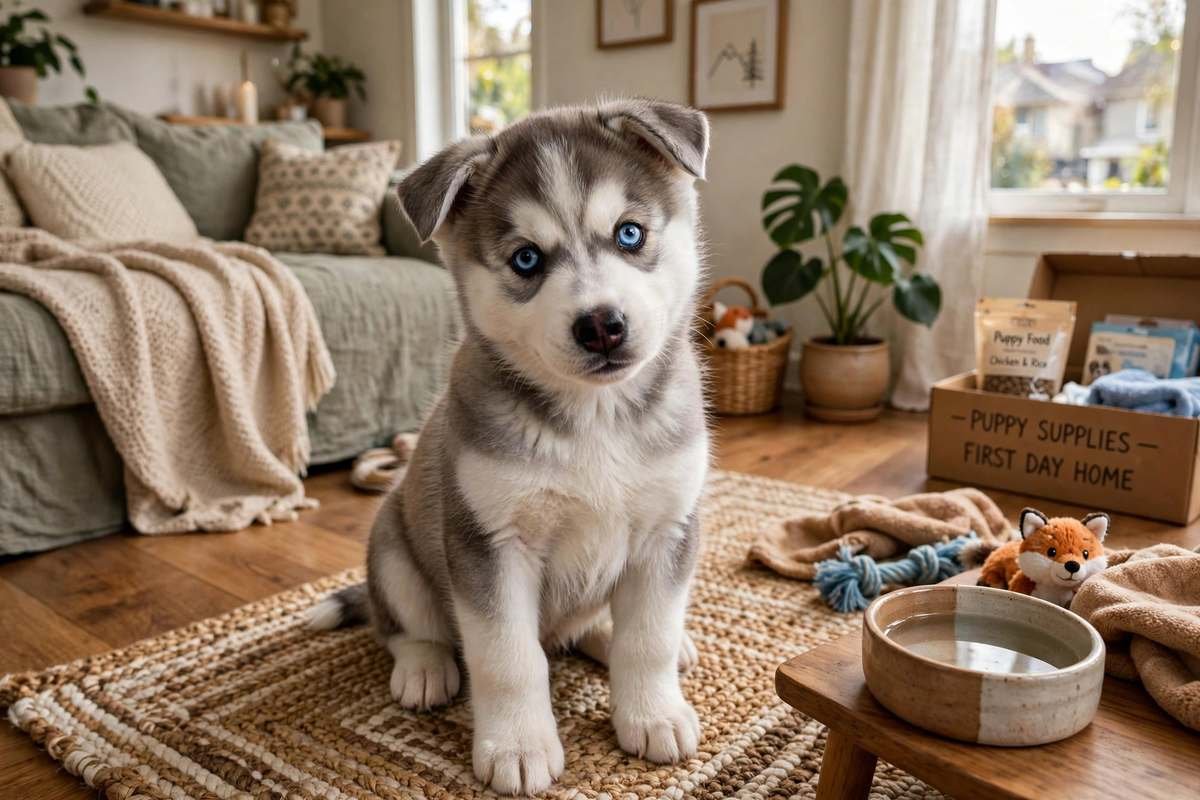
The first month sets the tone for years. Husky puppies are adorable chaos engines, and the habits they learn now, good or bad, stick hard.
- Week 1: Decompress. Keep things calm and predictable. Same feeding times, same potty spot, a crate set up as a cozy den. Limit visitors. Let the puppy learn the house rules before it learns the neighborhood.
- Week 2: Routine and name. Start short training sessions, practice the name, begin alone-time training in tiny increments. Huskies bond fast and can develop separation anxiety if never left alone from the start.
- Week 3: Socialization window. Between 8 and 16 weeks, puppies are primed to learn what is safe. Expose yours to different people, sounds, surfaces, and gentle dogs. Carry unvaccinated puppies in public places rather than letting them walk where unknown dogs have been.
- Week 4: Leash foundations. Begin loose-leash practice in the yard, start recall games with amazing rewards, and enroll in a puppy class. This is also when the land-shark chewing phase peaks, so stock frozen carrots and chew toys.
Vet visit in the first week is non-negotiable for a health check and vaccination planning. And puppy-proof like you mean it: husky puppies chew with industrial enthusiasm, and anything at nose height is fair game in their minds.
Cost of Owning a Husky
Huskies are not the most expensive breed to keep, but they are not cheap either, and the containment costs from Truth 9 push the first year up. Here is a realistic breakdown in US dollars.
| Expense | First Year | Annual After That |
|---|---|---|
| Purchase / adoption fee | $150 – $1,500 | – |
| Fence upgrades / escape-proofing | $300 – $2,000 | $0 – $100 maintenance |
| Food | $500 – $800 | $500 – $800 |
| Vet care (vaccines, checkups, prevention) | $400 – $700 | $300 – $600 |
| Spay / neuter | $200 – $500 | – |
| Crate, leash, harness, toys | $200 – $400 | $100 – $200 replacements |
| Training classes | $150 – $400 | $0 – $200 |
| Grooming supplies / occasional pro groom | $100 – $250 | $100 – $250 |
| Realistic total | $2,000 – $5,550 | $1,000 – $2,150 |
Pet insurance typically adds $30 to $60 a month and is worth pricing out. Emergency costs are the budget killer with this breed: foreign body surgery, hit-by-car treatment, or bloat surgery can each exceed $3,000 without warning.
Adoption vs. Breeder
Both paths can lead to a great husky, but go in with eyes open either way.
Adoption is genuinely excellent for this breed because husky-specific rescues are overflowing. Owner surrenders peak when cute puppies become demanding adolescents, so rescues often have young, healthy dogs. Fees run $150 to $400. Dogs are usually vetted and often spayed or neutered. Foster homes can tell you the dog’s real temperament, energy level, and escape tendencies. The trade-off is unknown history and possibly ingrained habits that need retraining.
A reputable breeder charges $800 to $1,500 and should show you OFA hip scores, current eye clearances, and health testing for both parents. Puppies should be raised in the home, well socialized, and come with a contract including a take-back clause. Red flags: no health testing, always having puppies available, meeting in parking lots, prices far below market, or unwillingness to show you the mother. Never buy from pet stores, which overwhelmingly source from puppy mills.
Whichever route you take, ask about prey drive and escape history specifically. These are the two traits that end husky placements, and an honest rescue or breeder will discuss them openly.
Is a Husky Right for You? The Honest Quiz

Answer honestly. This is not about being a good or bad person. It is about fit.
- Can you give 1 to 2 hours of vigorous exercise daily, for 12+ years, in all weather? If not, stop here. This is the dealbreaker.
- Is your yard escape-proof, or can you make it so? Six-foot fence, buried footer, locking gates. Renters need a solid management plan instead.
- Are you okay with fur everywhere, forever? Twice-yearly coat explosions plus steady shedding in between.
- Do you have small pets? Rabbits, guinea pigs, or outdoor cats plus a husky’s prey drive need very careful thought.
- Can you laugh when training goes sideways? Huskies test boundaries. Owners who take it personally burn out.
- Is someone home much of the day, or can the dog get midday exercise? Long alone hours plus husky energy equals destruction.
- Can you afford the real costs? Budget $2,000+ for year one and keep an emergency fund or insurance.
If you answered yes down the line, congratulations. You are looking at one of the most entertaining, affectionate, clean, and downright funny dogs on earth. Huskies bond deeply, play with puppy joy well into old age, and will make you laugh every single day. They are a lot of dog, and for the right owner, that is exactly the point.
Frequently Asked Questions
Are Siberian Huskies good for first-time owners?
Honestly, usually not. The combination of extreme exercise needs, escape artistry, prey drive, and independent training makes them one of the tougher breeds for beginners. A first-timer who is very active, reads this siberian husky care guide carefully, and commits to training can succeed. But most trainers steer novices toward more forgiving breeds.
Can huskies live in hot climates?
Yes, with management. Exercise at dawn and dusk, air conditioning during heat waves, constant water access, and never leaving them in cars. Their double coat actually insulates against heat, so never shave it. Watch closely for overheating signs like excessive drooling or stumbling.
Do huskies bark a lot?
They rarely bark, but they are extremely vocal in other ways: howling, wooing, grumbling, and talking back. If you want a quiet dog, or you have noise-sensitive neighbors, this matters more than the bark question suggests.
How long do Siberian Huskies live?
Typically 12 to 14 years, which is excellent for a medium-large dog. Good diet, healthy weight, regular vet care, and serious daily exercise all support a long life.
Can you ever let a husky off-leash?
Only in fully secure, fenced areas. Their prey drive and roaming instinct make open off-leash time genuinely dangerous no matter how good training seems. Use long lines for trail freedom instead.
Are huskies good with kids?
Generally yes. Huskies are famously tolerant and playful with children. Always supervise, teach kids respectful handling, and remember that an excited 50-pound dog can knock over a toddler accidentally.
Related Guides
- Loose Leash Walking: 5-Step Method That Actually Works
- First Night With a New Puppy: Crying, Sleep and Setup
- Puppy Proofing Your Home: Room-by-Room Danger List
- Crate Training a Dog With Separation Anxiety (Step by Step)
Written by the PetsVentres editorial team.
This guide is for informational purposes and doesn’t replace professional veterinary advice.