

Quick answer: The Maine Coon mistakes new owners regret most are buying regular-size gear for a giant cat, skipping daily brushing until mats form, underfeeding or overfeeding a fast-growing frame, and neglecting heart screening for HCM. Each mistake has clear warning signs and a straightforward fix, and catching them early saves hundreds in vet bills and grooming costs.
Contents
- What Mistakes Do New Maine Coon Owners Make?
- What Do Maine Coon Owners Wish They Knew Before Adopting?
- 7 Maine Coon Mistakes at a Glance: Warning Signs and Fixes
- How Do You Avoid Expensive Vet Bills From Maine Coon Mistakes?
- Related Guides
- Frequently Asked Questions
What Mistakes Do New Maine Coon Owners Make?
Most new Maine Coon owners make the same errors. They almost all trace back to one misunderstanding: treating a gentle giant like an average cat. Males reach 15 to 25 pounds and keep growing until age 3 to 5. They eat like athletes, shed like snowstorms, and think of themselves as your shadow. Plan for a big, social, high-maintenance companion and most regrets never happen. Here are the first four mistakes, each with its warning signs and fix.
Mistake 1: Buying regular-size gear
A standard litter box is a bathtub joke for a 20-pound cat. The same goes for flimsy cat trees, narrow carriers, and dainty food bowls. Undersized gear leads to litter box avoidance, toppled furniture, and whisker stress at mealtimes.
Warning signs: your cat perches on the litter box rim instead of standing inside it, the cat tree wobbles or has already been knocked over, and your cat paws food out of a deep narrow bowl onto the floor.
The fix: buy an extra-large, uncovered litter box (or a large storage tote as a box) from day one. Choose a solid-wood or heavy-duty cat tree rated for large breeds, with perches at least 14 inches wide. Use wide, shallow bowls so the whiskers never touch the sides, and size the carrier for a 25-pound passenger.

Mistake 2: Skipping the grooming routine
Grooming mistakes are the most expensive kind of neglect for this breed. That silky kitten coat thickens into a dense double coat. Without brushing 3 to 4 times a week (daily during spring shedding), mats form behind the ears, under the armpits, and along the belly. Mats pull on the skin, trap moisture, and often need a professional shave to remove.
Warning signs: small tangles that resist a comb, a greasy or clumpy look along the flanks, and your cat flinching or snapping when touched on the belly.
The fix: start a brushing routine in the first week home, before mats exist. Use a wide-tooth metal comb followed by a slicker brush, and always comb in the direction of hair growth. Check the armpits and groin area every session, because those are the mats’ favorite hiding spots. A 10-minute routine now prevents a $100-plus dematting bill later.

Mistake 3: Feeding like it’s a regular cat
Diet mistakes go both directions. Some owners free-feed cheap kibble and end up with an overweight giant. Others underfeed a still-growing adolescent and wonder why the frame looks lanky at 18 months. A Maine Coon needs high-protein food: 30 percent protein or more, with real meat as the first ingredient. Portions should match a long, slow growth curve, not a standard cat’s.
Warning signs: rapid weight gain after the first year, or a disappearing waistline. Watch the opposite too: a young cat that looks thin and ravenous despite “plenty” of food.
The fix: feed measured meals of a quality high-protein diet. Ask your vet to track weight against the breed’s growth curve at every visit until age 3. Treats should stay under 10 percent of daily calories. A food puzzle feeder is a smart addition: it slows down gulping and gives this clever breed a job at mealtimes.

Mistake 4: Cheap scratching setups and unprepared housing
Housing mistakes are what shred sofas. A wobbly 2-foot scratching post is a toy to a cat that can stand 40 inches tall on its hind legs. Maine Coons need to stretch fully upward when they scratch. They will use whatever is tall and stable, which is usually your furniture.
Warning signs: claw marks on the sofa arms, the cat tree leaning after two weeks, and your cat ignoring the short post entirely.
The fix: get a scratching post or tower at least 3 feet tall with a heavy, wide base that cannot tip. Place one near the sleeping spot (cats love a scratch right after a nap) and one near the furniture they target. Secure tall bookcases to the wall, because a 20-pound cat launching off a shelf generates real force.

What Do Maine Coon Owners Wish They Knew Before Adopting?
Ask experienced owners what surprised them, and the answers are rarely about the cute parts. They wish they had known three things before the kitten ever came home: the health screening, the social needs, and the true long-term cost. These last three mistakes are the ones that generate the deepest regret, because they are the hardest to undo.
Mistake 5: Skipping heart screening and preventive vet care
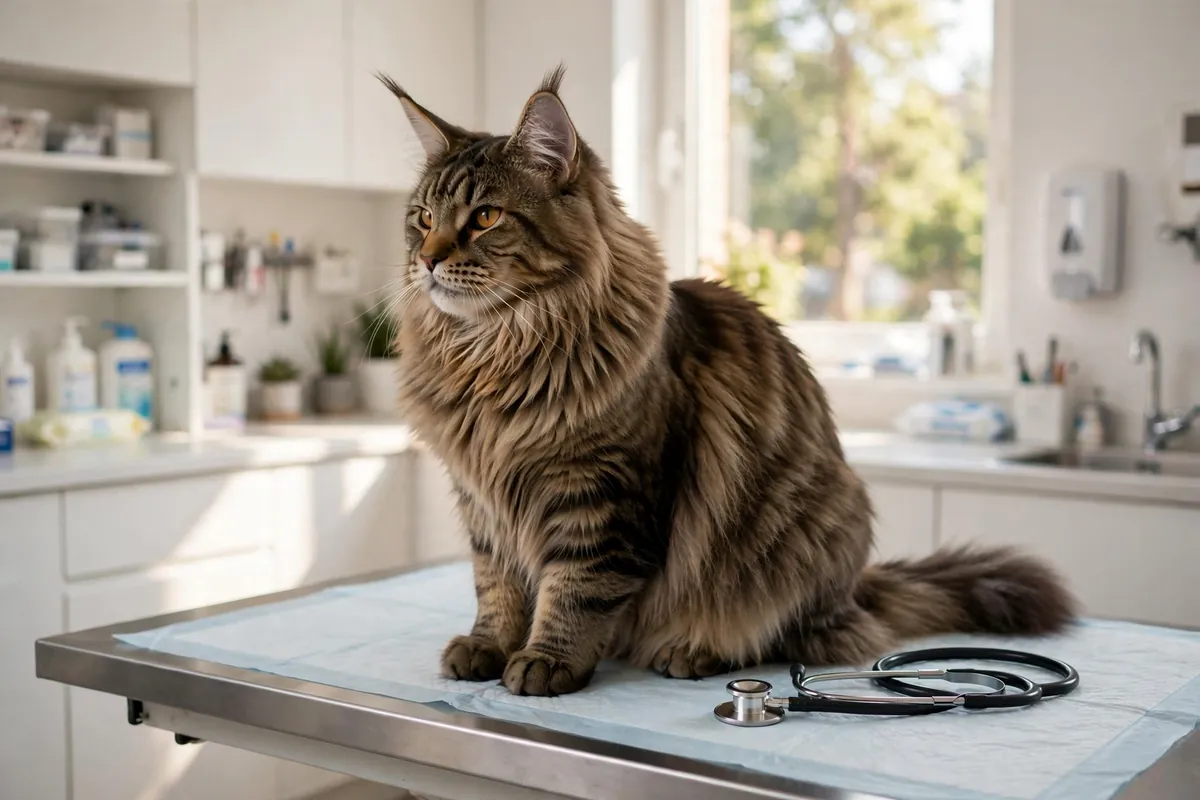
Maine Coons carry a breed-specific risk of hypertrophic cardiomyopathy (HCM), a thickening of the heart muscle that can appear silently in young adults. Owners who skip screening to save money often discover the condition only during an emergency. By then treatment options are limited and the bill is enormous.
Warning signs: there usually are none early on, which is exactly the danger. Later signs include labored breathing, lethargy, and loss of appetite.
The fix: if you buy from a breeder, confirm the parents have echocardiogram screening for HCM (ask for documentation, not promises). For any Maine Coon, schedule annual vet checkups with heart auscultation, and discuss an echocardiogram baseline around age 1 to 2. Also ask about spinal muscular atrophy and polycystic kidney disease screening, two other conditions the breed is prone to.
Mistake 6: Leaving them alone all day
The “dog-like” label is not marketing. Maine Coons follow their people from room to room, greet them at the door, and many learn to play fetch. Owners who expected an independent cat and work 10-plus hour days come home to a bored, lonely giant. Boredom in this breed often turns into overeating or destructive behavior, which owners then mistake for a training problem.
Warning signs: frantic greeting behavior that looks more like panic than affection, overeating when you are home, knocking objects off shelves, and excessive vocalizing in the evening.
The fix: build daily interactive play into your routine (two 15-minute sessions with a wand toy works well). Rotate puzzle feeders and toys weekly, and add vertical territory like wall shelves so the cat has its own space. If your schedule keeps you away most of the day, a second pet for company is worth serious consideration.
Mistake 7: Adopting for the looks without counting the cost
The fluffy photos do the selling, and then reality arrives. A Maine Coon lives 12 to 20 years and keeps growing for up to 5 of them. Quality food, litter, grooming supplies, and insurance run roughly $150 to $300 a month. Owners who budgeted for “a cat” feel blindsided by the first year’s bills.
Warning signs: sticker shock at the first vet visit, resentment when the food bill doubles, and the creeping thought that a smaller breed would have been easier.
The fix: run the numbers before you commit. Price out a year of premium food for a 20-pound cat, an XL litter setup, and grooming tools. Add pet insurance (strongly recommended for this breed). If the budget works with room to spare, adopt with confidence. A Maine Coon chosen with eyes open is one of the most rewarding companions in the cat world.
7 Maine Coon Mistakes at a Glance: Warning Signs and Fixes
| Mistake | Warning Signs | Fix |
|---|---|---|
| Regular-size gear | Perching on the litter box rim, toppled cat tree, food pawed out of the bowl | XL litter box, heavy-duty large-breed tree, wide shallow bowls |
| Skipping brushing | Tangles behind ears and armpits, greasy flanks, flinching at belly touches | Comb 3-4 times weekly, daily in shedding season, 10 minutes a session |
| Wrong feeding | Rapid weight gain, or a thin, ravenous adolescent | 30%+ protein measured meals, vet-tracked growth curve to age 3 |
| Flimsy scratching setup | Claw marks on the sofa, ignored short post | 3 ft+ post with heavy base, placed near sleep and target furniture |
| Skipping heart screening | Usually silent early; later labored breathing and lethargy | Breeder HCM documentation, annual checkups, echo baseline at 1-2 years |
| Long lonely days | Panic-like greetings, overeating, evening destruction | Two daily 15-minute play sessions, puzzle feeders, consider a companion pet |
| Ignoring the true cost | Sticker shock at the vet, food bill resentment | Budget $150-$300/month before adopting, add pet insurance |
How Do You Avoid Expensive Vet Bills From Maine Coon Mistakes?
Vet bills from mistakes follow a pattern: a small skipped cost becomes a large emergency cost. Preventive care is always the cheaper line item. An annual checkup with heart auscultation costs far less than treating advanced HCM. And a $30 comb used weekly beats a $120 professional dematting session.
The single highest-value move is pet insurance, bought while the cat is young and healthy. Maine Coons’ size alone makes everything pricier: higher medication doses, larger surgical costs, and breed-specific screening. Insurance turns a $2,000 emergency into a manageable deductible, which is why breeders and breed clubs recommend it so consistently.
Beyond insurance, keep a simple prevention calendar. Brush 3 to 4 times a week, check weight monthly during the growth years, and get dental checks at every vet visit (dental disease is common and costly). Act fast on any change in breathing, appetite, or energy. Maine Coons are stoic cats; by the time symptoms are obvious, the problem is usually advanced.
Related Guides
- Ragdoll Care Guide: 7 Secrets of the Gentlest Cat
- Persian Cat Care Guide: Grooming, Health and Daily Needs
- Fleas on Cats: Treatment and Home Cleanup Protocol
Frequently Asked Questions
How big do Maine Coons actually get?
Males typically reach 15 to 25 pounds and up to 40 inches long including the tail, with females smaller at 10 to 15 pounds. They keep growing until age 3 to 5, much longer than the 12 to 18 months of most breeds, so the giant cat arrives gradually.
Do Maine Coons need a lot of grooming?
Yes. Their dense double coat needs brushing 3 to 4 times a week, daily during spring shedding, to prevent mats behind the ears, under the armpits, and on the belly. Skipping grooming leads to painful matting that often requires professional removal.
Are Maine Coons expensive to keep?
Expect roughly $150 to $300 a month for quality high-protein food, litter for an XL box, grooming supplies, and pet insurance. The first year costs more because of large-breed gear and initial vet screening. Pet insurance is strongly recommended given their size and heart risk.
Do Maine Coons get lonely?
They can. This is a famously social, dog-like breed that follows its people and thrives on interaction. Owners away 10 or more hours daily should provide puzzle feeders, daily interactive play, and seriously consider a companion pet to prevent boredom-driven overeating and mischief.
What health problems do Maine Coons have?
The main concern is hypertrophic cardiomyopathy (HCM), a heart condition the breed is genetically prone to, plus spinal muscular atrophy and polycystic kidney disease. Responsible breeders screen for these, and skipping these screenings is one of the costliest Maine Coon mistakes. Annual vet checkups with heart auscultation are the key preventive step.
How long do Maine Coons live?
With good care, Maine Coons typically live 12 to 15 years, and many reach 18 to 20. Their long lifespan, combined with slow maturation and ongoing food and vet costs, is why owners should treat adoption as a two-decade commitment, not a kitten phase.
This guide is for informational purposes and doesn’t replace professional veterinary advice.