

Quick answer: How to bond with a rabbit? It takes two to eight weeks of patient, floor-level interaction. Lie on the floor and ignore your rabbit, progress to hand-feeding greens, then gentle forehead petting, and let the rabbit choose every step. Never chase, grab, or loom: trust is offered by the rabbit, not taken.
A rabbit that hides from you is not broken. It is doing exactly what prey animals do around large, looming creatures. Rabbits form deep bonds once they decide you are safe. If you are learning how to bond with rabbits, this seven-step trust ladder gives you honest timelines and the mistakes that send you back to step one.
Contents
- Why Do Rabbits Fear Humans in the First Place?
- How Long Does It Take to Bond With a Rabbit?
- Step 1: What Is Floor Time and Why Does It Work?
- Step 2: How Do I Hand-Feed My Rabbit?
- Step 3: How Should I Pet My Rabbit for the First Time?
- Step 4: When Is My Rabbit Ready for Lap Time?
- Step 5: How Do I Play With My Rabbit?
- Step 6: What Does a Bonded Rabbit Look Like?
- Step 7: How Do I Keep the Bond Strong?
- How Do I Read My Rabbit’s Body Language?
- What Mistakes Destroy Trust With Rabbits?
- Can Two Rabbits Bond With Each Other Too?
- Related Guides
- Frequently Asked Questions
Why Do Rabbits Fear Humans in the First Place?
Rabbits are prey animals wired to treat anything big, fast, and overhead as a predator. A human reaching down looks exactly like a hawk. This is survival software, not a flaw. Your strategy: convince that software, through hundreds of safe repetitions, that you are furniture that delivers parsley.
How Long Does It Take to Bond With a Rabbit?
Most rabbits show real trust within two to eight weeks of daily calm interaction, which is the honest answer to how to bond with a rabbit. Confident youngsters may clear a step in days; shy rescues can spend two weeks on one. If your rabbit is stuck on a step, stay on it: rushing is the only way to make the timeline longer.
| Step | What you do | Realistic timeline | Sign to move on |
|---|---|---|---|
| 1 | Lie down, ignore the rabbit | 3 to 7 days | Approaches and sniffs |
| 2 | Hand-feed greens and herbs | 3 to 10 days | Eats calmly from fingers |
| 3 | Gentle forehead petting | 5 to 14 days | Lowers head asking for more |
| 4 | Lap time, rabbit’s choice | 1 to 3 weeks | Climbs on voluntarily |
| 5 | Play sessions | Ongoing | Initiates play and binkies |
| 6 | Spot bonded behavior | 2 to 8 weeks total | Grooming, flopping, seeking you |
| 7 | Maintain the routine | For life | Bond deepens instead of fading |

Step 1: What Is Floor Time and Why Does It Work?
Floor time means lying on the floor with a book or phone and completely ignoring your rabbit for 20 to 30 minutes. No reaching, no eye contact, no talking. This removes every predator signal at once: you are low, still, and uninterested. Curiosity eventually beats fear, and the rabbit will come to sniff you.
Repeat once or twice daily; even zero-contact sessions teach your rabbit you are harmless.

Step 2: How Do I Hand-Feed My Rabbit?
Once your rabbit approaches willingly, offer high-value greens from your hand: cilantro, parsley, dill, and romaine are favorites. Hold greens still at nose level and let the rabbit come. Eating from your hand is a genuine milestone: the prey brain has downgraded you from predator to safe.
Keep sessions short and end on a success. Snatching the green and running is normal early on. Within a week or two most rabbits settle beside you to eat.
Step 3: How Should I Pet My Rabbit for the First Time?
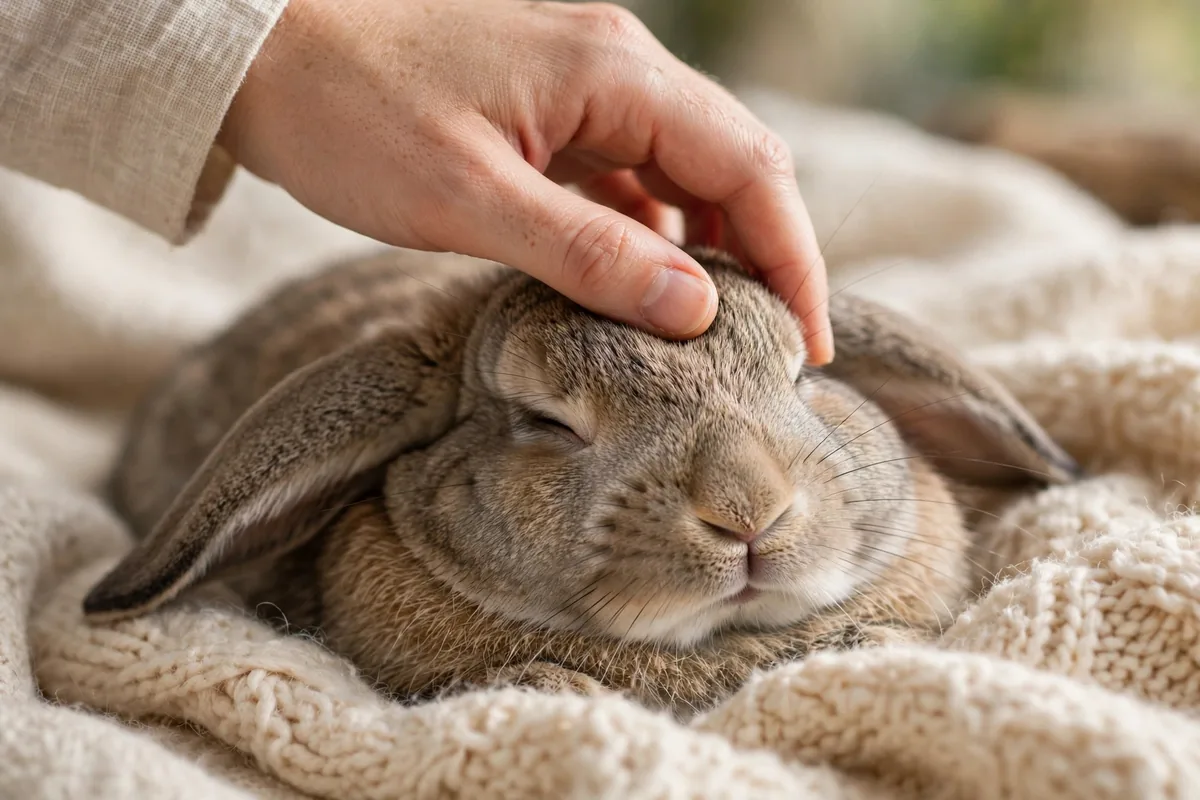
Pet the forehead only, stroking from nose toward ears with the fur. This mimics rabbit grooming: the one touch almost every rabbit accepts. Keep your hand low and visible, never swooping from above. Start with three or four strokes while the rabbit eats, then stop.
Watch for the magic signal: the rabbit lowers its head under your hand, asking for more. That is an invitation. Avoid belly, feet, and tail: they trigger flight in new bonds.
Step 4: When Is My Rabbit Ready for Lap Time?
Lap time happens when the rabbit decides it happens. Sit on the floor, offer greens on your lap, and wait. A ten-second visit before hopping off counts as a win. Never trap the rabbit on your lap or lift it there. Being held triggers prey panic, and one bad experience can undo weeks of progress.
Over time, visits lengthen. A rabbit that grooms or naps on your lap pays its highest compliment.
Step 5: How Do I Play With My Rabbit?
Play builds the bond sideways: you become the source of fun instead of the approaching giant. Drag a willow ball or a paper bag (handles removed) slowly past your rabbit and let it chase. Rabbits that play with you link your presence to excitement, not just safety.
A mid-game flop means total relaxation, not boredom.
Step 6: What Does a Bonded Rabbit Look Like?
A bonded rabbit seeks you out, follows you between rooms, and runs to greet you. It licks you, nudges your hand for petting, flops beside you, and may grind its teeth softly (tooth purring).
Do not expect dog-like obedience. Rabbit affection is quieter: napping while touching your leg is an enormous statement of trust.

Step 7: How Do I Keep the Bond Strong?
After disruptions like a move, rebuild with a few days of step-one floor time. Bonds fade without maintenance, so keep the daily rituals going.
How Do I Read My Rabbit’s Body Language?
A binky (a joyful mid-air twist) means pure happiness. Soft tooth grinding while petted means contentment. Thumping a hind foot is an alarm call: something scared your rabbit, so give space. Flat ears and a tense body mean fear: back off. Ears up and forward mean curiosity.
The flop is the most misunderstood signal: a rabbit throwing itself sideways looks alarming but means blissful relaxation. If your rabbit flops beside you, sit still and accept the honor.

What Mistakes Destroy Trust With Rabbits?
Picking your rabbit up against its will is the number one trust killer. Being lifted triggers captured-by-predator panic, and kicking can injure the spine. Lift only when necessary, and learn the proper hold from our Rabbit Care Guide: Complete Beginner’s Manual.
Other trust destroyers: looming instead of getting low, chasing to catch (herd gently into the pen instead), rough play, and forced cuddles. Punishment only teaches fear. Every interaction should end with the rabbit feeling safer than it started.
Can Two Rabbits Bond With Each Other Too?
Yes: a bonded pair is often happier, since rabbits are social. But rabbit-to-rabbit bonding is its own process. Introduce slowly on neutral ground in short sessions, and expect chasing and mounting as they sort hierarchy. Never drop a new rabbit into a resident’s pen. Spay or neuter both first: it dramatically reduces aggression.
Related Guides
- Rabbit Care Guide: Complete Beginner’s Manual
- GI Stasis in Rabbits: The #1 Killer (Signs + Emergency)
- Best Diet for Pet Rats: What to Feed Daily
Frequently Asked Questions
How long does it take to bond with a rabbit?
Two to eight weeks of daily interaction, longer for shy or rescue rabbits. The timeline depends on personality and history, not effort. Twenty calm minutes daily beats one long stressful session.
Why does my rabbit run away when I try to pick it up?
Being lifted feels like being caught by a predator. Most rabbits never enjoy it, and that is normal. Bond on the floor; reserve lifting for vet visits and emergencies.
Can I bond with an older rescue rabbit?
Absolutely. Many rescues bond deeply because they appreciate safety after a rough start. The ladder works the same, just slower. Patience earns fierce loyalty.
My rabbit thumps at me. What does it mean?
Thumping is an alarm signal: your rabbit detected something scary, perhaps you moving too fast or a strange noise. Freeze, speak softly, and give space. It is communication, not aggression.
Should I get a second rabbit for company?
A spayed or neutered bonded pair is the gold standard: two rabbits entertain each other when you are away. But bonding takes weeks of supervised introductions, so prepare for a project.
This guide is for informational purposes and doesn’t replace professional veterinary advice.