

Quick answer: This rabbit care guide covers the essentials. Indoor housing with room to run, unlimited timothy hay plus measured pellets and daily greens, a litter box in every pen, weekly grooming, and a rabbit-savvy vet on call. Rabbits live 8 to 12 years and need daily social interaction. Get the diet and housing right, and most common health and behavior problems never appear.
Rabbits are the third most popular pet in many countries and also among the most misunderstood. Too many live lonely lives in tiny outdoor hutches, fed on colorful muesli mixes that wreck their digestion. A rabbit kept the modern way becomes a genuinely delightful companion for a decade or more. That means indoors, hay-fed, litter trained, and treated as the intelligent social animal it is. This rabbit care guide covers everything a beginner needs on one page: housing, diet, litter training, grooming, health, behavior, and handling.
Contents
- Are Rabbits the Right Pet for You?
- What Kind of Housing Does a Rabbit Need?
- What Should Rabbits Eat Every Day?
- Which Foods Are Safe and Which Are Toxic for Rabbits?
- How Do I Litter Train My Rabbit?
- How Do I Groom My Rabbit?
- What Health Problems Should Rabbit Owners Watch For?
- How Do Rabbits Behave and What Enrichment Do They Need?
- How Do I Handle My Rabbit Safely?
- Related Guides
- Frequently Asked Questions
Are Rabbits the Right Pet for You?
A rabbit is a ten-year commitment, not a starter pet for a child. Healthy indoor rabbits live 8 to 12 years. They need several hours of supervised exercise outside their pen every day, plus daily social interaction. A lonely rabbit develops depression and destructive chewing. They are also crepuscular, meaning most active at dawn and dusk, which suits working owners better than many expect.
Budget honestly before you commit. Beyond the setup ($150 to $400 for a pen, litter boxes, and supplies), expect $50 to $100 a month for hay, pellets, greens, and litter. Add annual vet checkups and an emergency fund. Spaying or neutering ($200 to $500) is strongly recommended for health and behavior. Pairs do best, which doubles the food bill but halves the loneliness. If you travel often, line up a rabbit-savvy sitter, because rabbits cannot be left with just a big bowl of food like some pets.
What Kind of Housing Does a Rabbit Need?
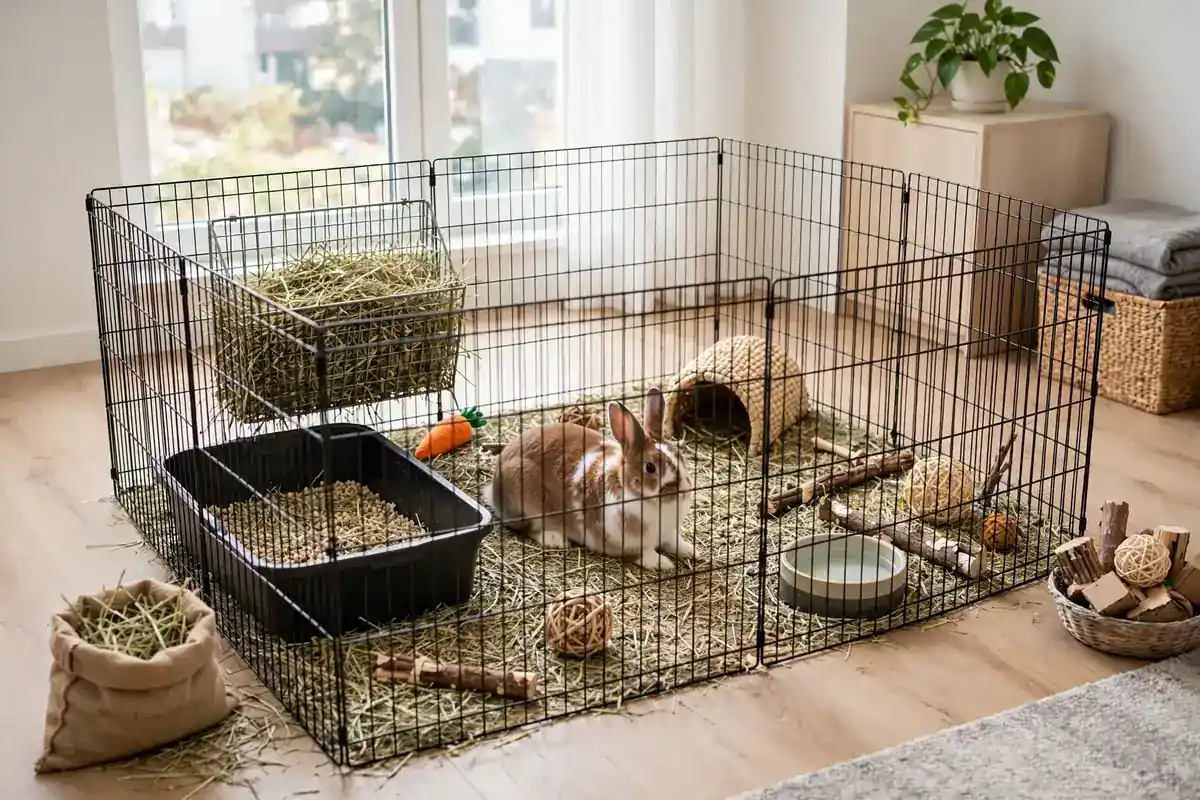
Indoor housing is strongly preferred. Outdoor hutches expose rabbits to temperature extremes, predators, parasites, and loneliness, and they make health problems easy to miss. The modern standard is an exercise pen or a rabbit-proofed room, not a cage. Use the four-times rule: the enclosure should allow at least four full hops in each direction. For an average rabbit, that means roughly 4 by 4 feet of floor space as a bare minimum, plus daily free-roam time.
Flooring matters more than most beginners realize. Wire floors injure feet and cause sore hocks, so cover the pen floor with fleece, low-pile rugs, or foam mats that give traction. Slippery hardwood or tile stresses rabbits because they cannot grip it. Set up the pen with zones. Put a litter box in the corner the rabbit chooses, with a hay rack above or beside it (rabbits graze while they go). Add a heavy ceramic water bowl, a hideout box for security, and a few toys. Clean litter boxes every day or two and do a full pen refresh weekly.
What Should Rabbits Eat Every Day?
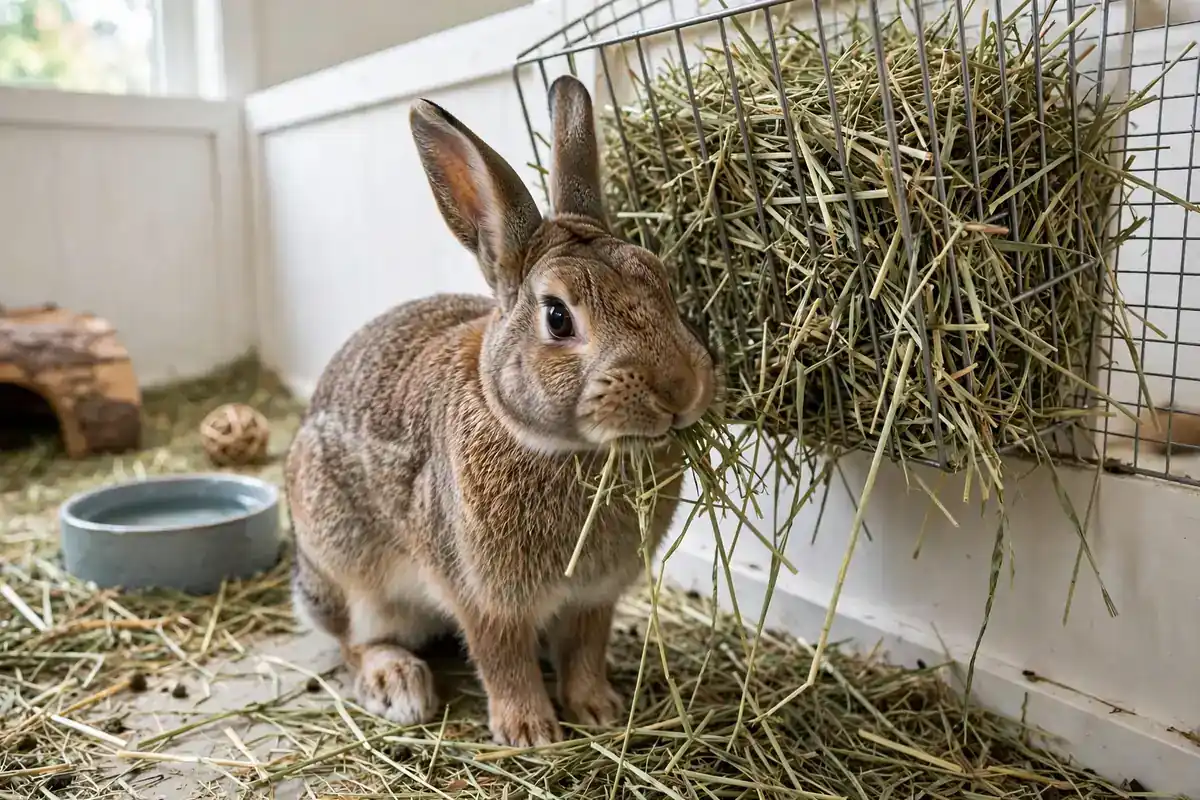
The rabbit diet is simple and strict. Unlimited grass hay, a measured portion of plain pellets, and a daily variety of leafy greens, with fresh water always available. Hay should make up about 80 percent of everything your rabbit eats. It keeps the endlessly growing teeth worn down and the gut moving. That prevents the two biggest rabbit health disasters: dental disease and GI stasis. Timothy hay suits most adults; orchard grass and oat hay are fine alternatives for picky eaters.
Pellets should be plain, timothy-based, and high in fiber (look for 18 percent fiber or more). Skip mixes with colorful bits, seeds, or dried fruit. Those muesli-style mixes let rabbits cherry-pick the sugary pieces and leave the fiber, which is exactly backwards. Measure pellets by weight using the table below rather than free-feeding, because overweight rabbits develop joint, heart, and grooming problems. Offer a rotating mix of safe greens daily: romaine, cilantro, parsley, dill, mint, and bok choy are all excellent. Introduce any new green one at a time over a few days.
| Life stage | Hay | Pellets (plain, timothy-based) | Fresh greens |
|---|---|---|---|
| Baby (under 7 months) | Unlimited alfalfa hay | Unlimited alfalfa-based pellets | Introduce slowly from 12 weeks, one green at a time |
| Juvenile (7 to 12 months) | Transition to unlimited timothy hay | Reduce to 1/4 cup per 5 lb body weight daily | 1 cup per 2 lb body weight daily, varied |
| Adult (1 to 5 years) | Unlimited timothy or orchard hay (about 80% of diet) | 1/4 cup per 5 lb body weight daily | 1 to 2 cups per 5 lb body weight daily, varied |
| Senior (over 5 years) | Unlimited hay; add alfalfa if losing weight | Slightly increase if weight drops (vet guidance) | Continue varied daily greens; softer options if teeth worn |
Which Foods Are Safe and Which Are Toxic for Rabbits?
Most rabbit poisoning cases come from the kitchen or the garden, not from pet products. Rabbits cannot vomit, so anything harmful they swallow stays down, which makes prevention the only real strategy. Fruit is fine as an occasional treat (a tablespoon or two) despite its sugar. But starchy and toxic human foods must stay out of reach entirely. When in doubt about a plant or food, do not offer it until you have verified it in a reliable rabbit care guide.
| Safe daily or regular foods | Toxic or dangerous foods (never feed) |
|---|---|
| Romaine lettuce, green and red leaf lettuce | Iceberg lettuce (causes diarrhea) |
| Cilantro, parsley, dill, mint, basil | Onion, garlic, leeks, chives |
| Bok choy, arugula, carrot tops | Potato and potato leaves |
| Bell peppers, cucumber, zucchini (small amounts) | Chocolate, candy, anything with xylitol |
| Apple, banana, berries, pear (treat only, tiny portions) | Grapes and raisins |
| Carrot (treat only, high in sugar) | Bread, pasta, crackers, cereals, nuts, seeds |
| Fresh willow, apple branches (pesticide-free chew toys) | Avocado, rhubarb leaves, tomato leaves |
How Do I Litter Train My Rabbit?
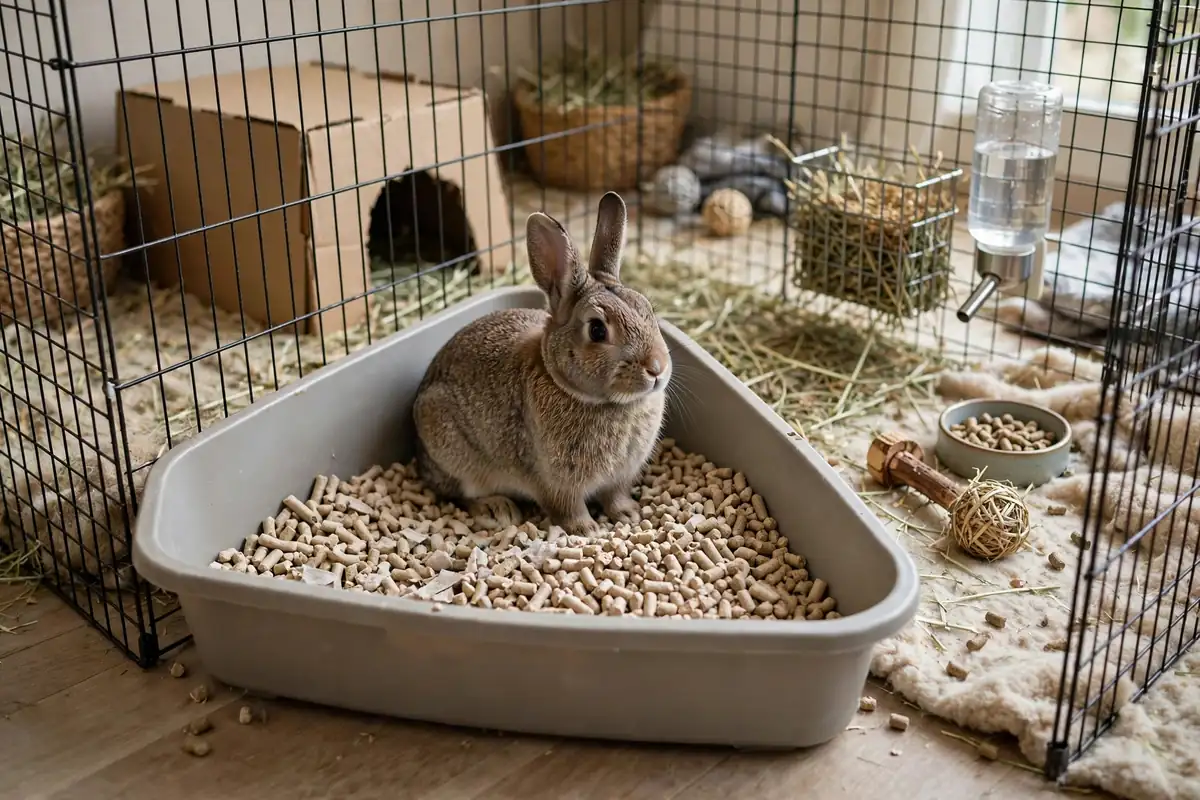
Most rabbits litter train readily because they naturally choose one corner as a toilet. Start by watching where your rabbit goes in the pen, then place a large, low-sided litter box exactly there. Fill it with paper-based or aspen litter. Never use clumping cat litter or pine and cedar shavings, which damage rabbit lungs. Pile fresh hay at one end of the box, since rabbits graze while they eliminate and the hay lures them in.
Scoop soiled litter daily and dump and refresh the box every few days. If the rabbit picks a second corner, add a second box rather than fighting instinct. Spayed and neutered rabbits train faster and mark territory less, which is another reason the surgery pays off. Expect a few stray droppings during free-roam time even from trained rabbits. Dry fecal pellets are territorial markers, not accidents, and they sweep up easily.
How Do I Groom My Rabbit?
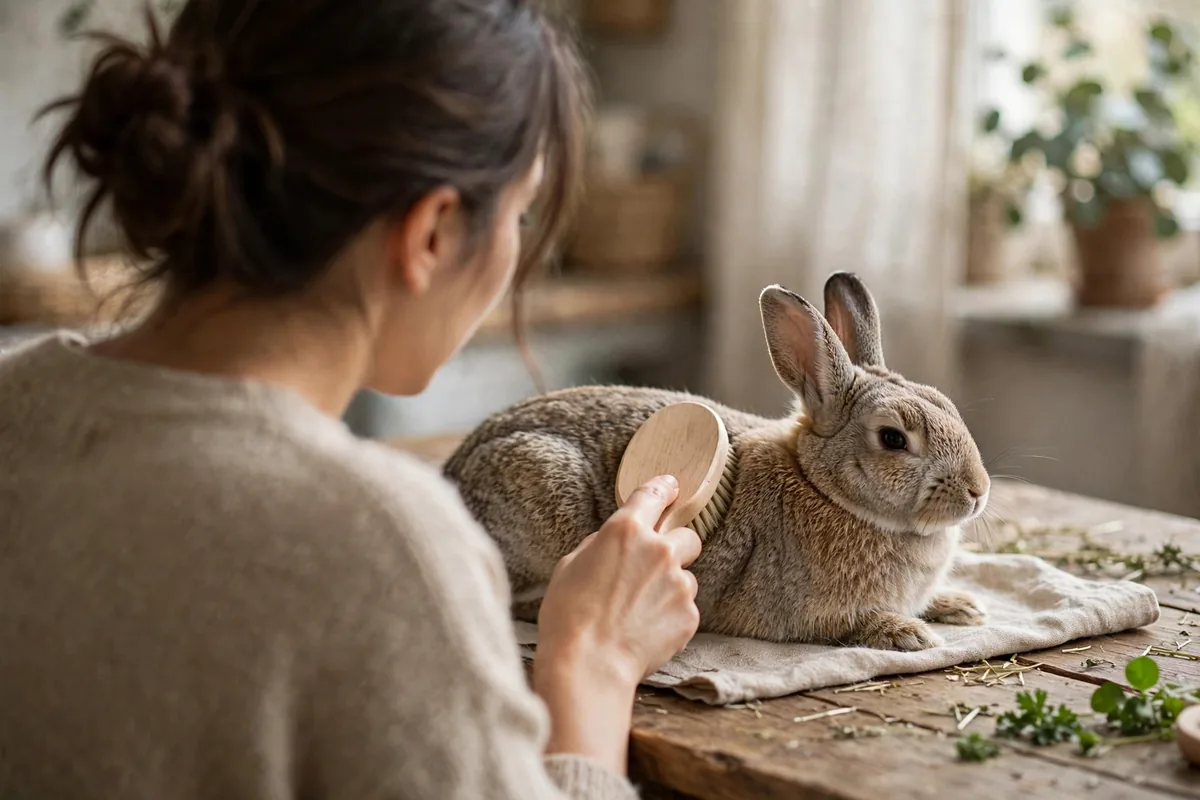
Brush your rabbit weekly, and daily during heavy seasonal sheds. Rabbits groom themselves constantly and swallow the loose fur, which can form gut-blocking hairballs when shedding is heavy. A slicker brush or a rubber grooming mitt removes the loose coat before it becomes a problem. Long-haired breeds like angoras need daily brushing to prevent painful mats that tug the skin.
Trim nails every four to eight weeks. Rabbit nails grow fast and curl, and overgrown nails snag and change how the rabbit stands. Use small animal nail clippers and trim only the tip past the quick (the pink line inside the nail). Keep styptic powder nearby in case you nick it. Check ears for wax buildup and the scent glands under the chin and near the tail for waxy residue during grooming sessions. Never bathe a rabbit. Water destroys the coat’s insulation and bathing causes extreme stress and dangerous chilling. Spot-clean dirty areas with a damp cloth instead.
What Health Problems Should Rabbit Owners Watch For?
The number one rabbit emergency is GI stasis, where the gut slows or stops. Warning signs include a rabbit that stops eating or pooping. It may sit hunched, press its belly to the floor, or grind its teeth loudly in pain. GI stasis can turn fatal within 24 hours, so it is always an emergency vet visit, never a wait-and-see situation. Our dedicated guide covers it in full: GI Stasis in Rabbits: The #1 Killer (Signs + Emergency). Feeding unlimited hay is the single best prevention.
Dental disease is the other big one: rabbit teeth grow continuously, and a low-hay diet lets them overgrow into painful spurs. Signs include drooling, dropping food, facial swelling, and watery eyes. Snuffles (a bacterial respiratory infection with sneezing and nasal discharge), ear mites, and sore hocks from wire or hard flooring round out the common list. Spaying females dramatically cuts the risk of uterine cancer, which affects a heartbreaking share of unspayed females. Neutering males reduces spraying and aggression.
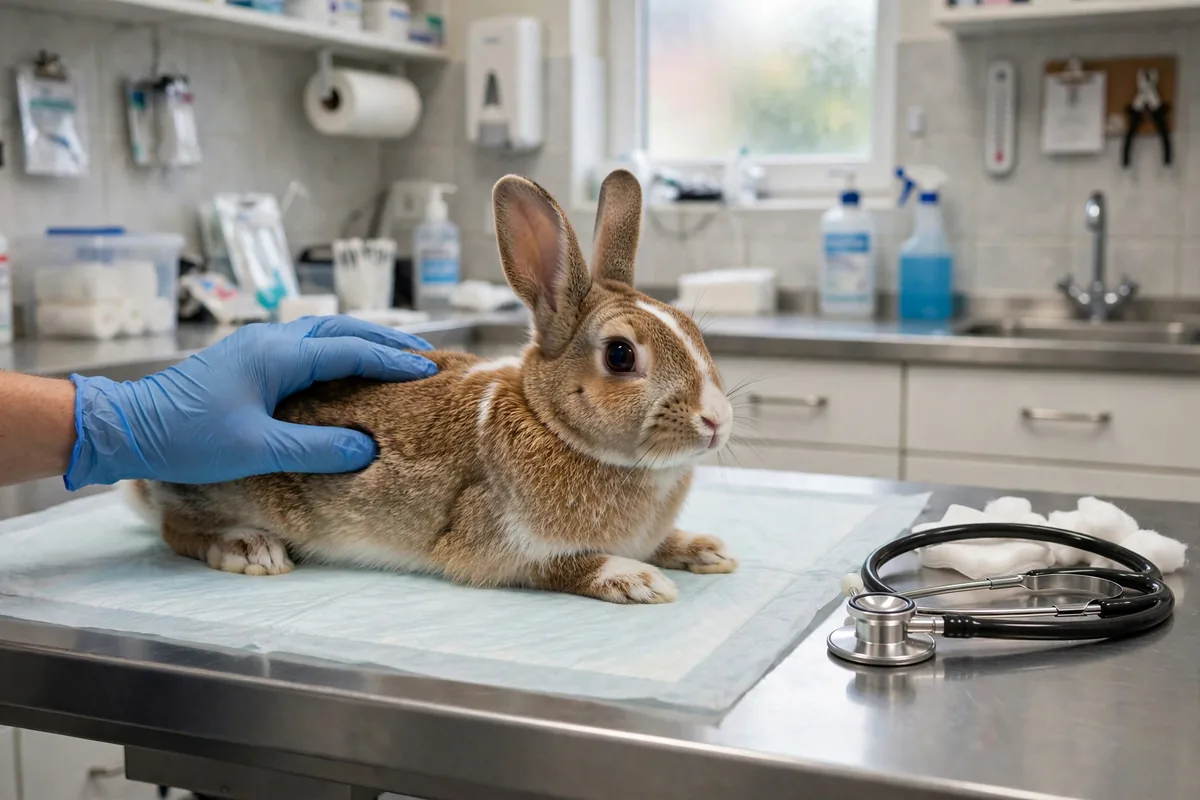
Book a checkup with a rabbit-savvy vet (not all small-animal vets see rabbits regularly) within the first weeks, then annually. Ask about vaccinations: in many regions rabbits need protection against deadly viral diseases like RHDV, and your vet will know the local schedule. Between visits, weigh your rabbit monthly and check appetite, droppings, and behavior daily, because rabbits hide illness until it is advanced.
How Do Rabbits Behave and What Enrichment Do They Need?
A bored rabbit is a destructive rabbit. In the wild, rabbits spend hours foraging, digging, and exploring, and a pen with nothing to do produces chewed baseboards and depressed animals. Provide cardboard boxes with doorways cut in, paper bags stuffed with hay, willow balls, untreated wood chews, and tunnels. Rotate toys weekly to keep them novel, and scatter part of the daily greens around the pen so meals become foraging puzzles.
Learn the language. Binkies and zoomies mean joy, flopping means total relaxation, tooth purring during petting means contentment, and thumping means something scared them. Rabbits are crepuscular, so schedule your main interaction time for morning and evening when they are naturally active. Give them a digging box filled with shredded paper or soil, because digging is a core rabbit need, not misbehavior.
How Do I Handle My Rabbit Safely?
Handle rabbits as little as possible and always on their terms. Most rabbits dislike being picked up because being lifted triggers the prey panic response, and a kicking rabbit can fracture its own spine. When lifting is necessary, support the hindquarters fully. Keep one hand under the chest and one under the bottom, hold the rabbit against your body, and stay low to the ground.
For everything else, interact at floor level: sit or lie down and let the rabbit come to you. This is also the foundation of bonding, which deserves its own guide: How to Bond With Your Rabbit: Trust Steps walks you through the seven-step trust ladder from hiding to seeking you out. Never chase a rabbit to catch it: herd it gently into its pen with your body instead.
Related Guides
- How to Bond With Your Rabbit: Trust Steps
- GI Stasis in Rabbits: The #1 Killer (Signs + Emergency)
- Sugar Glider Care: Complete Beginner’s Manual
Frequently Asked Questions
How long do pet rabbits live?
Indoor rabbits with proper diet and vet care typically live 8 to 12 years, with some reaching 14. Outdoor hutch rabbits average far less because of temperature stress, predators, and undetected illness. Lifespan is one of the strongest arguments for keeping rabbits indoors.
Can rabbits live alone or do they need a companion?
Rabbits are social animals and most are happier with a bonded partner, ideally a spayed or neutered pair introduced slowly on neutral ground. A single rabbit can thrive if its human provides several hours of daily interaction. But a lonely rabbit with a busy owner often becomes depressed and destructive.
Do rabbits really need hay all the time?
Yes, unlimited grass hay is non-negotiable. It wears down continuously growing teeth and keeps the gut moving to prevent GI stasis. It also provides the fiber that makes up the bulk of a healthy rabbit diet. A rabbit without constant hay access is a rabbit heading for dental or digestive trouble.
Why does my rabbit chew everything?
Chewing is how rabbits explore, wear down their teeth, and relieve boredom. Rabbit-proof by covering cords, blocking baseboards, and providing plenty of legal chew options like willow balls, apple branches, and cardboard. Punishment does not work on rabbits: management and enrichment do.
Are rabbits good pets for children?
Rabbits are fragile, easily frightened prey animals that dislike being picked up, so they suit calm older children with adult supervision, not toddlers. The daily care, vet costs, and decade-long commitment are really the parents’ responsibility. Families expecting a cuddly low-maintenance pet are usually happier with a different animal.
How much does it cost to keep a rabbit per month?
Expect $50 to $100 a month for hay, pellets, fresh greens, and litter for one rabbit. Add annual vet checkups and an emergency fund. The initial setup (pen, litter boxes, hideout, supplies) runs $150 to $400, and spay or neuter surgery adds $200 to $500 once.
This guide is for informational purposes and doesn’t replace professional veterinary advice.