

Quick answer: Kitten proofing your house means removing or securing about 20 household dangers before your kitten arrives. Toxic lilies, chemicals, medications, cords, small swallowable objects, open toilets, and unscreened windows all need attention. Work room by room, fix fatal risks first, and set up one safe room for the kitten’s first week.
A kitten explores the world mouth-first, climbs before it learns to land, and fits through gaps you would swear were too small. What is harmless clutter to you is a chew toy or a toxin to a ten-week-old cat. Most kitten emergencies are preventable with one focused afternoon with this guide.
Contents
- Why Is Kitten Proofing Different From Cat Proofing?
- Which Plants Can Kill a Kitten?
- What Kitchen Dangers Should I Remove First?
- What Bathroom Hazards Threaten Kittens?
- What Living Room and Bedroom Dangers Do Owners Overlook?
- How Do I Make Windows and Balconies Kitten-Safe?
- What Is the Full 20-Danger Room-by-Room Checklist?
- How Do I Set Up a Safe Room for the First Week?
- Related Guides
- Frequently Asked Questions
Why Is Kitten Proofing Different From Cat Proofing?
Adult cats have learned what hurts; kittens have not. A kitten will chew a live cord or swallow a rubber band an adult would ignore. Kittens also weigh under two pounds. A toxin dose that would only sicken an adult can kill them, and they squeeze behind appliances no adult cat fits. Proof for a kitten by assuming everything will be tasted, climbed, and knocked over.
Which Plants Can Kill a Kitten?
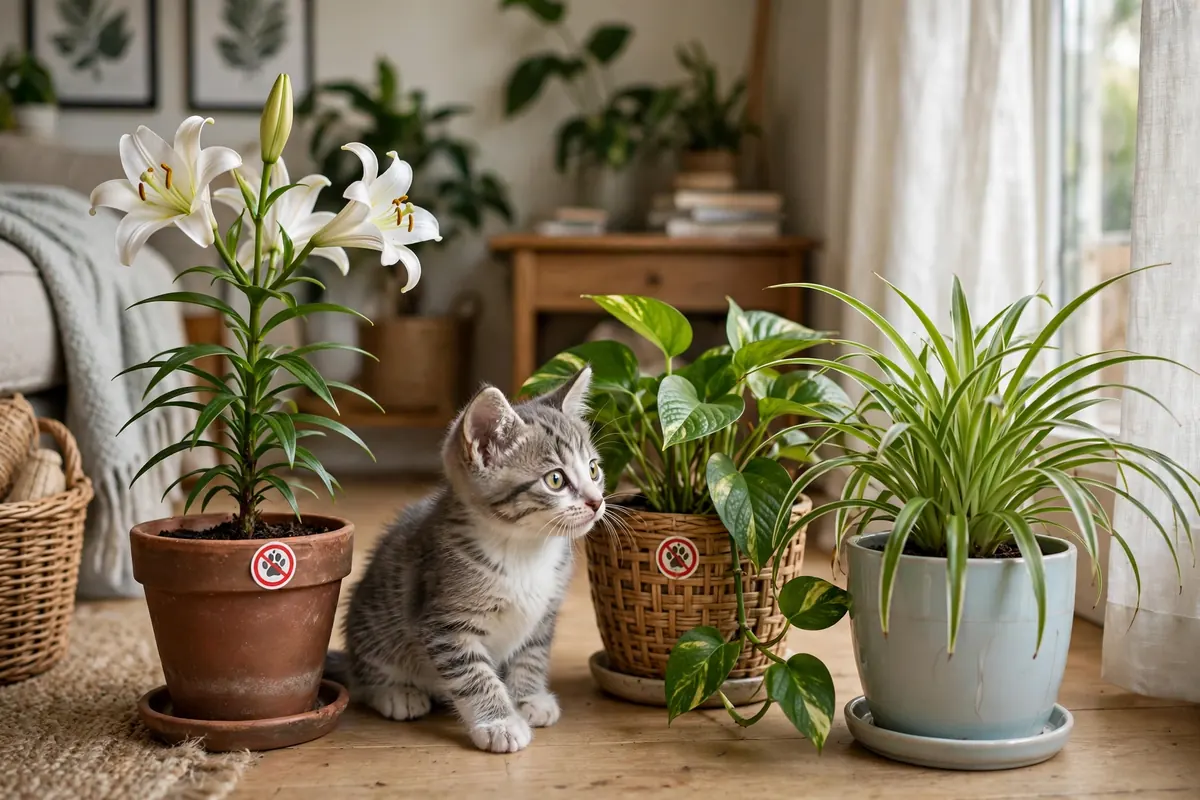
Lilies are the number one plant emergency for cats. Every part of a true lily (Easter, tiger, stargazer, daylilies) is toxic, and even grooming pollen off the fur can cause fatal kidney failure within days. This is a rush-to-the-vet situation, not a wait-and-see one. Sago palm, oleander, and dieffenbachia are other common killers, while pothos, philodendron, and aloe cause painful mouth and stomach burns.
Walk every room and identify each plant with a plant-ID app if unsure. Rehome the toxic ones or hang them where a climbing kitten cannot reach. When in doubt, treat an unknown plant as guilty. Cat-safe options like spider plants and cat grass give your kitten something legal to chew.
What Kitchen Dangers Should I Remove First?
Start with the trash can. Chicken bones, wrappers, and onion scraps sit in one tempting place, so switch to a locking-lid can or latch it inside a cabinet. Move cleaning chemicals from under the sink to a high locked cabinet, since kittens learn to nose open low doors within days. Unplug small appliances when idle and bundle their cords.
Keep chocolate, grapes, onion, garlic, xylitol products, and raw dough off counters. A kitten that learns the counter is a snack bar becomes an adult cat with the same habit.
What Bathroom Hazards Threaten Kittens?
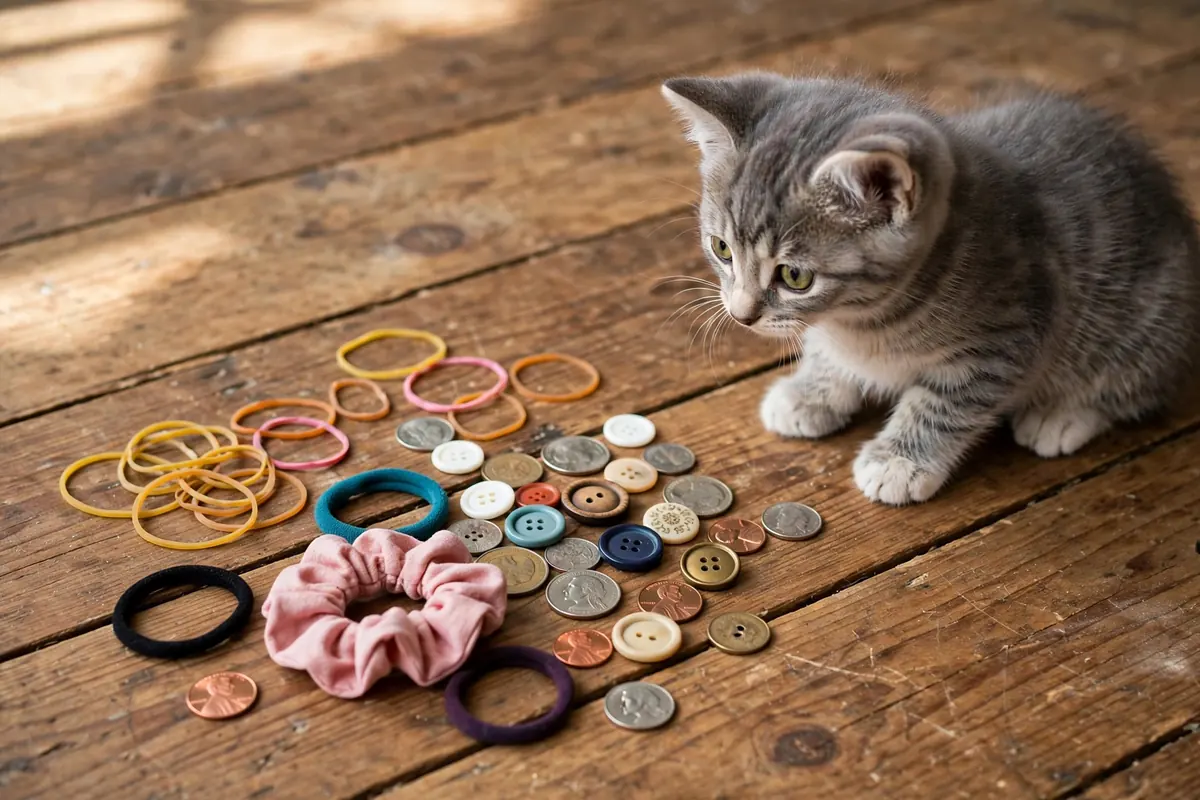
Close the toilet lid every time: kittens fall in, cannot climb out, and tiny ones can drown or chill dangerously. Lock medications in a cabinet, not on the counter: common painkillers are toxic to cats and a knocked-over bottle becomes a scattered buffet. Store razors, floss, and hair ties in drawers: floss causes linear foreign bodies needing emergency surgery.
Move bleach and cleaners into locked storage and keep the bathroom door closed when unsupervised. A hazard-free bathroom also works as a safe room for the first week. Just add food, water, a litter box, and a bed.
What Living Room and Bedroom Dangers Do Owners Overlook?
Electrical cords are the most underestimated danger in the house. Kittens chew chargers, lamp cords, and TV cables, risking burns and shock. Bundle cords with covers, unplug what you are not using, and block access behind the TV. Use flameless candles instead.
Recliners and rocking chairs crush kittens napping in the moving parts, so always look before you close or rock. Remove essential oil diffusers: tea tree, eucalyptus, citrus, and pine oils are toxic to cats. In the bedroom, scan the floor for rubber bands, hair ties, and buttons, and check the washer and dryer before every load.

How Do I Make Windows and Balconies Kitten-Safe?
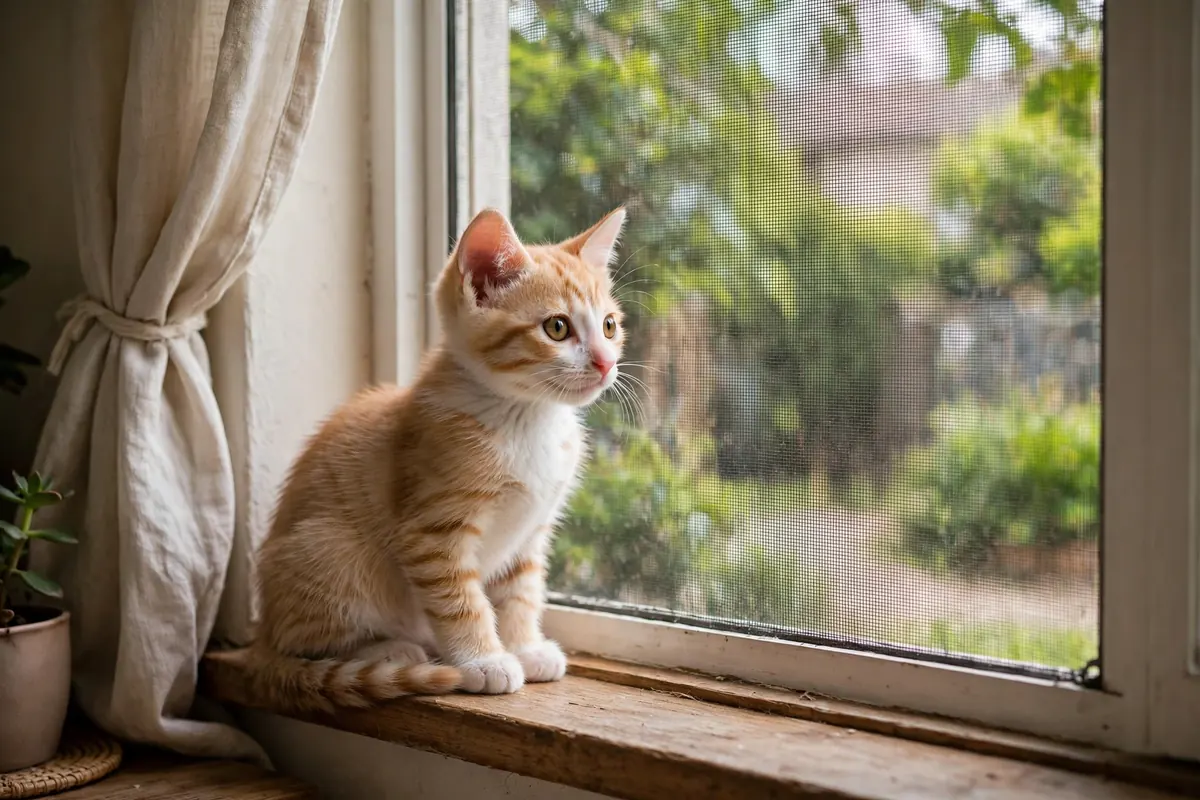
Kittens fall from windows and balconies far more often than owners expect, and the resulting fractures and chest trauma are known as high-rise syndrome. A kitten chases a fly, misjudges a landing, or slips off a rail. Fit every openable window with a secure screen or guard, never a flimsy insect screen that pops out.
Treat balconies as off-limits unless fully enclosed as a catio with netting overhead and no climbable gaps. Tilt-and-turn windows need special hardware because kittens wedge into the top gap. A screened window perch gives safe breeze and bird-watching.
What Is the Full 20-Danger Room-by-Room Checklist?
Print this kitten proofing house checklist and work room by room. Tackle the fatal risks (plants, chemicals, medications, windows) before the merely messy ones.
| # | Danger | Why it is dangerous | Quick fix |
|---|---|---|---|
| 1 | True lilies and toxic houseplants | Lily pollen or petals cause fatal kidney failure | Rehome toxic plants or hang out of reach |
| 2 | Open trash can | Bones, wrappers, toxic scraps in one spot | Use a locking-lid can |
| 3 | Cleaning chemicals under the sink | Burns and poisoning from licks or spills | Move to a high, locked cabinet |
| 4 | Hot stove and oven | Burned paws from a warm stovetop | Use stove covers; keep kittens out while cooking |
| 5 | Small appliance cords | Chewing cords causes burns and shock | Unplug when idle; bundle cords with covers |
| 6 | Toxic human foods on counters | Chocolate, onion, garlic, grapes, xylitol poison cats | Store food sealed; train counters as off-limits |
| 7 | Open toilet lid | Tiny kittens can drown or chill badly | Close the lid every time; keep the door shut |
| 8 | Medications on counters | Human pills are toxic; batted bottles scatter | Lock all medications in a cabinet |
| 9 | Razors and dental floss | Floss causes surgical linear foreign bodies | Store in closed drawers |
| 10 | Electrical cords and chargers | Chewing causes burns and shock | Wrap with cord covers; block access behind furniture |
| 11 | Lit candles | Tails catch fire; knocked candles start fires | Switch to flameless candles |
| 12 | Recliners and rocking chairs | Moving parts crush napping kittens | Always check before closing or rocking |
| 13 | Essential oil diffusers | Tea tree, eucalyptus, citrus oils poison cats | Remove diffusers |
| 14 | Plastic bags | Handles snag necks; chewed plastic blocks digestion | Store in a sealed bin; cut handles first |
| 15 | Rubber bands and hair ties | Swallowed bands saw intestines (linear foreign body) | Pick up daily; store in closed containers |
| 16 | Washing machine and dryer | Kittens climb into warm laundry | Keep doors closed; check the drum before every load |
| 17 | Unscreened windows | Falls cause fractures and trauma (high-rise syndrome) | Fit secure screens or guards on every window |
| 18 | Open balconies | Kittens slip through rails or misjudge jumps | Keep off-limits or enclose fully as a catio |
| 19 | String, yarn, and ribbon toys | Swallowed string tangles intestines | Supervised use only; lock away after play |
| 20 | Heavy or wobbly objects on shelves | Climbing kittens topple decor | Secure with museum putty; move breakables away |
How Do I Set Up a Safe Room for the First Week?
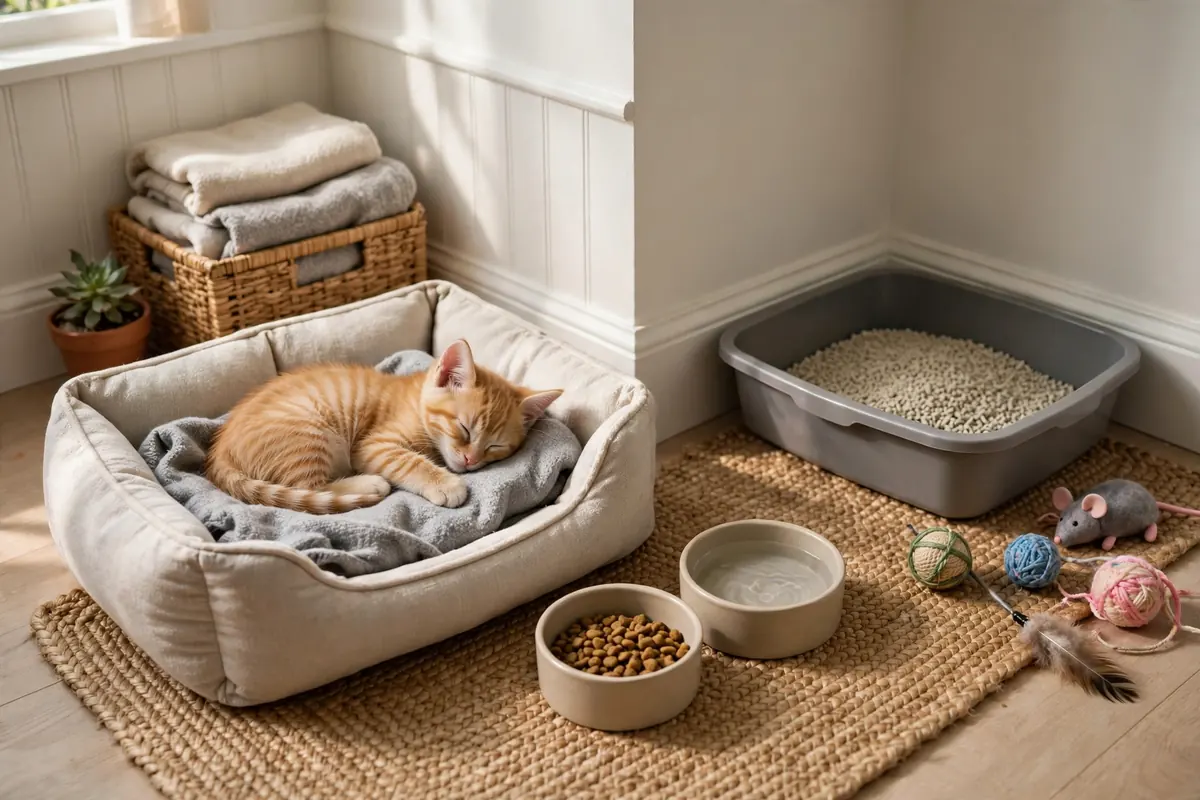
Even a proofed house overwhelms on day one. Give your kitten one safe room for the first week: a proofed quiet bedroom or bathroom with a litter box at one end, food and water at the other, a cozy bed, a scratching post, and two or three toys.
Spend calm floor time in the room so your kitten learns you are safe. Open the door gradually once it eats, drinks, and uses the litter box confidently. Most kittens are ready for supervised exploration within a week.
Related Guides
- 7 Maine Coon Mistakes New Owners Regret
- Do Cats Bleed When in Heat? The Truth About Feline Heat
- Fleas on Cats: Treatment and Home Cleanup Protocol
Frequently Asked Questions
How long should I keep my kitten in the safe room?
Most kittens need three to seven days. Expand access once your kitten eats well, uses the litter box reliably, and approaches you for play. Shy kittens may need two weeks: confidence now prevents behavior problems later.
Are essential oil diffusers really dangerous for kittens?
Yes. Cats lack the enzyme that breaks down tea tree, eucalyptus, citrus, and pine oils, so exposure can cause drooling, tremors, and liver damage. Tiny kittens are most vulnerable.
What should I do if my kitten chews a lily leaf?
Go to the vet immediately, even if the kitten looks fine. Lily poisoning destroys kidneys silently over 24 to 72 hours, and treatment only works if started early.
Can kittens really fall from balconies?
Yes, it is one of the most common kitten emergencies in warm months. Kittens chase insects, lose balance, or misjudge jumps. Falls from even the second floor cause serious injuries, so screens and enclosed catios are non-negotiable.
When can I stop kitten proofing?
Never fully, but intensity drops after six months as curiosity calms. Keep the permanent fixes (screens, locked chemicals, lidded trash) forever. Once your cat stops tasting everything, kitten proofing the house gets much easier.
This guide is for informational purposes and doesn’t replace professional veterinary advice.