

Nearly every parrot surrendered to a rescue in its first year wasn’t given up because it was a bad bird. It was given up because a handful of small, repeated mistakes quietly turned an exciting new pet into a source of stress for everyone involved. Understanding the most common beginner bird owner mistakes before they happen is one of the cheapest forms of insurance a new owner can get.
None of these mistakes come from carelessness. They come from good intentions paired with information nobody handed the owner up front. This guide breaks down the specific mistakes that show up again and again in the first year of bird ownership, why they happen, and exactly how to avoid them.
In this guide, you’ll learn:
- The diet and feeding mistakes that quietly cause long term health problems
- Cage and environment mistakes that seem harmless but aren’t
- Social and behavioral mistakes that damage trust early on
- Health related mistakes that delay catching real problems
- Common bird owner myths worth debunking
- Which mistakes carry the highest risk and deserve the most attention first
Key Takeaways:
- Most beginner bird owner mistakes come from missing information, not neglect
- Diet and cage placement mistakes tend to cause slow, hard to notice harm
- Social neglect and handling mistakes often show up as behavior problems, not obvious warning signs
- A handful of these mistakes account for most first year rehoming decisions
- Fixing even two or three of these early prevents most downstream problems
Let’s start with what actually counts as a beginner mistake here, and what doesn’t.
Table of Contents
- What Counts as a Beginner Bird Owner Mistake
- Why These Mistakes Are So Common in Year One
- Diet and Feeding Mistakes to Avoid
- Cage and Environment Mistakes to Avoid
- Social and Handling Mistakes to Avoid
- Health and Vet Care Mistakes to Avoid
- Bird Owner Myths Debunked
- Which Mistakes Matter Most: The Silent Risk Scale
- Frequently Asked Questions
What Counts as a Beginner Bird Owner Mistake
Beginner bird owner mistakes are defined as common, repeated errors in diet, environment, handling, or health care that stem from missing information rather than poor intentions. Nearly every new owner makes several of them without realizing it.
These are different from first time owner regrets about the decision to get a bird at all. Regret usually comes from underestimating noise, mess, or lifespan before buying. Mistakes, by contrast, are things not to do with pet birds once you already have one, and they can be corrected immediately once an owner knows about them, which is exactly why a clear list matters so much.
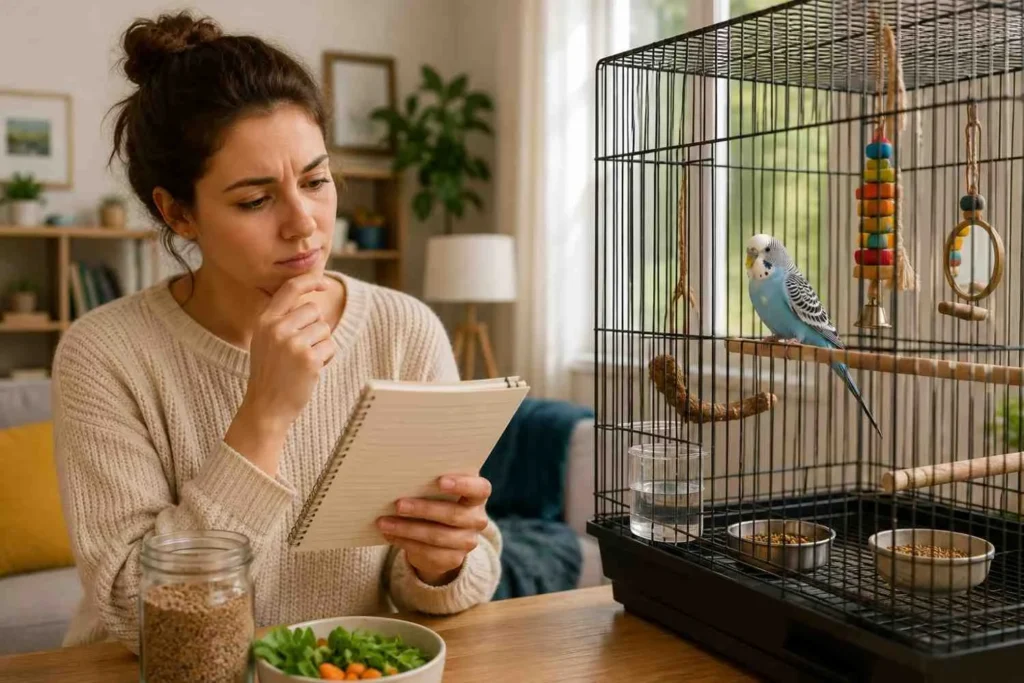
[IMG: new bird owner reviewing a checklist next to a bird cage]
Why These Mistakes Are So Common in Year One
New bird owner mistakes cluster heavily in the first twelve months for a simple reason. Birds are marketed and sold with far less onboarding information than dogs or cats typically receive, and much of what a bird needs runs counter to instinct, since a stressed or unwell bird instinctively hides it rather than showing obvious signs.
Quotable insight: a bird’s silence about a problem is not the same as the absence of one. Most of the mistakes below persist for months precisely because the bird doesn’t visibly protest right away.
Pro Tip: If something about your current setup feels like it might be a shortcut, it usually is. Most beginner mistakes aren’t dramatic failures. They’re small compromises that seemed reasonable at the time.
Diet and Feeding Mistakes to Avoid
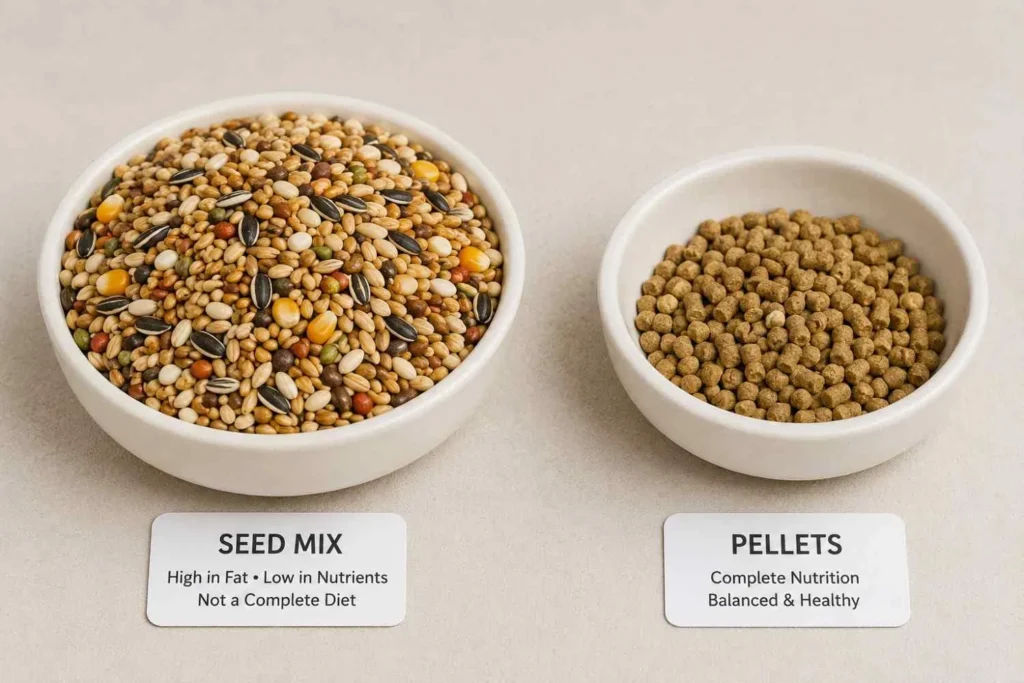
Bird care mistakes to avoid start most often with diet, since it’s the easiest area to get wrong without any immediate visible consequence.
The overfeeding seeds mistake is the most common of all. Seeds are calorie dense but nutritionally incomplete, and an all seed diet is one of the leading causes of long term malnutrition in pet birds. Because a bird on an all seed diet often looks perfectly healthy for months, this mistake tends to go uncorrected far longer than it should.
Other frequent diet related mistakes:
- Switching a bird’s diet abruptly instead of transitioning gradually, which can lead to a bird refusing to eat entirely
- Judging food intake by how full the bowl looks rather than actual weight, since hulled seed shells make bowls appear fuller than they are
- Leaving fresh food in the cage too long, allowing bacteria to build up in warm rooms
These specific feeding habits and correct portioning are covered in full detail elsewhere. Here, the focus is simply on recognizing that diet mistakes are common, slow to show symptoms, and easy to fix once identified.
Cage and Environment Mistakes to Avoid
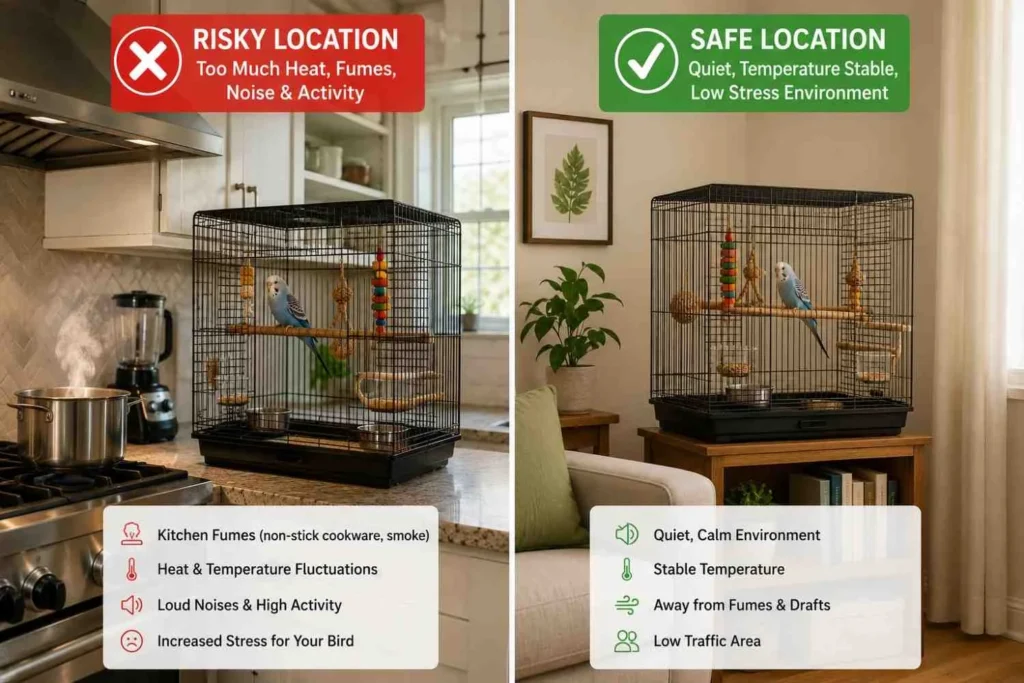
The wrong cage size mistake happens more often than most new owners expect, usually because a cage is chosen based on price or appearance rather than the specific species’ movement and wingspan needs. A cage that’s technically large enough to sit comfortably in still might not give a bird enough room to fly, climb, or stretch fully.
Improper bird cage placement mistake patterns show up just as often. Common placement errors include:
- Positioning the cage in the kitchen, where non stick cookware fumes can be fatal to birds within minutes
- Placing the cage in direct sun with no shaded area to retreat to
- Setting the cage near a drafty window or air conditioning vent
Wrong temperature for birds is closely related. Most companion species do best in a stable, moderate room temperature without sudden swings, and a cage near an exterior door or drafty hallway can expose a bird to temperature changes it has no way to escape.
Real world example: A first time cockatiel owner placed the cage in a sunny kitchen corner because it looked cheerful and bright. Within weeks, the bird was panting during the afternoon and refusing food during peak sun hours. Moving the cage to a shaded living room corner resolved both issues within days.
Fixing these day to day habits is part of a bigger routine. For the complete first time owner picture, including supplies, feeding, sleep, and cage care, see the [ Pet Bird Care Guide].
Social and Handling Mistakes to Avoid
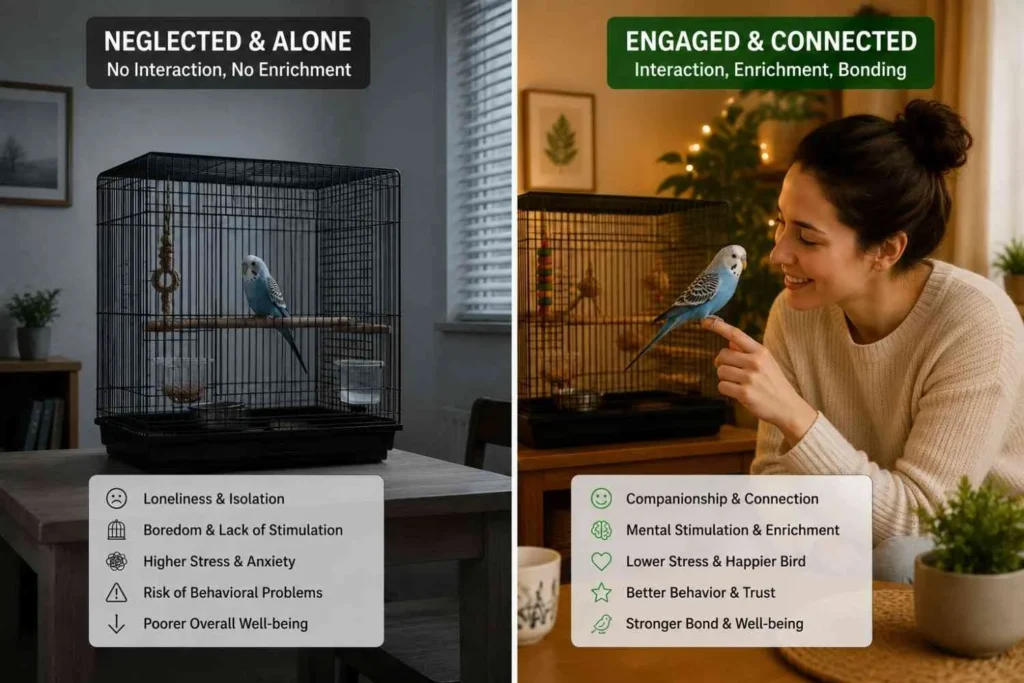
Ignoring bird social needs is one of the most damaging beginner mistakes because it rarely produces an immediate crisis. Instead, it shows up gradually as excessive screaming, feather plucking, or general anxiety over weeks and months.
Bird handling mistakes worth watching for:
- Forcing physical contact before a bird has had time to build trust on its own terms
- Reaching directly into the cage instead of letting the bird approach the front first
- Handling inconsistently, sometimes ignoring the bird for days and then expecting immediate affection
Mistakes causing bird stress compound quickly when several happen at once. A bird that’s socially neglected, handled inconsistently, and kept in a high traffic area is dealing with several sources of stress simultaneously, even though each individual factor might seem minor on its own.
Neglecting bird enrichment rounds out this category. A cage with the same one or two toys for months, with no rotation or foraging opportunity, leaves an intelligent animal with very little to do during the majority of its waking hours.
Health and Vet Care Mistakes to Avoid
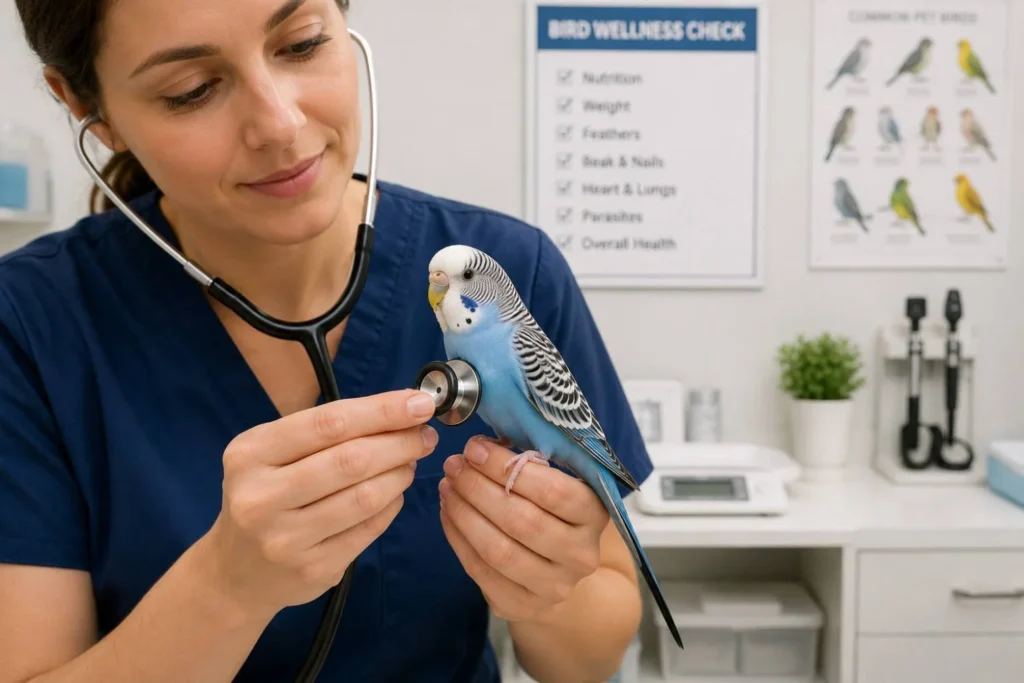
Skipping vet checkups mistake patterns are common largely because birds hide illness so effectively that owners assume no news is good news. By the time a bird visibly shows symptoms, an underlying issue has often been developing for some time.
Common bird health neglect habits include:
- Never establishing a relationship with an avian specific vet before an emergency happens
- Skipping preventive wellness visits because the bird “seems fine”
- Assuming general small animal vets have the same expertise as avian specialists
Building a relationship with an avian vet before there’s a problem, rather than scrambling to find one during an emergency, is one of the simplest ways to avoid this entire category of mistakes.
Bird Owner Myths Debunked
Bird owner myths debunked here are some of the most persistent misconceptions that quietly lead to real mistakes:
- Myth: A quiet bird is a happy bird. Reality: Sudden quietness is often an early illness signal, not contentment.
- Myth: Birds don’t need much space if they’re out of the cage sometimes. Reality: Cage size still matters for the majority of hours a bird spends inside it.
- Myth: One species of bird is basically like another. Reality: Care needs, temperament, and lifespan vary enormously even between commonly compared species.
- Myth: Birds adapt to any schedule an owner keeps. Reality: Consistent light, sleep, and feeding schedules matter far more than most owners assume.
Which Mistakes Matter Most: The Silent Risk Scale
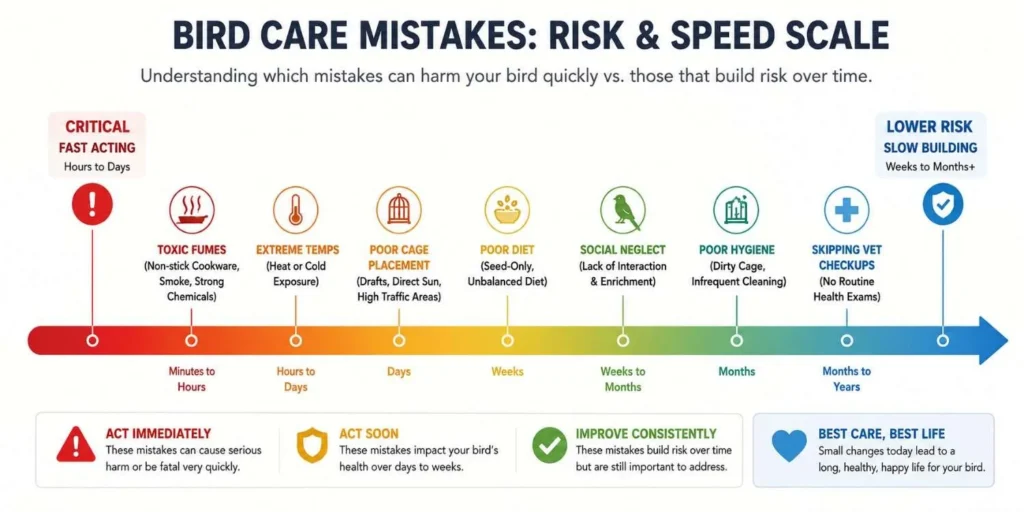
Not every mistake carries the same weight, which is where The Silent Risk Scale helps prioritize what to fix first. It ranks mistakes by how quickly they cause visible harm versus how long they can go unnoticed.
Beginner Bird Owner Mistakes: Risk Comparison at a Glance
| Mistake | Category | Time to Notice Harm | Risk Level | Quick Fix |
| Cage in the kitchen | Environment | Minutes to hours | Critical | Relocate immediately |
| All seed diet | Diet | Months | High | Gradual pellet transition |
| Wrong cage size | Environment | Weeks to months | Moderate to High | Upgrade cage size |
| Ignoring social needs | Social | Weeks to months | Moderate to High | Daily interaction routine |
| Skipping vet checkups | Health | Months to years | High | Schedule annual wellness visit |
| Inconsistent handling | Social | Weeks | Moderate | Build a predictable routine |
Recommendation: Fix the critical, fast acting mistakes first, especially cage placement, then work through the slower building ones like diet and social neglect over the following weeks.
Conclusion
Beginner bird owner mistakes almost always come from good intentions and missing information rather than neglect, which is exactly why they’re so fixable once identified. Diet, cage placement, social interaction, and vet care are the four areas where small early corrections prevent most of the serious problems that develop later.
Quick Summary:
- Most beginner mistakes come from missing information, not carelessness
- Cage placement near kitchen fumes or direct sun is the fastest acting risk
- Diet and social neglect cause slower, harder to notice harm
- A handful of persistent myths quietly drive many of these mistakes
- Fixing the highest risk items first prevents most downstream problems
Next steps:
- Walk through your current cage placement and diet against the mistakes above today
- Build a consistent daily social interaction routine if one doesn’t already exist
- Schedule a preventive avian vet visit if you haven’t established one yet
Frequently Asked Questions
What are the most common beginner bird owner mistakes?
The most common mistakes are feeding an all seed diet, placing the cage in the kitchen or in direct sun, neglecting daily social interaction, and skipping preventive vet checkups. Most of these share one trait: they don’t cause obvious harm right away, which is why they persist.
Why do new bird owners make so many mistakes?
New bird owners make mistakes mainly because birds are sold with far less care guidance than dogs or cats, and because birds instinctively hide distress rather than showing it clearly. Most mistakes come from missing information, not carelessness.
Is an all seed diet really a mistake?
Yes, an all seed diet is one of the most common and damaging beginner bird owner mistakes because seeds are calorie dense but nutritionally incomplete. The problem is that a bird on this diet often looks fine for months before deficiencies become visible.
What is the biggest cage placement mistake beginners make?
The biggest cage placement mistake is putting the cage in the kitchen, where fumes from heated non-stick cookware can be fatal to birds within minutes. Direct sun with no shade and drafty locations are close behind in risk.
How does ignoring a bird’s social needs cause problems?
Ignoring social needs typically leads to gradual behavioral changes like excessive screaming, feather plucking, or increased anxiety rather than an immediate crisis. Because the effects build slowly, this mistake often goes unaddressed for months.
Are bird handling mistakes reversible?
Most bird handling mistakes are reversible with patience, though they take longer to undo than they took to create. A bird that’s learned to associate hands with stress usually needs a slow, bird led trust rebuilding process rather than a quick fix.
What is a common bird owner myth that leads to mistakes?
One of the most damaging myths is that a quiet bird is a happy bird, when sudden quietness is often an early sign of illness rather than contentment. Believing this myth commonly delays owners from seeking veterinary care when it’s actually needed.
How do I know which mistakes to fix first?
Prioritize fast acting risks first, especially cage placement near kitchen fumes or direct sun, then address slower building issues like diet and social interaction over the following weeks. Fixing even a few of the highest risk mistakes early prevents most downstream problems.