

Quick answer: A healthy cockatiel diet is built on pellets (about 60 percent of daily food) plus a fresh serving of chopped vegetables every day, with seeds kept as small treats. Feed on a steady morning and evening schedule, change the water daily, and remove uneaten fresh food after a few hours.
Contents
- What do cockatiels eat every day?
- What does a cockatiel’s daily feeding schedule look like?
- What is the best daily food for a cockatiel?
- How do I make bird chop for my cockatiel?
- What foods are toxic to cockatiels?
- What treats can my cockatiel have?
- Related Guides
- Frequently Asked Questions
What do cockatiels eat every day?
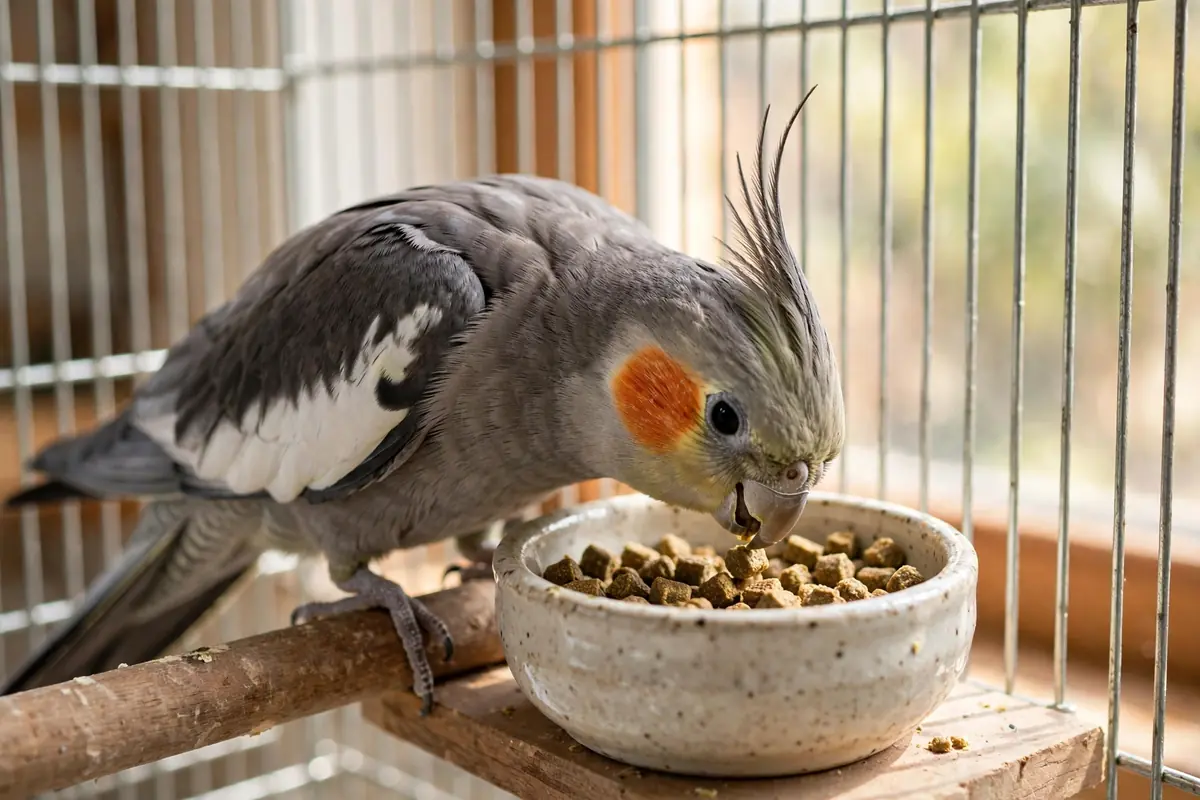
A pet cockatiel should eat three things every day: a base of quality pellets, a serving of fresh vegetables (often served as “chop”), and clean water. Getting the cockatiel diet right matters more than any single food, because small daily imbalances add up fast. A small amount of seed can be part of the daily routine too, but only as a treat, not the main meal.
In the wild, cockatiels forage on the ground for grass seeds, berries, and grains, eating a wide variety over the day. Captive birds do best when their daily food mimics that variety in a controlled way. Avian veterinarians generally recommend these proportions for a cockatiel’s daily intake:
- Pellets: about 50 to 70 percent. The foundation of the diet, because each pellet carries a full balance of nutrients.
- Fresh vegetables and chop: about 25 to 30 percent. The daily serving of color and vitamins.
- Seeds and treats: up to 10 percent. Kept small, used for foraging fun and training rewards.
- A little fruit: a small piece a few times a week, since fruit is high in sugar.
What does a cockatiel’s daily feeding schedule look like?
A steady routine keeps a cockatiel calm, helps you notice appetite changes early, and keeps fresh food safe. Birds thrive on predictability, so feed at roughly the same times each day. This schedule turns the cockatiel diet from a guessing game into a habit that fits most households:
- Morning (when the cage cover comes off): change the water, refill the pellet bowl, and serve the day’s fresh chop in a separate dish.
- Midday: check the chop dish. If it is warm or soiled, remove it. This is a good time for a small foraging toy with a few seeds.
- Evening (an hour or two before bedtime): remove all uneaten fresh food so nothing sits overnight. Top up pellets if the bowl is low, and refresh the water.
- Overnight: leave only the pellet bowl and clean water. Birds sleep through the night and do not need fresh food waiting for morning.
Fresh chop should not sit out for more than four to six hours, especially in warm weather, because moist vegetables spoil quickly. Use separate bowls for pellets, fresh food, and water so nothing contaminates the rest, and wash all bowls daily. The table below puts the whole day on one page:
| Time | What to serve | Amount |
|---|---|---|
| Morning | Fresh chop (vegetable mix) | About 2 teaspoons per bird |
| Morning | Pellets, fresh water | Pellets free choice; water changed daily |
| Midday | Foraging treat (a few seeds or a small nut piece) | A pinch, hidden in a toy |
| Evening | Leafy greens or a small vegetable piece | One leaf or a tablespoon of greens |
| Bedtime | Remove all fresh food; leave pellets and water | Cage stays clean overnight |
What is the best daily food for a cockatiel?
When building the ideal cockatiel diet, high-quality pellets made for small parrots are the best daily staple. Unlike a seed mix, where a bird picks out the tastiest bits and leaves the rest, every pellet contains the same balanced mix of protein, vitamins, and minerals, so selective eating cannot create hidden deficiencies. Choose a fine or small size suited to a cockatiel’s beak.
If your bird currently eats mostly seeds, pellet conversion is the process of shifting its daily diet toward pellets, and it should be done gradually over several weeks. A common method is to offer pellets in a dish next to the seed dish, then slowly reduce the seed portion while the bird starts sampling pellets. Never remove seeds suddenly or starve a bird into eating pellets: monitor droppings and weight, and if the bird stops eating, go back a step and try again more slowly. Many owners ask their avian vet for guidance during the switch.
Not all pellets are equal. Look for brands formulated for cockatiels or small parrots with no added sugar or artificial colors, and store the bag sealed and cool to keep the nutrients fresh. Pellets are dry, so fresh water must always be available, changed at least once a day.
How do I make bird chop for my cockatiel?
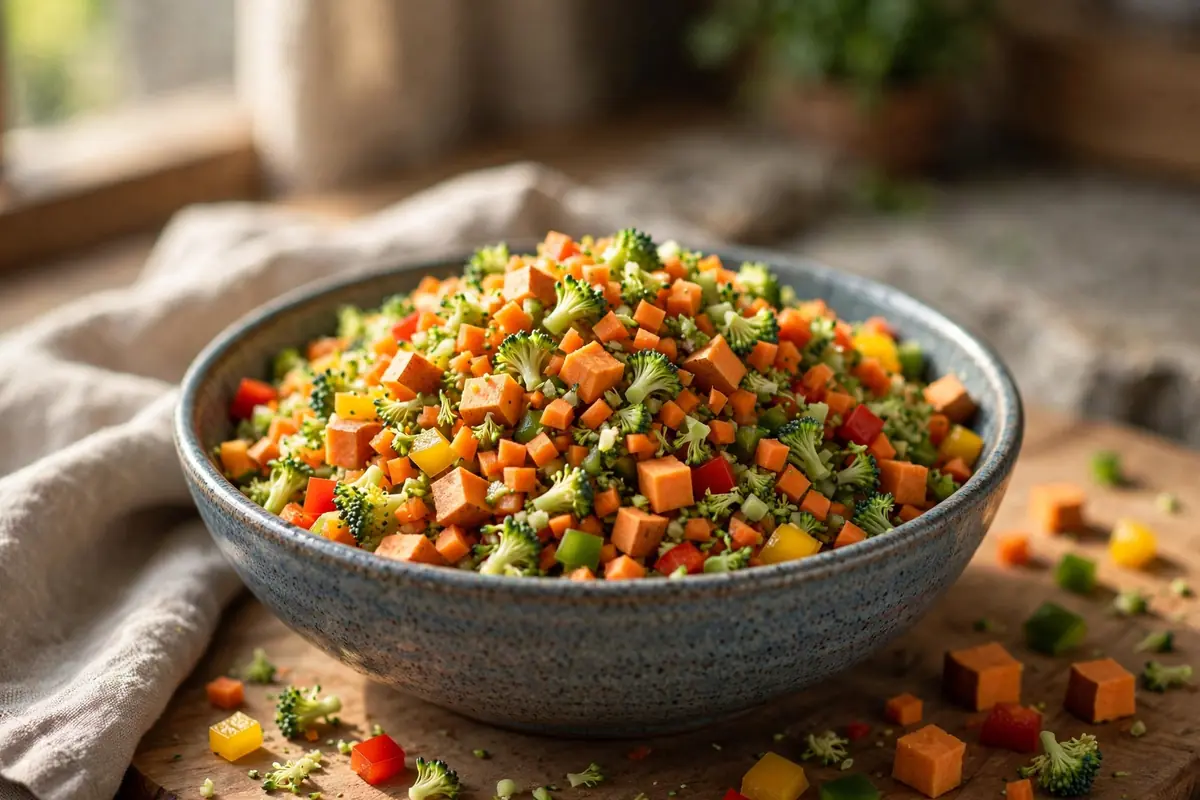
A chop recipe is simply a mix of finely diced vegetables, grains, and legumes prepared in bulk and served fresh each day. Chop is popular because one batch covers a week of servings, and the tiny pieces make it harder for picky birds to eat only their favorites. Each cockatiel needs only about two teaspoons a day, so a single batch goes a long way.
Here is a simple starter recipe:
- Dice into rice-sized pieces: broccoli, carrot, sweet potato, bell pepper, and peas.
- Add a cooked whole grain such as quinoa or brown rice (about one part grain to four parts vegetables).
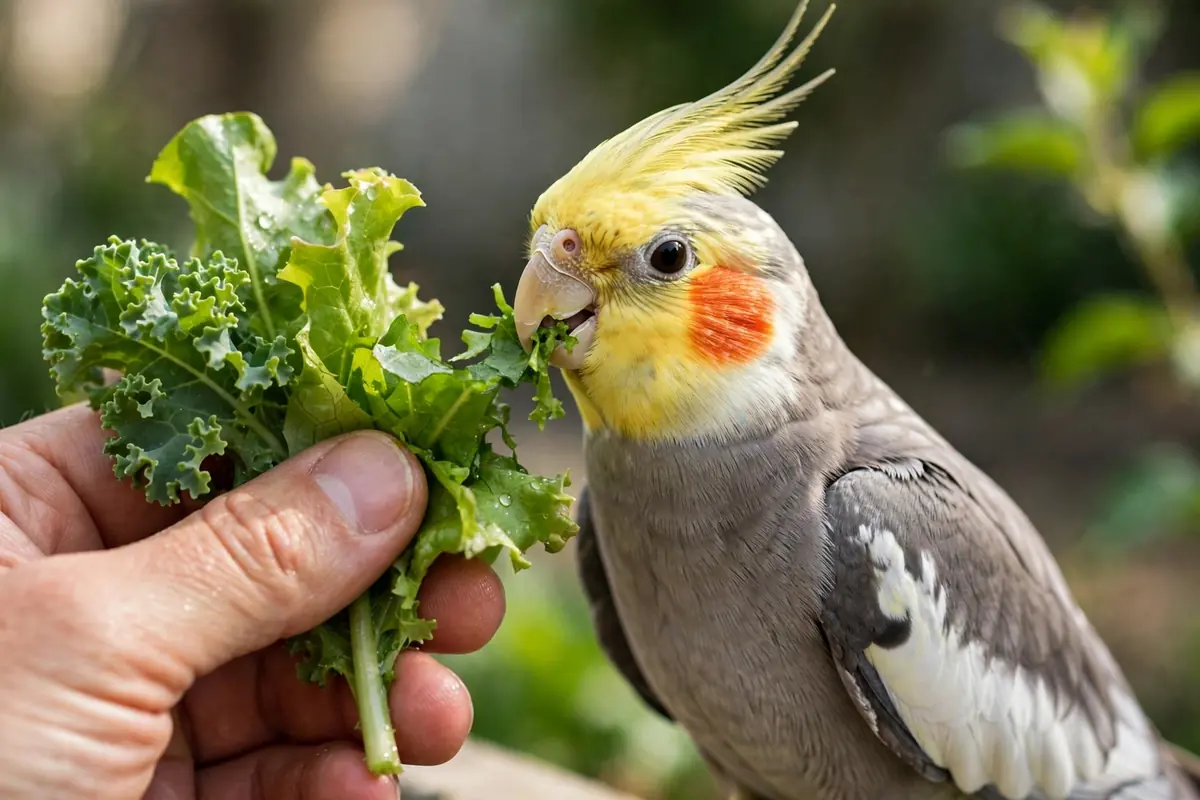
- Mix in a handful of chopped dark leafy greens like kale or collard greens.
- Portion into ice cube trays and freeze. Thaw one cube overnight in the fridge for each day’s serving.
Rotate the vegetables weekly so your bird gets a range of nutrients. Good safe vegetables for the mix include broccoli, carrot, sweet potato, bell pepper, peas, corn, zucchini, squash, kale, and beetroot. As a rule, the darker and more colorful the vegetable, the more nutrition it carries. Serve chop at room temperature, never straight from the freezer or steaming hot.

What foods are toxic to cockatiels?
Some everyday human foods can seriously harm or kill a cockatiel, so it helps to know the danger list by heart. The most dangerous toxic foods are avocado (its persin toxin attacks a bird’s heart), chocolate, caffeine, alcohol, and onion and garlic. Fruit pits and apple seeds contain cyanide compounds and should never be offered.
Beyond the deadly list, a few foods are unhealthy enough to avoid entirely: salty snacks, fried food, butter, and anything sweetened. Raw dried beans are toxic too, so only offer beans fully cooked. When in doubt about a new food, check a trusted avian source before serving it, and keep the bird away from the kitchen while you cook. Overheated non-stick pans can release fumes that are fatal to birds.

What treats can my cockatiel have?
Treats should make up no more than about 10 percent of the daily diet, but they play a real role: they reward training, encourage foraging, and keep mealtimes interesting. A small amount of quality seed mix works well as a treat, since cockatiels naturally enjoy hulling seeds. Spray millet is a classic favorite and a good reward during taming.
Other good treats include a small piece of unsalted nut (like a sliver of almond or walnut), a few berries or a slice of apple a couple of times a week, and a sprig of fresh herbs such as basil or parsley. A cuttlebone or mineral block hung in the cage is also worth offering, especially for females, since it supplies calcium for beak and bone health. Hide treats inside foraging toys or paper to roll up: making the bird work a little for its food keeps its mind busy, which is half the point of a good diet.
Related Guides
- Cockatiel Care Handbook: Beginner Tips, Tricks, and Training
- Bird Body Language: 15 Signals Every Owner Should Know
- Do Birds Really Need 12 Hours of Sleep?
Frequently Asked Questions
What is the best cockatiel diet for beginners?
Start simple: a bowl of cockatiel pellets available all day, about two teaspoons of fresh chopped vegetables each morning, and a pinch of seeds as an evening treat. This basic cockatiel diet covers the essentials while you learn your bird’s preferences. Expand the vegetable variety week by week from there.
How much should a cockatiel eat per day?
Most cockatiels eat about one to two tablespoons of dry food (pellets plus a small seed allowance) plus roughly two teaspoons of fresh chop per day. Appetite varies with size, age, and activity. Watch the food bowls: steady eating with little waste is normal, while a sudden drop in appetite deserves a vet visit.
Can cockatiels eat fruit every day?
Fruit is fine a few times a week, but not every day. Fruit is high in natural sugar and low in the nutrients vegetables provide, so it works better as an occasional treat. Offer small pieces of bird-safe fruit like apple (no seeds), berries, melon, or banana, about a teaspoon at a time.
Should I leave food out for my cockatiel all day?
Pellets and water can stay available all day, since cockatiels graze. Fresh chop and vegetables should be removed after four to six hours to prevent spoilage. At night, take out all fresh food and leave only pellets and clean water in the cage.
Can cockatiels eat eggs?
Yes, a small amount of hard-boiled egg is a good protein source, especially during molting or breeding season. Offer about a teaspoon of mashed egg once or twice a week. Remove leftovers within a couple of hours, and skip any seasoning, butter, or oil.
Why won’t my cockatiel eat pellets?
Cockatiels raised on seeds often ignore pellets at first because the texture is unfamiliar. Keep offering pellets beside the seed dish, try crushing them over the seeds, and warm them slightly to release aroma. Pellet conversion can take weeks. If the bird stops eating or loses weight, slow down and ask an avian vet for help.
This guide is for informational purposes and doesn’t replace professional veterinary advice.