

Quick answer: Cockatiels are the better beginner bird if you want a calm, cuddly companion that whistles and perches on your shoulder. Parakeets (budgies) are the better pick if you want a small, playful, talkative bird that needs less space. Both are beginner friendly, but your lifestyle decides the winner in the cockatiel vs parakeet debate.
Contents
- Should I Get a Cockatiel or a Budgie?
- What Is the Best Beginner Bird?
- What Are the Differences Between Parakeets and Cockatiels?
- Cockatiel vs Parakeet: Which Beginner Bird Should You Choose?
- Related Guides
- Frequently Asked Questions
Should I Get a Cockatiel or a Budgie?
Start with a simple question: what kind of company do you want? A cockatiel behaves like a feathered lap companion. It will seek out your hand, lean into scratches, and settle on your shoulder while you watch TV. A budgie behaves more like a tiny roommate with a busy social calendar. It plays, chatters, and entertains you, but it usually prefers to perch nearby rather than snuggle.
The cuddle factor is the single biggest difference in daily life with these birds. Cockatiels actively invite physical affection. Head scratches, cheek rubs against your finger, and long shoulder sessions are normal cockatiel behavior once the bird trusts you. Budgies can be tamed and will step onto your hand. Most remain hands-off pets that bond through play and conversation rather than touch.

Time matters too. A cockatiel generally needs one to two hours of out-of-cage interaction every day to stay happy and tame. A single budgie needs similar attention, but budgies adapt better to being kept in pairs. A pair entertains each other when you are busy. If your schedule is unpredictable, a pair of budgies can be the more forgiving choice.
Budget is another early filter. Both birds are inexpensive to buy, but cockatiels cost more to set up and maintain. They need a larger cage, eat more, and produce feather dust that may mean an air purifier for sensitive households. Budgies are among the cheapest pet birds to keep long term, with smaller cages and smaller food bills. Working through these filters is how most owners resolve the cockatiel vs parakeet question before they ever visit a breeder.
What Is the Best Beginner Bird?
The best beginner bird is the one that fits your home, your noise tolerance, and your patience for training. Both the cockatiel and the budgie parakeet rank at the top of every beginner list for good reason. They are gentle, affordable, widely available, and forgiving of new-owner mistakes. Your living situation is what tips the scales.
Noise level deserves honest attention because it surprises many first-time owners. Cockatiels whistle, and a happy cockatiel whistles a lot. The sound is melodic but can carry, especially morning and evening contact calls. Budgies chatter almost constantly during the day, a cheerful background babble that some people love and some find distracting. Neither bird screams the way larger parrots do. Budgies are noisier in total minutes per day, while cockatiels hit higher peaks.
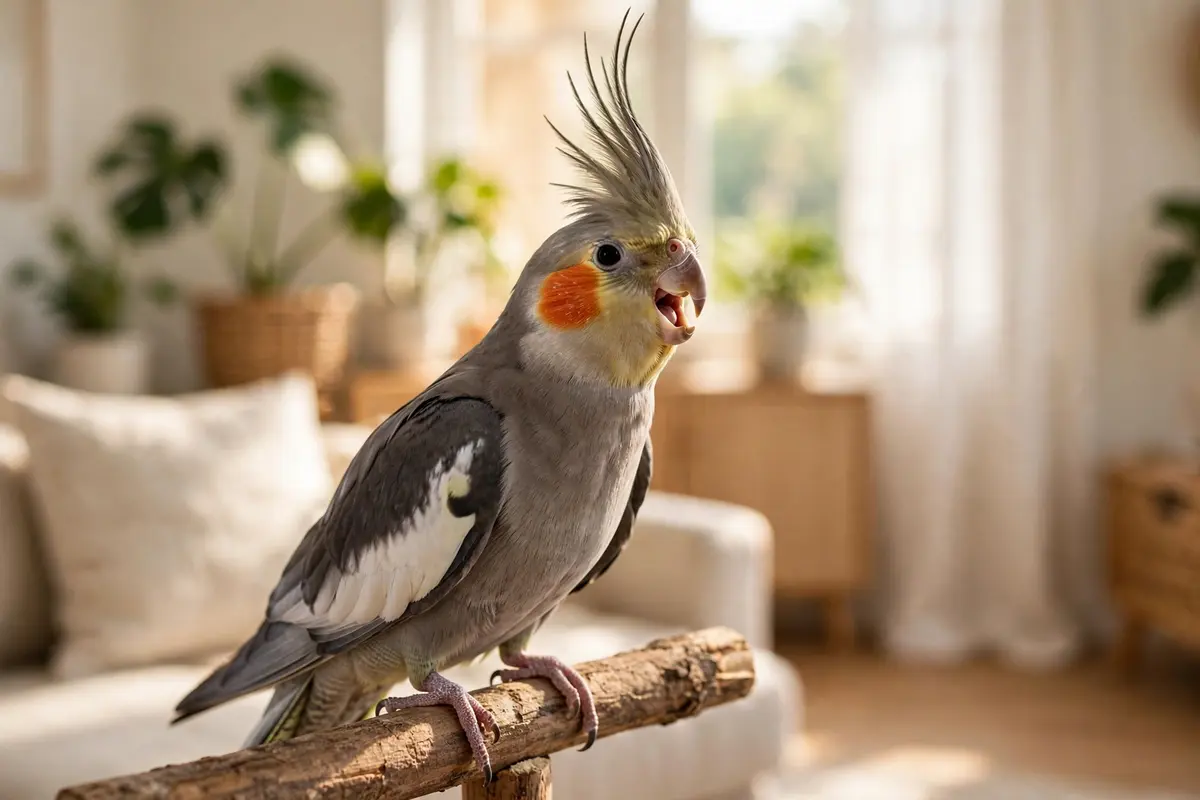
For families with kids, budgies often work better. They are quick, playful, and rarely deliver a serious bite. Cockatiels are also gentle, but their larger beaks can pinch harder when startled. Their longer lifespan means the commitment extends well into a child’s adult years. Speaking of commitment: budgies typically live 7 to 15 years, while cockatiels often live 15 to 25 years. That decade of difference should shape your decision as much as any personality trait.
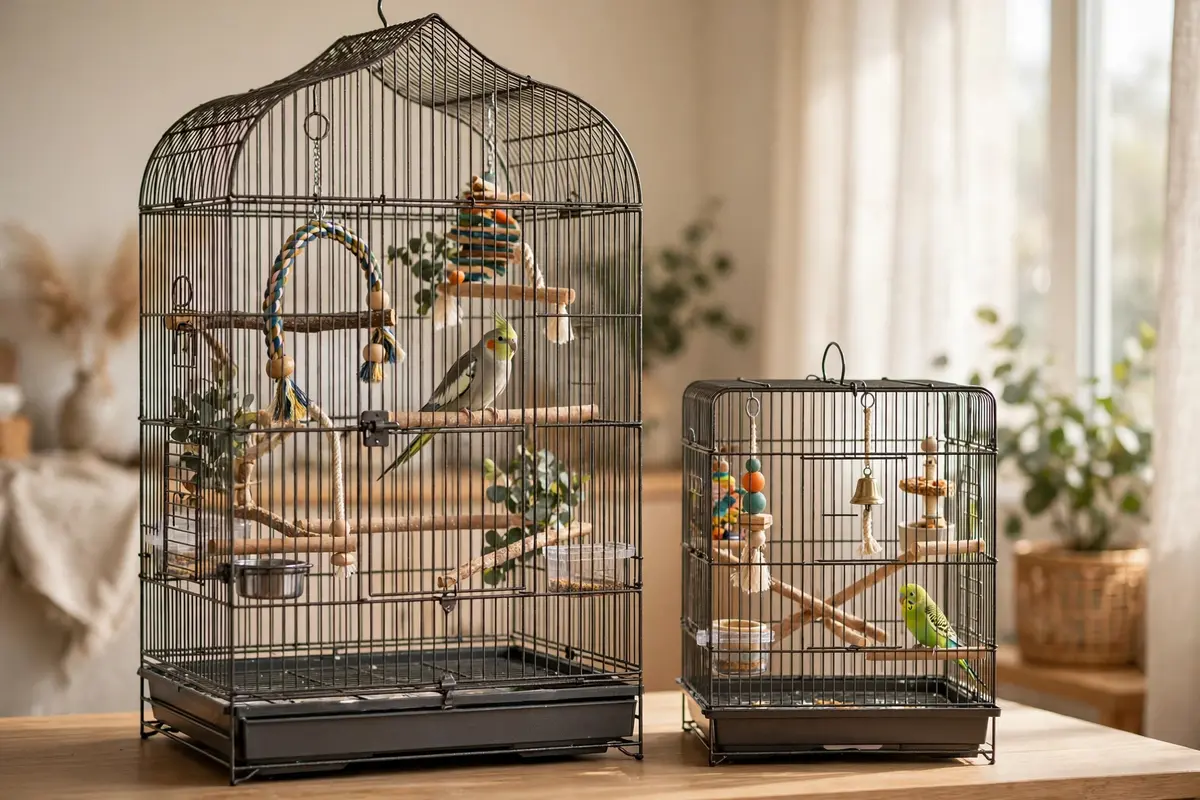
Space is the final practical check. A budgie pair does well in a cage around 30 inches wide, which fits comfortably on a sturdy table. A cockatiel needs a cage at least 36 inches wide with room to spread its wings fully. You also need space for a play gym outside the cage. If you live in a studio apartment, the budgie’s smaller footprint is a genuine advantage.
What Are the Differences Between Parakeets and Cockatiels?
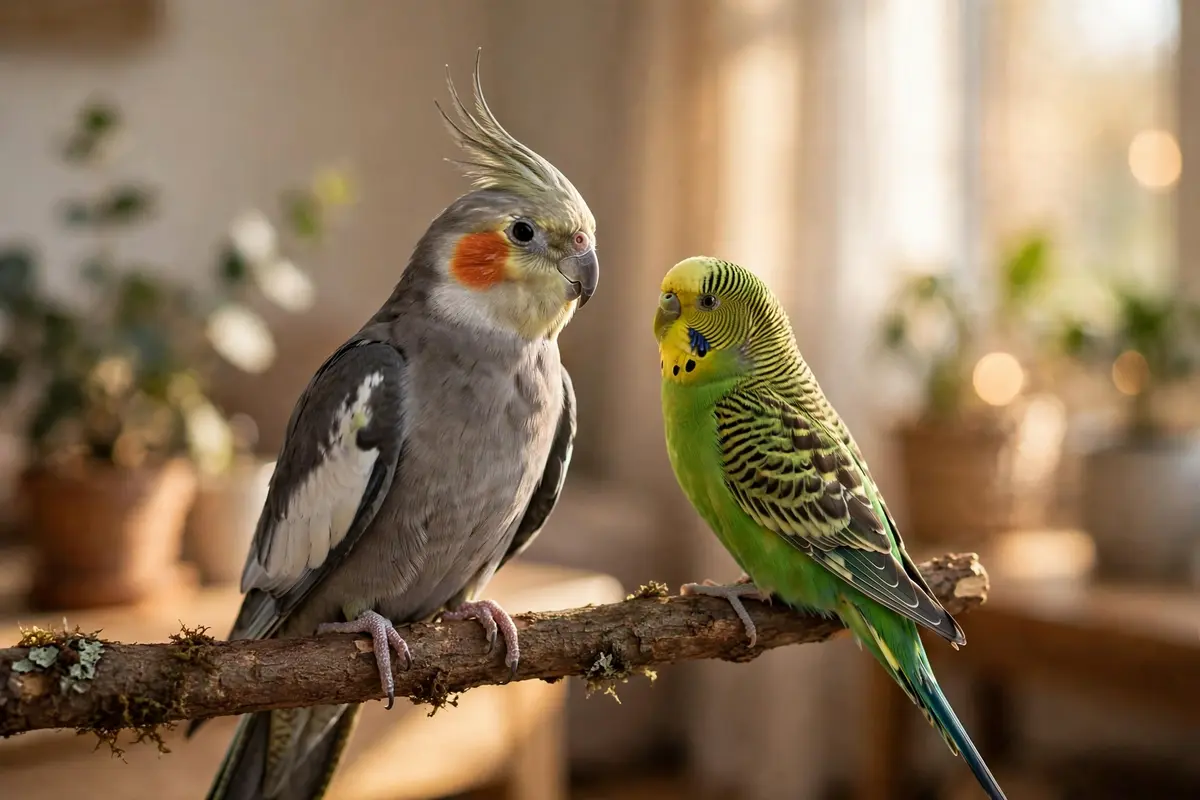
Here is the head-to-head breakdown of every difference that matters for a beginner owner. The table below summarizes the cockatiel vs parakeet comparison, then each point gets the detail it deserves.
| Feature | Cockatiel | Parakeet (Budgie) |
|---|---|---|
| Size | 12 to 13 inches, 3 to 4 oz | 6 to 8 inches, about 1 oz |
| Lifespan | 15 to 25 years | 7 to 15 years |
| Noise level | Moderate, melodic whistling with loud contact calls | Frequent, cheerful daytime chatter |
| Talking ability | Can learn a few words, famous for whistling tunes | Can learn dozens of words, best talker of the two |
| Affection style | Cuddly, seeks scratches and shoulder time | Social and playful, less physically cuddly |
| Cage size | At least 36 inches wide | At least 30 inches wide for a pair |
| Typical cost | $100 to $300 for the bird, higher setup cost | $20 to $50 for the bird, lower setup cost |
| Mess level | Feather dust (dander) is the main issue | Seed husks and food scatter around the cage |
| Social needs | Bonds deeply with owner, can be a single bird | Happiest with a same-species companion |
| Kid friendliness | Gentle but stronger beak, long commitment | Playful, tiny beak, shorter commitment |
Lifespan is where many buyers get caught off guard. A cockatiel bought for a teenager may still be whistling when that teenager turns 35. Plan for the bird to be part of major life changes: moves, college, careers. A budgie’s shorter lifespan still demands years of care, but it fits more comfortably into an uncertain decade.
Talking ability surprises people in the opposite direction from what they expect. The smaller bird is the better talker. Male budgies especially can build vocabularies of dozens of words and short phrases with daily repetition. Cockatiels can learn a handful of words. Their real talent is mimicry of sounds: phone ringtones, whistled songs, the microwave beep. Decide whether you want conversation or a soundtrack.

Social structure changes the daily routine. Cockatiels bond intensely with one person and can become jealous or stressed when that person disappears for long stretches. Budgies spread their affection across a flock, which makes them more resilient to a busy owner. It also means they bond less deeply with you specifically. Hand-raising and daily handling narrow this gap, but the underlying instinct stays.
Cage size and cost follow the birds’ bodies. A cockatiel cage must be wide enough for full wing extension without touching the bars. Bar spacing should be no wider than 5/8 inch. A budgie cage can be smaller with 1/2 inch bar spacing. Multiply the difference across larger toys, perches, and food bills. A cockatiel typically costs two to three times more per year to keep.
Cockatiel vs Parakeet: Which Beginner Bird Should You Choose?
Every cockatiel vs parakeet discussion ends at the same place: your lifestyle. Choose the cockatiel if you want a single, deeply bonded companion. This works if you have room for a large cage and a 20-year commitment feels right. Choose the parakeet if you want an affordable, entertaining, talkative little bird. This is also the pick if you prefer a shorter commitment or you are buying for kids.
| If this describes you | Pick this bird |
|---|---|
| You want a bird that cuddles and seeks your attention | Cockatiel |
| You want the best talking ability for the size | Parakeet (budgie) |
| You live in a small apartment with limited space | Parakeet (budgie) |
| You can commit to 15 to 25 years of care | Cockatiel |
| You have young kids and want a gentle starter bird | Parakeet (budgie) |
| You work long hours and need a bird that self-entertains | Pair of parakeets (budgies) |
| You want a whistling companion that learns tunes | Cockatiel |
Whichever you pick, buy from a breeder who hand-raises chicks or adopt from a rescue. Quarantine any new bird for 30 days before introducing it to existing pets. A hand-tamed young bird of either species will reward you with years of personality that a pet-store impulse buy rarely matches.
Related Guides
- Cockatiel Care Handbook: Beginner Tips, Tricks, and Training
- Do Birds Really Need 12 Hours of Sleep?
- Bird Body Language: 15 Signals Every Owner Should Know
Frequently Asked Questions
Are cockatiels louder than parakeets?
It depends on how you measure noise. Cockatiels produce louder individual sounds, especially their morning and evening contact calls. Parakeets chatter more continuously through the day. Most owners find budgie chatter easier to tune out, while a cockatiel’s whistle demands attention.
Can a cockatiel and a parakeet live in the same cage?
Housing them together is not recommended. Cockatiels are much larger and can injure a budgie by accident, and budgies can be territorial bullies that stress a calm cockatiel. They can share supervised out-of-cage time once both are tame, but each species should have its own cage.
Cockatiel vs parakeet: which bird talks more?
Budgies talk more and more clearly. With daily training, a male budgie can learn dozens of words and short phrases. Cockatiels learn fewer words but excel at whistling melodies and mimicking household sounds like ringtones and the microwave beep.
Is a cockatiel or parakeet better for kids?
Parakeets are usually the better starter bird for kids. They are playful, have tiny beaks that rarely hurt, and their shorter lifespan fits a childhood commitment better. Cockatiels are gentle too, but they need calmer handling and can live 20 years or more.
Do cockatiels need a friend, or is one enough?
One cockatiel is enough if you give it one to two hours of daily interaction. They bond strongly with their owner and many single cockatiels are perfectly content. If you cannot offer that much time, a second cockatiel provides company. Just know it may bond with the other bird instead of you.
What is the cheapest beginner bird to keep?
The budgie parakeet is the cheapest common pet bird to buy and maintain. The bird itself costs $20 to $50, cages and supplies are small and affordable, and food bills stay low. Annual upkeep for a budgie typically runs well under half of what a cockatiel costs.
This guide is for informational purposes and doesn’t replace professional veterinary advice.