

Quick answer: Fireworks anxiety hits pets hard every New Year, so start preparing about two weeks out: set up a safe room, trial calming aids early, and escape-proof your home. On the night, keep your dog indoors, mask the noise, stay calm, and never punish fearful behavior.
Contents
- Why Do Fireworks Terrify Dogs So Much?
- What Should I Do Two Weeks Before New Year’s Eve?
- How Do I Set Up a Safe Room for My Dog?
- What Calming Aids Actually Help Anxious Dogs?
- What Should I Never Do When My Dog Is Panicking?
- How Do I Escape-Proof My Home and Yard?
- What Does the Perfect New Year’s Eve Night Timeline Look Like?
- What Should I Do the Day After the Fireworks?
- Related Guides
- Frequently Asked Questions
Why Do Fireworks Terrify Dogs So Much?
Fireworks hit dogs with a combination their brains simply cannot process. The sounds are far louder than anything they have evolved to handle. Add sudden bright flashes and ground vibrations that feel like an approaching threat. Dogs hear frequencies up to about 65,000 Hz compared to our roughly 20,000 Hz, so every crack and whistle arrives amplified. On top of that, fireworks are unpredictable. A dog can learn that the vacuum cleaner makes noise. But it cannot predict when the next boom will come, and that unpredictability is what turns stress into genuine panic.
This matters because many owners mistake the reaction for stubbornness. A bolting or door-scratching dog is in fight-or-flight, not misbehaving, so the answer is managing the environment and supporting the dog, not trying to reason with panic.
What Should I Do Two Weeks Before New Year’s Eve?
Two weeks before the big night, start a short preparation routine that removes surprises. Book a vet checkup if your dog has shown severe anxiety in past years, because any prescription help needs time to trial. Begin playing recorded firework sounds at very low volume during relaxed moments, like mealtimes, and increase the volume only in tiny steps over several days. Never push past the point where your dog stays calm. At the same time, introduce any new calming aid now: a wrap, a diffuser, or a new bed in the safe room. That way none of it feels unfamiliar on the night. Spend a few calm evenings in the safe room with your dog so it already feels like safety before the first rocket goes up.

How Do I Set Up a Safe Room for My Dog?
Pick the most interior room of your home, ideally one with no exterior windows, and turn it into your dog’s bunker for the night. Close the curtains or blinds, dim the lights, and add a comfortable bed, a water bowl, and a worn shirt that smells like you. White noise helps enormously: a fan, a TV left on at moderate volume, or a calm music playlist all work as sound masking. The goal is to shrink your dog’s world to one small, predictable, familiar space where the outside chaos feels far away.
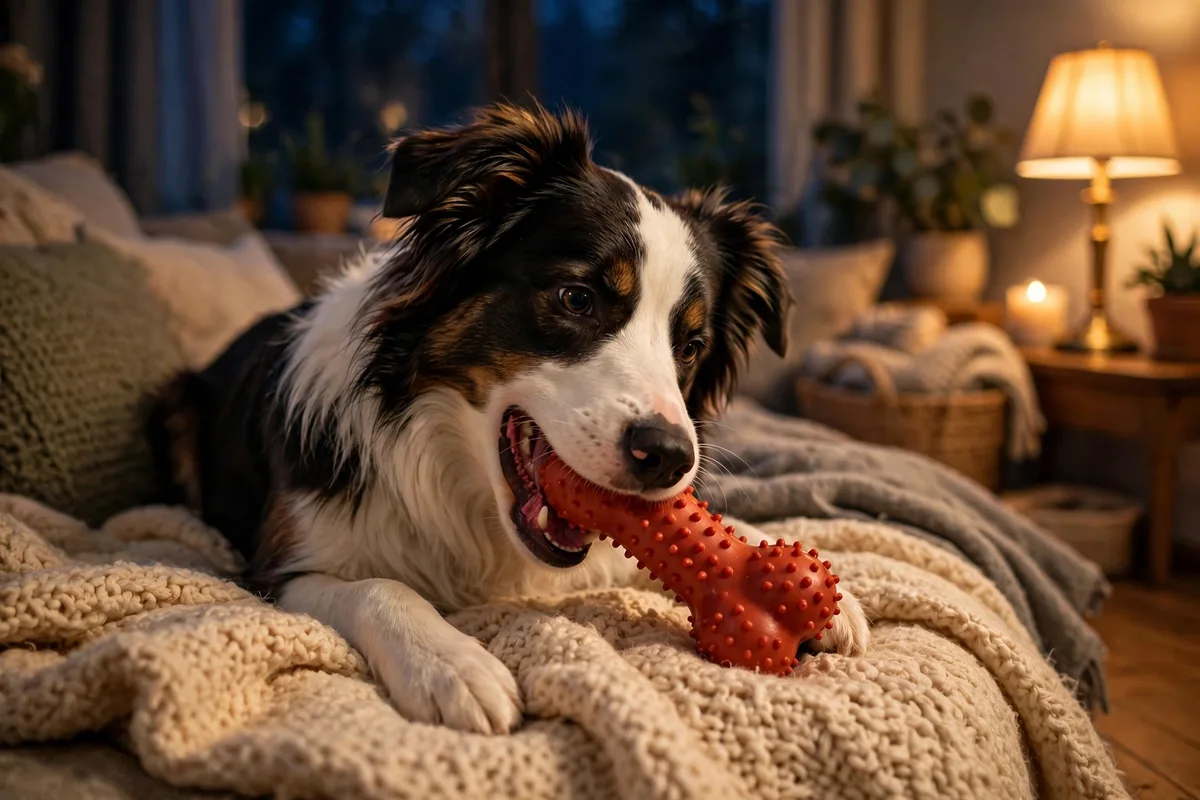
Keep the door closed once the fireworks start. But never lock your dog in a crate it dislikes. A crate is a great den for a crate-trained dog with the door open, and a trap for one that fears it. Place a long-lasting chew or stuffed food puzzle in the room before the noise peaks. If you have more than one pet, give each its own space, since animals can feed off each other’s stress.
What Calming Aids Actually Help Anxious Dogs?
Calming aids work best as a team. A snug pressure wrap helps some dogs, pheromone diffusers mimic calming nursing signals, and slow-tempo music plus a familiar chew toy round out the toolkit. Trial every aid at least a week before the event so you know what actually helps your dog.
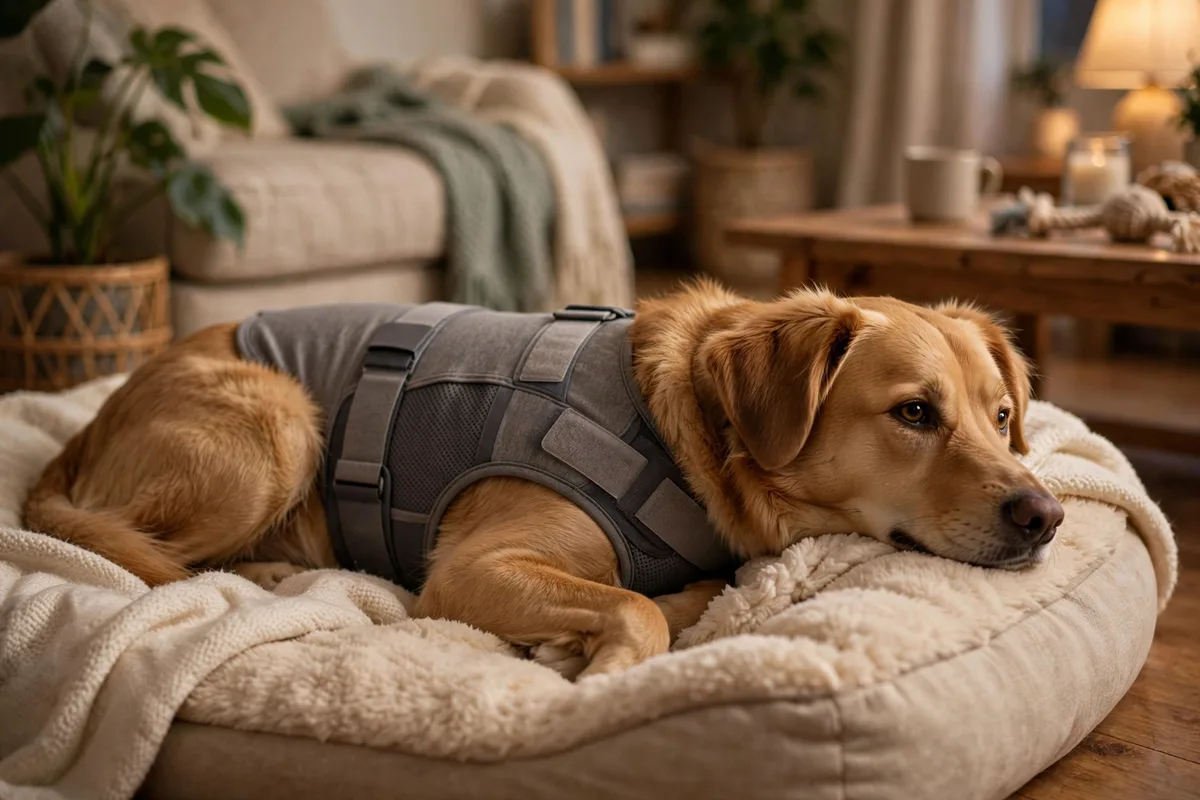
For severe fireworks anxiety, medication is the honest answer, but it must come from your veterinarian. Ask about short-acting options during your pre-holiday visit and trial the plan beforehand. Never dose your dog on your own with human products or borrowed pet medications. If your dog injures itself or cannot settle, that is exactly the case to discuss with your vet.
What Should I Never Do When My Dog Is Panicking?
Three mistakes make fireworks anxiety in pets worse every year. First, never punish fear: shouting at a trembling dog deepens the fear. Second, do not over-coddle with frantic fussing and a worried voice, which signals that there really is something to fear. The sweet spot is calm, quiet company: be present, speak softly, and carry on as if nothing is wrong.
Third, never take a fearful dog outside off-leash during fireworks season, and keep leashed walks short and early on the day. More dogs go missing around New Year’s Eve than on any other night, many slipping collars or bolting through doors held open for guests. If your dog paces or shakes, mirror the energy you want: slow movements, low voice, predictable routine.
How Do I Escape-Proof My Home and Yard?
Escape-proofing is the highest-leverage step, because a lost dog is the worst possible outcome. Walk your fence line for gaps, loose boards, and gates that do not latch. Brief everyone in the house, including guests, to keep exterior doors shut and use one designated door. Keep a leash by the door and clip it on before anyone opens it.

Verify identification now: legible ID tag, current phone number on the microchip registry, and a collar snug enough not to slip over the head. Save a recent photo on your phone in case you need a lost notice. These five-minute jobs prevent the worst midnight panic.
What Does the Perfect New Year’s Eve Night Timeline Look Like?
Structure the night so your dog is tired, fed, and settled before the noise peaks. Take a long sniffy walk in the late afternoon, well before dark, and feed dinner a little early. Around 8 or 9 pm, move to the safe room, start the sound masking, hand over the chew toy, and settle in. Stay through midnight if possible; your calm presence is the strongest signal that everything is okay.

When the midnight peak hits, keep the routine boring: lights dim, TV on, door closed, chew available. Do not open the front door to watch the show. After the peak passes, usually within 30 to 45 minutes, give a short calm potty break on leash. Then return to the safe room until the neighborhood goes quiet.
Anxiety Signs Ranked by Severity
Match your response to what you actually see. The table below ranks common signs from mild to panic, with the matching response for each level.
| Severity | Signs to Watch For | Matching Response |
|---|---|---|
| Mild | Lip licking, yawning, ears back, light panting | Stay nearby, offer a chew, keep the routine normal |
| Moderate | Pacing, whining, clinginess, refusing food | Move to the safe room, start sound masking, add calming aid |
| Severe | Trembling, drooling, hiding, trying to escape the room | Stay with the dog, keep doors shut, use vet-prescribed plan if you have one |
| Panic | Bolting, destructive scratching, self-injury, house soiling | Prevent escape and injury first, then call your vet or an emergency clinic |
What Should I Do the Day After the Fireworks?
The morning after is for recovery. Keep the day calm, and check the yard for firework debris and unburned fireworks, which are hazards for curious noses. Write down what worked and what did not; that note becomes next year’s plan.
Related Guides
- Puppy Separation Anxiety: First Week Alone Training Plan
- 12 Puppy Mistakes Every New Dog Owner Makes
- Pet Birds in Winter: Temperature, Humidity and Drafts
Frequently Asked Questions
How long does fireworks anxiety last in dogs?
For most dogs, acute anxiety lasts as long as the noise, typically a few hours, and fades within a day. Some stay on edge for 24 to 48 hours, flinching at small sounds. If fearfulness persists beyond a couple of days, talk to your vet about a longer-term plan.
Can I give my dog something to calm it down on fireworks night?
Only use products your veterinarian has approved. Calming supplements, pheromone products, and pressure wraps are low-risk starting points, but anything sedating or prescription must be vet-guided and trialed before the event. Never use human medications or another pet’s prescription.
Should I comfort my dog during fireworks, or will that reward the fear?
You cannot reinforce an emotion, only a behavior, so calm comfort does not teach your dog to be more afraid. Quiet, steady company is reassuring. What to avoid is frantic fussing in a worried voice, which can signal that the situation really is alarming. Be present, speak softly, and act like everything is normal.
Can fireworks permanently traumatize a dog?
A single terrifying night can create a lasting sound phobia in a sensitive dog, especially a puppy, which is why preparation matters. The good news is that gradual desensitization and positive associations can undo much of that damage over time. If your dog’s fear generalizes to thunderstorms or everyday bangs, work with your vet or a qualified behavior professional.
My dog ran away during fireworks. What should I do now?
Act fast: check your immediate neighborhood on foot, call local shelters and vets, and post in local lost-pet groups with a recent photo. Make sure your microchip registration is current so a finder can reach you. Most fireworks escapees are found within a few miles of home, often hiding quietly, so search calm spots like under porches and in bushes too.
This guide is for informational purposes and doesn’t replace professional veterinary advice.