

Quick answer: Can cats eat tuna? Yes, but only as an occasional treat. Offer plain tuna packed in water, about one tablespoon once a week for an average adult cat. Tuna carries a mercury risk and lacks complete nutrition, so it must never replace balanced cat food.
Contents
- Is tuna bad for cats?
- Can I give my cat tuna as a treat?
- How much tuna can a cat safely eat?
- Why does my cat seem addicted to tuna?
- Can my cat live on tuna?
- Related Guides
- Frequently Asked Questions
Is tuna bad for cats?
Tuna is not poisonous to cats in small amounts, but it becomes harmful when fed often or in large portions. The real problems are mercury buildup from a big predator fish, nutritional gaps (especially low vitamin E and taurine), and a condition called steatitis, or yellow fat disease, that inflames body fat. One tiny serving now and then is fine; a regular tuna habit is not.
The mercury risk works like this. Mercury from the environment settles in seawater, tiny fish absorb it, and bigger fish eat those smaller fish. Tuna sit near the top of the food chain, so each tuna accumulates the mercury from hundreds of smaller fish. That process, called biomagnification, is why tuna carries far more mercury than small fish like sardines or salmon.
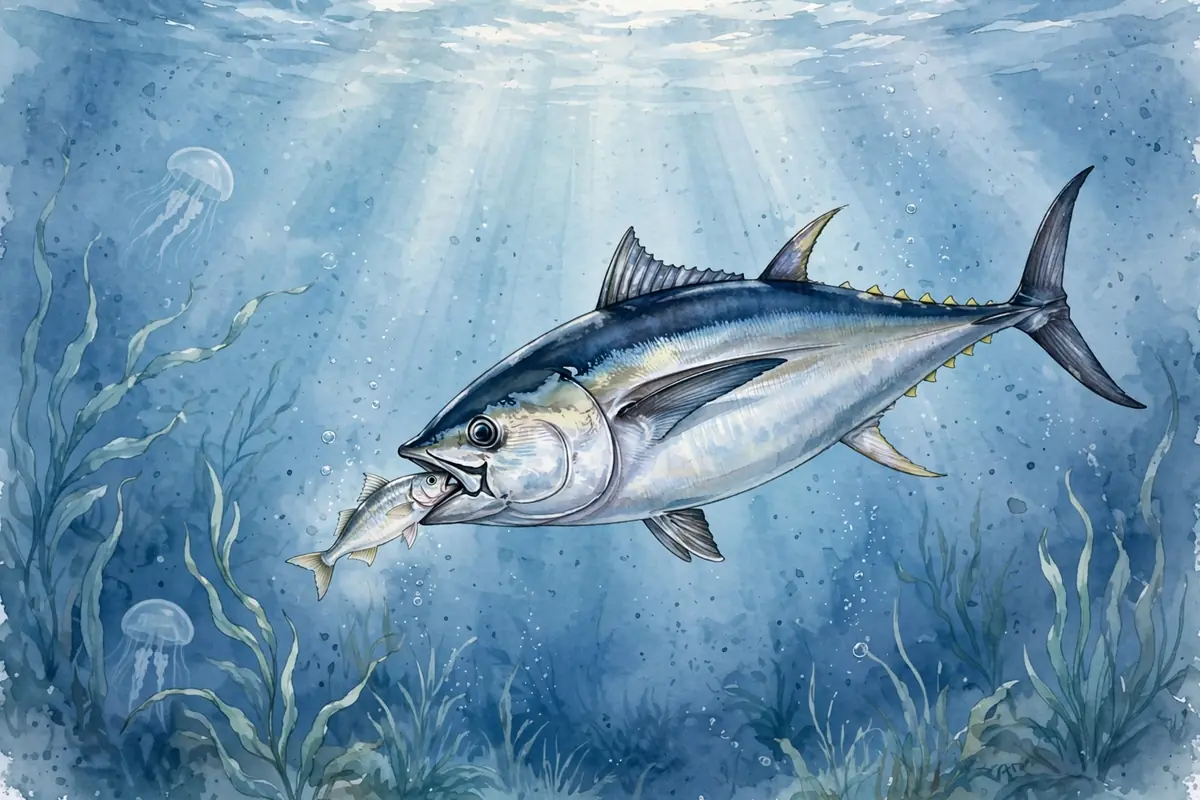
Cats are especially sensitive to this buildup. A cat’s liver is small relative to its body, so methylmercury, the toxic form found in fish, clears from feline tissue very slowly. Repeated servings stack up over weeks and months, and the damage can affect the brain and kidneys long before you notice symptoms.
Mercury is not the only concern. Tuna canned for people is low in vitamin E, and diets built around oily fish can leave a cat short of this nutrient, causing steatitis, a painful inflammation of body fat. It is also poor in taurine, the amino acid cats need to protect their heart and eyes.
Can I give my cat tuna as a treat?
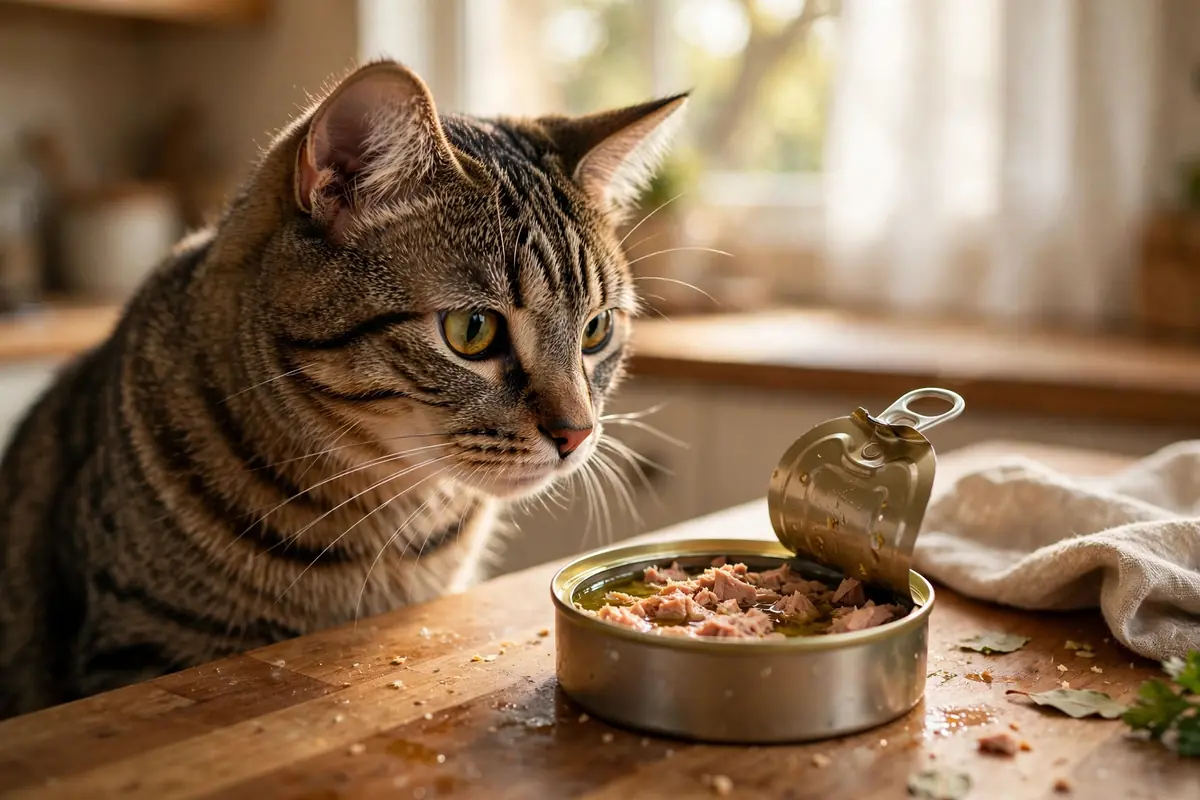
So, can cats eat tuna as a weekly treat? Most healthy adult cats can, as long as you choose the right kind and keep it rare. Pick plain chunk-light tuna packed in water with no added salt, drain it well, and offer it on its own plate so you control the portion. Think of tuna like cake for people: enjoyable sometimes, unhealthy as a routine.
Not all tuna is equal in safety. Tuna type affects both the mercury load and how strictly you should limit it:
- Skipjack (light) tuna: lower mercury. This is the best choice for a cat treat.
- Chunk light tuna: usually skipjack or similar small species. Also a good choice.
- Albacore (white) tuna: noticeably higher in mercury. If this is all you have, halve the portion.
- Yellowfin or bigeye tuna: high to very high mercury. Avoid these for cats.
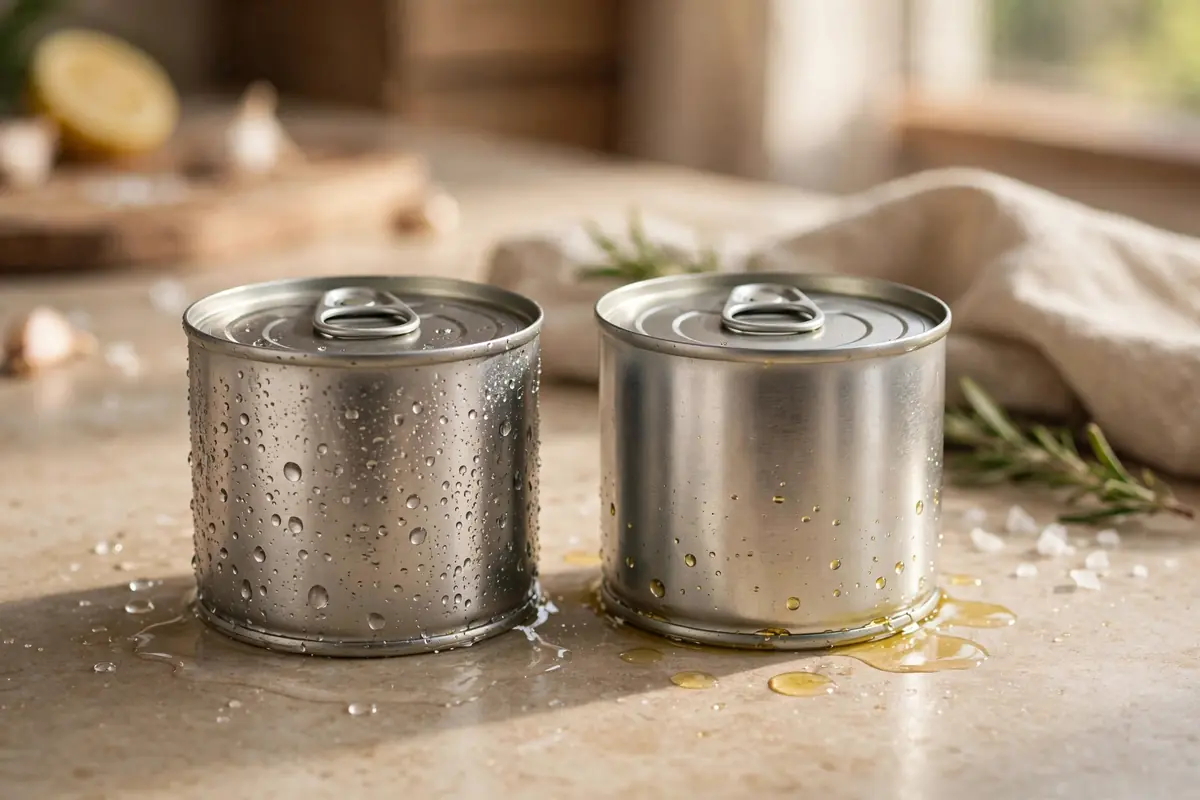
Follow these simple rules every time. Choose tuna in water not oil: oil-packed tuna is much fattier and can upset digestion or, in large amounts, strain the pancreas. Never serve tuna in brine, since the sodium level is far too high for cats. Avoid flavored pouches and tuna salads containing onion or garlic, both toxic to cats. Never feed raw tuna, which can carry parasites and bacteria, and skip the “tuna juice” from the can as a meal topper, because it concentrates the salt.
How much tuna can a cat safely eat?
For an average adult cat, the widely used guideline is about one tablespoon of plain tuna (roughly 15 grams) once a week, and no more. Smaller cats should get less, kittens under twelve months should get none, and senior cats should be kept to the lowest end because mercury accumulates over a lifetime. So can cats eat tuna regularly? No. That weekly ceiling is firm, and treats of all kinds, tuna included, should stay under 10 percent of a cat’s weekly calories.
Use the table below to set the right limit for your cat’s size:
| Cat weight | Max tuna per serving | Frequency |
|---|---|---|
| Under 8 lbs (small) | 1 teaspoon (about 5 g) | Once per week, max |
| 8 to 12 lbs (average) | 1 tablespoon (about 15 g) | Once per week, max |
| Over 12 lbs (large) | 2 tablespoons (about 30 g) | Once per week, max |
| Kittens under 12 months | None | Not recommended |
A practical trick: measure the portion with a real teaspoon or tablespoon before serving. It is easy to scoop “a little bit” that turns out to be three times the safe amount. If you want to share the tuna flavor more often without the mercury, use tuna-flavored cat food made for cats instead. Commercial cat foods with tuna are formulated to be complete and balanced, with safe mercury levels and added taurine.

Why does my cat seem addicted to tuna?
Tuna has an extremely strong smell and taste, and some cats start holding out for it, refusing their regular food until tuna appears. This tuna addiction is a learned behavior, not a nutritional need, and it can spiral fast. A cat that skips balanced meals to wait for tuna is slowly sliding into malnutrition even while looking satisfied.
If your cat is already staging hunger strikes, stop offering tuna entirely for two to three weeks, serve regular meals at fixed times, and pick up uneaten food after thirty minutes. Most cats return to their normal food within a few days.
Can my cat live on tuna?
No. Tuna made for people is not a complete diet for cats, and a tuna-only diet will eventually make a cat seriously ill. It lacks adequate taurine, which cats cannot make enough of themselves, and low taurine over time can damage the heart and cause blindness. It is also missing the right balance of vitamins, minerals, and fatty acids that formulated cat food provides.
This is the complete diet warning every tuna-loving cat owner should hear: the label “for humans” means the can was designed around human nutrition, not feline biology. A cat fed mostly on canned tuna can develop steatitis from vitamin E shortage, neurological damage from mercury buildup, and deficiency diseases that take months to show. The bottom line on can cats eat tuna: as a rare treat, yes. As a way of life, never.
Related Guides
- Can Cats Drink Milk? The Lactose Truth
- Cat Hairballs: Causes, Remedies, and When They Are Dangerous
- Fleas on Cats: Treatment and Home Cleanup Protocol
Frequently Asked Questions
Can kittens eat tuna?
Kittens should not eat tuna. Their small bodies are more vulnerable to mercury, and they need the precise nutrition of kitten food for growth. Wait until your cat is at least twelve months old, then introduce tuna only as a rare treat in the small amounts described above.
Is tuna in water or tuna in oil better for cats?
Tuna in water is the safer option by a clear margin. Oil-packed tuna adds a lot of fat with no nutritional benefit for cats, and it can cause digestive upset or weight gain. Always choose plain tuna packed in water with no added salt, and drain it well before serving.
Can cats eat raw tuna or fresh tuna steak?
Raw tuna is not safe for cats. It can carry parasites and bacteria, and raw fish contains thiaminase, an enzyme that destroys vitamin B1 (thiamine), which cats need for healthy nerves. If you share fresh tuna, cook it plain with no seasoning, and keep the portion small.
Can cats eat tuna every day?
No. Daily tuna, even in small amounts, lets mercury accumulate faster than a cat’s body can clear it. The weekly limit exists for exactly this reason. If your cat begs for fish daily, switch to a complete tuna-flavored cat food, which is formulated to be safe for everyday feeding.
What are the signs of mercury poisoning in cats?
Early signs include unsteady walking, loss of coordination, tremors, and changes in behavior or appetite. Because mercury builds up slowly, symptoms may appear months into a tuna-heavy diet. If your cat eats tuna often and shows any of these signs, see a veterinarian promptly.
Is tuna-flavored cat food safe to feed every day?
Yes. Tuna-flavored cat food made for cats is completely different from human canned tuna. It is formulated to be nutritionally complete, with proper taurine levels and safe mercury limits, so it can be fed daily as part of a balanced diet. Check the label for a nutritional adequacy statement.
This guide is for informational purposes and doesn’t replace professional veterinary advice.