

Quick answer: A fat cat becomes a health risk when you cannot easily feel the ribs, the waist disappears, and the belly sags. That usually means a body condition score of 7 or higher. The safe fix is a vet-guided plan targeting 0.5 to 1 percent of body weight loss per week through measured meals and play. Never crash diet: sudden food cuts can cause fatal liver disease in cats.
Contents
- How Do I Know If My Cat Is Overweight?
- What Does the 1-9 Body Condition Score Chart Look Like?
- What Is a Healthy Weight for My Cat?
- Why Is Extra Weight Dangerous for Cats?
- How Do Cats Get Fat in the First Place?
- What Is a Safe Weight Loss Plan for a Fat Cat?
- What Should I Never Do When Helping My Cat Lose Weight?
- Related Guides
- Frequently Asked Questions
How Do I Know If My Cat Is Overweight?
You can do the first assessment at home in thirty seconds with your hands and eyes. Run your palms along the ribs: in a healthy-weight cat you can feel each rib under a thin layer of fat. From above there should be a visible waist, an inward curve behind the ribs. From the side the belly should tuck up, not hang or sway. Buried ribs, no waist, and a swinging pouch mean overweight.
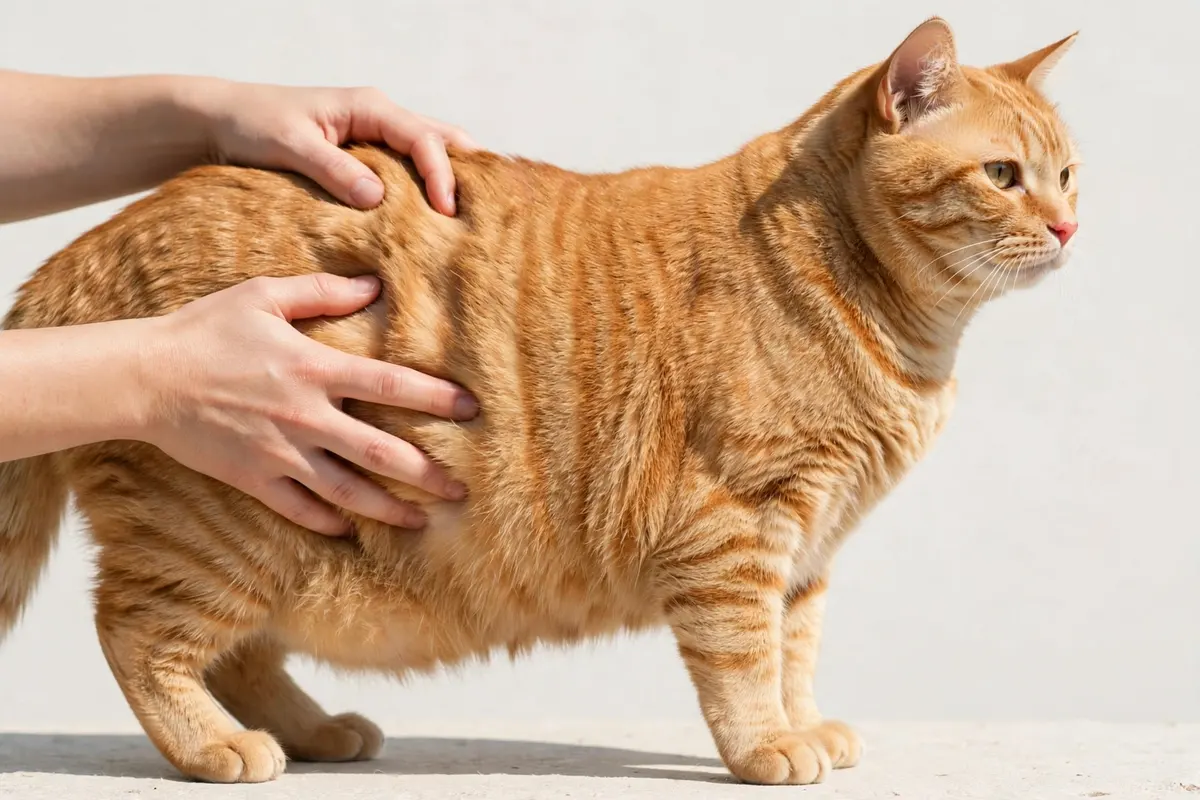
One caution: many cats develop a primordial pouch. That is a loose flap of skin and fat on the lower belly, completely normal and present even in slim cats. Do not confuse it with obesity. The real tests are the ribs and the overhead waistline. Long-haired cats can hide a lot under fluff, so the hands-on check matters even more for them. If you are unsure, your vet can score your cat in seconds during a regular visit.
What Does the 1-9 Body Condition Score Chart Look Like?
Veterinarians use a 9-point body condition score (BCS) instead of just the scale. That is because a big-framed cat and a petite cat can both be healthy at very different weights. Scores 4 and 5 are ideal, 6 and 7 mean overweight, and 8 and 9 mean obese. The table below gives you the plain-language version you can use at home.
| Score | Category | What You See and Feel |
|---|---|---|
| 1-3 | Underweight | Ribs, spine, and hip bones obvious with little fat; visible waist from above |
| 4-5 | Ideal | Ribs easily felt under slight fat cover; clear waist; belly tucks up |
| 6 | Slightly overweight | Ribs felt with slight pressure; waist barely visible; small fat pad on belly |
| 7 | Overweight | Ribs hard to feel under fat; no waist visible; obvious belly rounding |
| 8-9 | Obese | Ribs buried under thick fat; no waist; belly sags; fat deposits on face and limbs |
Score your cat honestly and write the number down. That number becomes your starting line. Re-checking every two to four weeks shows whether the plan is working, even when the scale moves slowly. Photos help too: take a top-down and side photo in the same spot each month, because gradual change is hard to see day to day.
What Is a Healthy Weight for My Cat?
There is no single magic number, because frame size varies enormously. As a rough guide: a petite-framed cat may be ideal at 6 to 8 pounds, an average-framed cat at 8 to 11 pounds. A large-framed cat (think Maine Coon types) may be ideal at 11 to 15 pounds or more. These are ranges, not rules: a muscular 12-pound cat can be perfectly healthy while a small-framed 11-pound cat is clearly overweight. This is exactly why the body condition score matters more than the scale.

The most useful number is your own cat’s personal target, which your vet can set based on frame, current score, and health history. Ask for a target weight and a target timeline at your next visit. Weigh your cat at home weekly on the same scale, at the same time of day, and log it. Baby scales, luggage scales (weigh yourself holding the cat, then subtract), or a digital pet scale all work.
Why Is Extra Weight Dangerous for Cats?
Fat is not just padding; it actively raises disease risk. Obese cats are several times more likely to develop diabetes, which means insulin, monitoring, and expense nobody wants. Extra weight grinds joints, worsening arthritis, which makes the cat move less, which makes the weight worse. It also raises the risk of urinary problems, skin infections, and difficulty grooming.
The scariest risk is hepatic lipidosis, or fatty liver disease, which can develop when an overweight cat stops eating for even a couple of days. The liver gets overwhelmed mobilizing fat, and the condition can be fatal without intensive veterinary care. That is why rapid weight loss is so dangerous for cats specifically. Studies also consistently show that overweight cats live shorter lives, often by a year or two. None of this is about shaming your cat or yourself; it is about adding healthy years together.
How Do Cats Get Fat in the First Place?
Most fat cats are made by routine, not genetics. The number one driver is free-feeding dry food: an always-full bowl lets a bored indoor cat graze hundreds of extra calories daily. Treats are the second culprit, easily 10 to 20 percent of daily calories that nobody counts. Indoor boredom completes the trio: a cat that sleeps most of the day burns almost nothing.
Neutering and age lower calorie needs too, and many owners never adjust portions after those milestones. Multi-cat households add another wrinkle, since the chubby cat often finishes the slim cat’s leftovers. The encouraging flip side: because the causes are routine-based, the fixes are routine-based too, and cats respond well once the routine changes.
What Is a Safe Weight Loss Plan for a Fat Cat?
A safe plan starts at the vet, because calorie targets should be set for your individual cat. The target is 0.5 to 1 percent of body weight loss per week. For a 14-pound cat, that is roughly 1 to 2 ounces weekly. It feels slow, but it is exactly right. Faster risks hepatic lipidosis. Your vet will set a daily calorie target, often 180 to 220 calories for an average dieting cat, and you measure every meal against it.
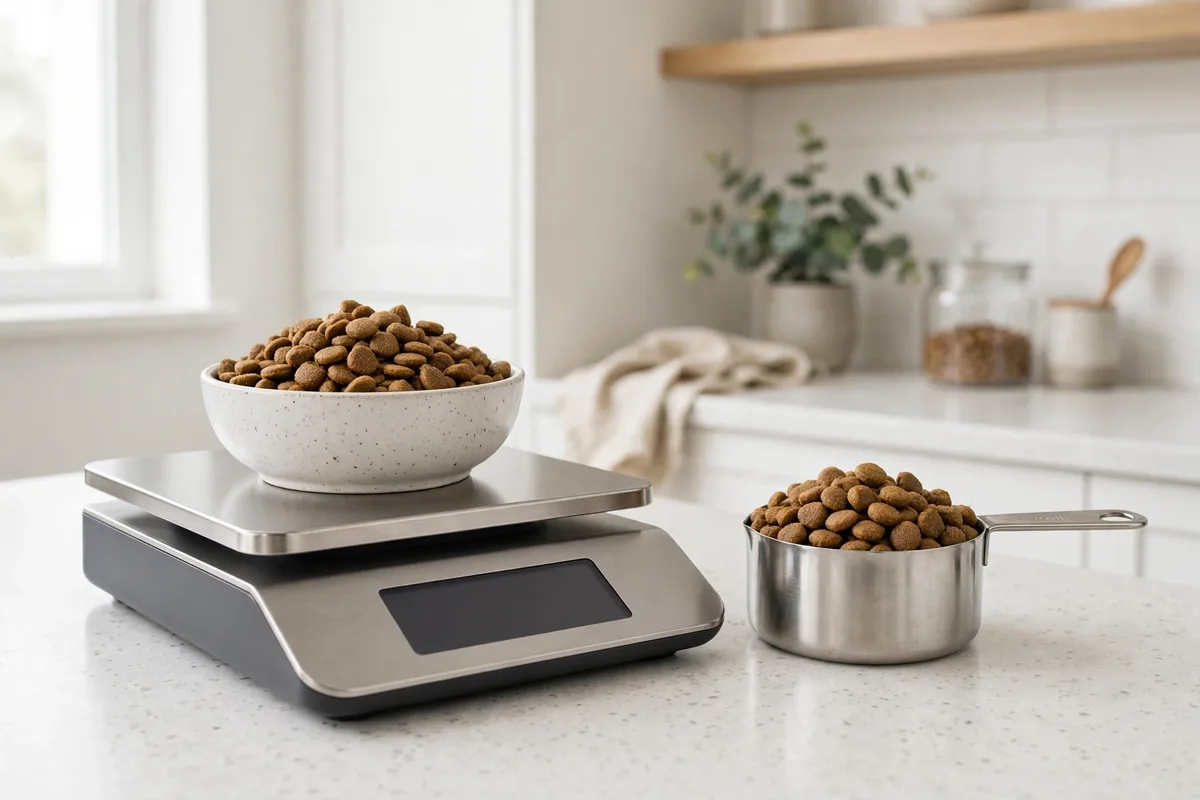
Switch from free-feeding to two or three measured meals a day, weighed on a kitchen scale for accuracy. Wet food has a real advantage here: it is less calorie-dense, higher in protein, and the extra moisture helps cats feel full. Cut treats to 10 percent of daily calories or less. Swap calorie-heavy treats for tiny bits of plain cooked chicken, or a few kibbles taken from the meal portion. If you have multiple cats, feed them separately so the dieter cannot steal.
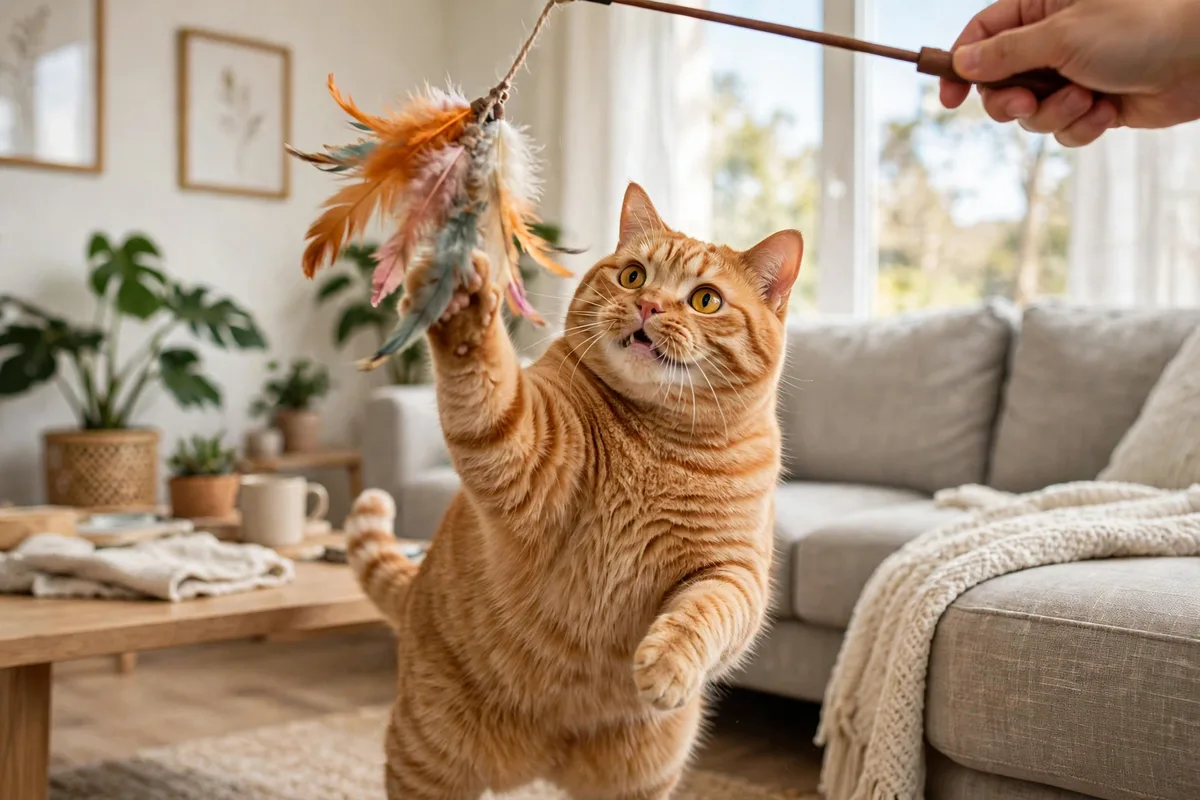
Then add movement. Two or three short play sessions a day, 5 to 10 minutes each, burn calories and fight boredom eating. Use a wand toy, feather teaser, or laser pointer. Always end laser sessions with a tangible toy to “catch.” Puzzle feeders make meals into activity too. Track weight weekly and body condition monthly, and expect plateaus. When weight stalls for three weeks, check in with your vet about adjusting the plan rather than cutting food further on your own.
What Should I Never Do When Helping My Cat Lose Weight?
Never put a cat on a crash diet. Withholding food or slashing portions drastically to speed things up is the single most dangerous thing you can do. An overweight cat that stops eating can develop hepatic lipidosis within days, and that condition kills. If your cat ever refuses food for more than 24 hours during a diet, call your vet promptly. Appetite loss in a dieting cat is always worth a call.
Also avoid switching foods abruptly, which causes stomach upset and food refusal; transition over 7 to 10 days. Do not rely on “diet” kibble alone without measuring, because the label does not matter if the bowl is overfilled. And do not compare your cat’s progress to anyone else’s; safe feline weight loss is measured in ounces per week, and steady always beats fast.

Related Guides
- Can Cats Have Blueberries? Safe Portions Guide
- Can Cats Eat Tuna? Mercury Limits Explained
- Fleas on Cats: Treatment and Home Cleanup Protocol
Frequently Asked Questions
Is it okay for my cat to be a little chubby?
A body condition score of 6, slightly overweight, is common and not an emergency. But it is the easiest stage to fix, so it is worth acting on. Extra fat still nudges diabetes and arthritis risk upward, and “a little chubby” tends to drift toward obese over the years. Small, sustainable changes now prevent a much harder diet later.
How can I weigh my cat at home accurately?
Weigh yourself on a bathroom scale, then weigh yourself holding your cat, and subtract; do it at the same time of day for consistency. A baby scale or digital pet scale is more precise and worth it during a diet. Weekly weigh-ins are plenty; daily weighing just adds noise from normal fluctuations in food and water.
Does diet cat food actually work?
Weight-management formulas can help because they are lower in calories and higher in fiber, which keeps cats feeling full. But the food only works if you measure portions against a daily calorie target; free-feeding diet kibble still overfeeds. Many vets prefer high-protein wet food portions over dry “diet” formulas, so ask your vet what fits your cat.
How long will it take my fat cat to reach a healthy weight?
At the safe rate of 0.5 to 1 percent of body weight per week, a cat that needs to lose 3 pounds takes roughly 5 to 8 months. That sounds long. But slow loss protects the liver, and the weight actually stays off. Celebrate small milestones, like the first visible waistline, to stay motivated through the slow middle months.
Why does my cat beg for food constantly on a diet?
Begging is usually habit, not true hunger, especially in cats that were free-fed. Split the daily portion into three or four small meals, use puzzle feeders to stretch mealtimes, and redirect begging with a short play session. Never give in with extra food; instead, check with your vet if begging seems extreme, as the calorie target may need review.
Can an old cat safely lose weight?
Yes, but senior cats need closer veterinary supervision, since weight loss in older cats can also signal illness like kidney disease or hyperthyroidism. Your vet should rule those out first and may set a gentler target. For seniors, the payoff is big: even modest weight loss noticeably eases arthritis pain and improves mobility.
This guide is for informational purposes and doesn’t replace professional veterinary advice.